Saturday, December 17, 2011

Jalan-jalan ke Taman Ayu

Street scene in Taman Ayu, Tangerang, Banten, western Java
Yes, it’s true. I am going to Indonesia for three weeks. God willing, I will be on board a flight from Portland to Tokyo sometime after twelve noon on Sunday, December 18. The title of this post, I hope, means something like ‘a trip to Taman Ayu.’ I am still at the beginning of learning to speak bahasa Indonesia. It’s the easiest language I’ve ever tried learning as far as structure, but if it weren’t for the frequent intrusions of Arabic and Sanskrit—languages I am familiar with—acquiring vocabulary would be daunting. Not a single word in the blog title traces back to anywhere outside the East Indies.

I will be staying with Yudi Kristanto at his place in the Taman Ayu (Park Beautiful) housing project. He shares an apartment with two sisters, teachers at Christian schools just as he is. The two girls share the larger bedroom, he the smaller. It is a good arrangement for all of them. They are doing what young people just starting out in life do all over the world, share an apartment or house so they can make ends meet. They are all Christians, a minority faith in this largest Muslim country on earth. I am going to see for myself what life is like in this kind of environment. Fortunately, religious conflict is uncommon in Indonesia. Nevertheless, it does happen.

In Tokyo I won’t probably leave the airport during my eighteen hour layover, but I have plenty to keep me busy and I’m looking forward to being in Japan again. It will be cool there if I get to go outside. The weather is similar to the Pacific Northwest. When I get to Jakarta the afternoon of December 20, the temperature will be tropical. That’s another part of my ‘experiment’—will I wilt under the hot, humid conditions? This is not going to be like Florida, I don’t think, but we’ll see. Visiting my Dad every year in Sarasota has gotten me somewhat acclimatised. My northern rainforest blood will probably be crying out for mercy after a few days.

But I don’t care. This is my planet. I used to say that, ‘this is my planet,’ to justify my enjoyment of being out in nature, especially in the winter, here in Oregon wearing just my trousers, bare-chested, with unsocked sandaled feet, as I walk through the forests near my home. Pretending to be a Native American, I still look forward to living here someday, out in the wilds, like an ‘Indian.’ But that may just be the private dream of a person who never was. In the real world, aside from my leisure hours at home, I dress and conform to mainstream culture like everyone else. No, I don’t wear Birkenstocks.

Going to Indonesia is for me another following of the call. I have no idea of what I will do there, or of why I am being sent. I have no delusions of ‘being on a mission’ any more than the next guy. My whole life is a mission, and I am not in charge of it. Like a poor beast of burden, but one lavishly loved by its owner, I just keep moving in a direction He only knows. Beast of burden? Well, no, that was a very poor choice of words. Our good and gracious Lord treats no one, absolutely no one, that way. Not as a dumb beast, not even as a servant, not even as a son, but as an only son and a firstborn: that’s how He treats us, all of us.

It is a beautiful, sunny day here in Oregon, on my last day ‘at home’ for awhile. I love my homeland and country so much, but strangely, I love even more wherever and among whom the Lord sends me. Fr Louis Evely writes, somewhere in his book That Man Is You—I can’t find the exact place—it’s because the saints have no home anywhere that they can feel at home everywhere. By saints, of course, he means you and me. (Sometimes I forget just how much I owe to this Belgian Roman Catholic priest who finished his course outside the institutional priesthood, and with a good conscience.) Where I’m headed, always seems home.

A final greeting for the year to all my friends, and to my enemies too, if I have any. What would life be without your friendship? What would life be if I were not wearing these chains? The way of Christ is perfect, because it is a life of mercy, of forgiveness, of affirmation, of freedom, of love. It is being transformed beyond all that you once could recognize. It is being poured out and yet never emptied. One blood, one body, one heart, the human race redeemed and ransomed by the head sorely wounded, to be part of that, to be knitted into the seamless robe of Jesus Christ, what is called ‘the Church,’ who is called ‘the Bride.’ Yes, always, not ‘what,’ but ‘who.’

Once we were lumps of clay, but the Threefold Radiance breathed soul into us. Once we stumbled and broke ourselves, but the Only-Begotten fell with us into that deepest of all pits, and then stood up, taller than the sky, and raised us on high with Him. To free us from our passions, yes, the Merciful Lord, having done all that He was sent to do, releases us now in Himself to do even greater works, because the Divine Nature before all ages, has come among us as a newborn Child, and invites us also to appear before the world. The First-Born from the dead, first-born in every way, invites us to become as He is in the world. ‘You are the Light of the world…’

Christ is born! Let us glorify! Χριστός γεννάται δοξάσατε
After I returned from Indonesia, I created a blog that chronicles what I did there. You can read all about it at Yndonesia.

Friday, December 16, 2011

The way of innocence

This seems a cheerful world, Donatus, when I view it from this fair garden, under the shadow of these vines. But if I climbed some great mountain and looked out over the wide lands, you know very well what I would see—brigands on the high roads, pirates on the seas; in the amphitheaters men murdered to please applauding crowds; under all roofs misery and selfishness. It is really a bad world, Donatus, an incredibly bad world. Yet in the midst of it I have found a quiet and holy people. They have discovered a joy which is a thousand times better than any pleasures of this sinful life. They are despised and persecuted, but they care not. They have overcome the world. These people, Donatus, are the Christians—and I am one of them.
…

If you keep the way of innocence, the way of righteousness,
if you walk with a firm and steady step,
if, depending on God with your whole strength
and with your whole heart,
you only ‘be’ what you have begun to be,
then liberty and power to do is given you
in proportion to the increase of your spiritual grace.

For there is not, as in the case with earthly benefits,
any measure of stint in the dispensing of the heavenly gift.

The Spirit freely flowing forth is restrained by no limits,
is checked by no closed barriers within certain bounded spaces,
He flows perpetually, He is exuberant in His affluence.

Let our hearts only be athirst, and be ready to receive:
in the degree in which we bring to Him a capacious faith,
in that measure we draw from Him an overflowing grace.

— Cyprian of Carthage (AD 208~258)

Sol Invictus

Sol Invictus, ‘the unconquered Sun,’ was a Greco-Roman deity popular especially in the later Empire, beginning with the era of the military emperors, particularly among the soldiers.
A syncretistic deity, connected to the observable phenomena of nature, his cult was a conscious replication in the human world of the sun’s movement through the heavens. His feast day, the 25th of December, relating to the winter solstice, celebrated the turning point from the shortest day, longest night, towards the lengthening of days, the time of increasing light. He was a favorite god of the emperors themselves, including Constantine, who exchanged his worship for that of the true and living God.

It’s amazing, how similar the truth can be to our not quite correct guesses about it. Among the episodes of man’s search for God, we are not surprised to find how universal is the attraction of man for the sun and how frequently the solar disk has become the object of our veneration in place of the Divine Being. From ancient Egypt’s first stab at monotheism, the pharaoh Ikhnaton’s cult of Aton, the sun, with which he tried to overthrow the worship of Amon-Re and the pantheon, to the solar cults of ancient Peru, and China, Greece and India. Even among the pagans of today, the sun worshippers who bathe practically naked in its light on the beaches without giving theology a thought, he reigns.

The ancient Church immediately incorporated feast days of the Christ into its calendar, imitating the biblical festivals of Judaism which it early discarded, and emulating in some respects the pagan feasts it was replacing. In the law codes of the first Christian emperors are edicts allowing the observance of the old pagan holidays as to the festivities while banning the religious offerings to the false gods that were the reason for them. This they did, the laws explicitly state (Code of Justinian, Book 1, Title 11, Paragraph 4), so as not to eliminate occasions of joy and revelry for the people. Even in those days, politicians, Christian though they might be, knew better than to suppress all at once what little fun the common folk enjoyed.

The commemoration of the birth of the Christ, of Jesus of Nazareth, was celebrated by the early Church on the same day as was His epiphany, the manifestation of Himself to the world at His baptism in the waters of the Jordan River by holy prophet and forerunner John, that is, on the 6th of January. Only later, after the Church had been incorporated into the Empire’s plans for world domination, was the commemoration of the actual birth, the incarnation, of the Christ separated from that of His epiphany.

The date chosen for this separate commemoration?
In step with their program of supplanting the native paganism throughout the Empire with Christianity as the national cult, the feast day of Sol Invictus, the unconquered Sun, was chosen. After all, wasn’t the coming of Jesus Christ the turning point in human history, just as the winter solstice was the turning point in nature, from the time of growing gloom to increasing light? It all made sense to the ancient mind; it still does, even to us today, when we think.

So much for the history of the feast day we shall soon be celebrating—yes, celebrating in the Church, which celebrates for twelve days, not one—which we call ‘the Nativity of Christ,’ revealing in the name a somewhat better reason for it than does the common English expression ‘Christmas,’ which has taken on other meanings for the world. Yet there is more to this connexion between Christian beliefs and the pre-Christian speculations about the sun in relation to God, to the Divine Nature.

In the ethos of the ancient Church, there is this notion of God’s revelation of Himself being accomplished only through the Divine Logos, through His Word. We would never have been able to have any real contact with the Being—Yod-he-vav-he, Yahweh in Hebrew, Ho Ôn, ‘the Being,’ in Greek—had He not sent forth His Word into our midst. That Word was recognized as being Jesus Christ, as He is announced in the first chapter of the holy gospel according to John.

This notion was translated into an attitude that the Word of God, the self-revelation of God, was available in two books—the greater book, and the smaller book. What were these two ‘books’? The greater book was the book of nature. The smaller book was the written scriptures, the Holy Bible. The greater book was called ‘greater’ because it was greater, larger. It was God’s nature revealed, written very, very large, in His physical poem, the heavens and the earth.

The smaller book was called ‘smaller’ because we could ‘hold it in our hands’ as the apostle writes. It was God’s nature revealed in human language, a human literature taken up to become the vehicle of God’s most sure and complete revelation of Himself, everything that He wants us to know about ourselves and Him in one handy, little volume, and in a dialect—human speech—that we could understand. Hence, the two books, one Truth revealed in both, never in opposition to each other.

That being true, it follows that what is written small for us in the Bible is also written large for us—if we are wise—in the greater book of the heavens and the earth. This is where the wisdom of the Church in supplanting Sol Invictus with the truly ‘unconquered Son’ enters. In English and other Germanic languages we are favored to have a similarity in the sound of two words, ‘sun’ and ‘son’, that is not present in most other tongues. Sometimes this confusion works well, other times not.

Herein is found one of the most excellent examples of the wisdom of God imparted to the Church in the idea of the book of nature and the book of scripture revealing Him and confirming each other. The Holy Triad, the Trinity, a doctrine much misunderstood and maligned by those who want to believe in a single Divine Being, is revealed in the Bible but not all in one place and never by name. In the book of Nature, however, we have been given a sign that is both simple and unique. It is the sun.

The sun is one thing, it is one being. Yet there never was a sun without light, but light is not the sun. There never was light without heat, and heat is neither the sun nor is it light. Though the sun is the source of both light and heat, and there never was the sun without either, in the same way light and heat could not be without the sun. Moreover light, though it is one thing, has two ‘natures’. It exists both as waves of pure energy, and as photons, particles like matter.

Do you see where ancient man in knowing that the sun had some wisdom to offer about the Divine Nature was not entirely wrong? But the mystic key was missing until the Word became flesh and dwelt among us, so that we could hear from His lips, see with our eyes and touch with our hands, His holy, otherwise hidden, Divine Nature.

Just as there was never a time that the sun existed without light or heat, so never was there a time that there existed the Father without Son or Spirit. Just as light and heat are not the sun, in the same way the Son and the Spirit are not the Father. Just as the sun is their source, so is the Father Their Source. Just as light exists as waves and photons but is one thing, so does the Son exist as divine and human but is one Person. Just as the sun, light and heat are one, so are the Father, Son and Spirit only One. The sun in physical nature reveals the Triune God of Divine Nature. The greater book and the smaller book agree.

Sol Invictus
, the unconquered Sun, was yet another form of that ‘unknown God’ to whom the altar was raised in the agora of ancient Athens, and we are not surprised when we discover that the God of nature is the God who created nature, and the God of scripture is the ‘Poet of heaven and earth,’ and that they are not two different Gods, but One and the Same. C. S. Lewis writes,

God sent the human race what I call good dreams: I mean those queer stories scattered through the heathen religions about a god who dies and comes to life again, and by his death, has somehow given new life to men.
(Mere Christianity, Book 2, Chapter 3)

What Lewis has tapped is the deepest well that was ever drilled by God for man, proving that preparation was made for us to know Him long before any man had become fully conscious, had become fully human, had been changed from soil to soul by the inbreathed life of the living God.

The waters from that wondrous well
That made my eyes to see
And made my mind to ever show
My greatest friend to me.

— from Greatest Friend, by Mike Heron, Incredible String Band

Thursday, December 15, 2011

The great inversion

You know that among the pagans the rulers lord it over them, and their great men make their authority felt. This is not to happen among you. No; anyone who wants to be great among you must be your servant, and anyone who wants to be first among you must be your slave, just as the Son of Man came not to be served but to serve, and to give His life as a ransom for many.
Matthew 20:25-28

It's curious how we have found so many ways to get around this saying of Jesus. One hierarch who otherwise declares himself the bridge-builder and the vicar of Christ on earth, humbly adds the epithet servant of the servants of God to the other titles by which he is known, and though protocol demands he be referred to as ‘his Holiness,’ we are advised that this form of address pertains not to him personally, but to what Christ has made him. That may be so; I don't know. But I ask myself, how does this differ from referring to the Queen as ‘her Majesty’?

Like all other human societies, the Church organizes itself in tiers according to rules of order. Is this not to be avoided? After all, even Christ had His inner ring of disciples, Peter, James and John, and even there we find an ambition for preeminence among its members which gave Him occasion to speak the words cited above, ‘anyone who wants to be great…’

Though Holy Church has institutions like the offices of bishop, presbyter and deacon, and has even added more classifications to these simple New Testament ones, the fact remains that within her we find strange inversions happening, even from the earliest times, that prove the saying of Jesus fulfilled and write a spiritual history of mankind that remains almost impossible of documentation.

In the ancient Church, we have figures like elders Barsanouphios and John in Gaza, simple men who from their desert cells guided countless lives both during their time and up to the present day. Bishops even feared them for their God-bestowed authority, and heeded their instructions, yet they considered themselves the worst of sinners.

In the film Ostrov, the simple, half-mad Fr Anatoly, after burning his abbot's best boots, nearly suffocating him in a smoke-filled boiler room, and then casting his precious down-filled comforter into the sea, sits side by side with him, both of them covered with soot and smoke, and talks to himself or them both, complaining that God has made him the leader of the monastery, and he simply can't understand why, since of all men he is the most sinful. You can tell that he's not just saying this out of humility; he really believes it. This is Fr Anatoly speaking, now, not the abbot. The abbot just sits there beside him silently and with a look of abject relief, thanking God for delivering him, at the hands of this madman, from his earthly crutches.

It is strange, too, how our perceptions of others can be so different, one person viewing another as a great saint, another criticizing him harshly. As C. S. Lewis writes, ‘What you see and what you hear depends a great deal on where you are standing. It also depends on what sort of person you are.’ I have known bishops who, I think, were great saints and men of God, yet I still hear them being traduced even after they have been reposed, and called bad men. Conversely, I am sure there are others whom I blame and others praise. So much for our private judgments. Why judge at all? But as Jesus says, ‘Wisdom is vindicated by all her children’ (Luke 7:35).

Holy Church is both the most merciful refuge for the afflicted and at the same time the most dangerous place for souls who still seek the world. Her structures and order can both relieve the afflicted and afflict the pious. The lowlier you are in spirit, the less you are jolted by the cataracts in the flow of churchly life, whether you are positioned at the top, as a chief shepherd, or just one of the lesser sheep. The stronger is your hold on the control of life, your own or that of others, the greater is your danger, to yourself and to others. A ride over the cataracts might throw you out of the boat, your stiff stance working ironically against you.

Spiritual freedom—ultimately, this is what it all boils down to. As the apostle writes, ‘When Christ freed us, He meant us to remain free. Stand firm, therefore, and do not submit again to the yoke of slavery’ (Galatians 5:1). All worldly systems of social organization lead to slavery and preserve it among men. Only Christ Jesus, in His divine teaching and holy example, has set us free from this when He turned the world upside down, as His disciples continue to do, for which the world blames them.

These men who have turned the world upside down have come here also. They are all defying Caesar's decrees, saying that there is another king, one called Jesus.
Acts 17:6-7

Wednesday, December 14, 2011

Only Christ saves

Here is a brief account taken from the life of Elder Ieronymos of Ægina (+1966), which I'd like to share…

One time a Turk visited the Elder in his humble cell. He said that his master, a judge, invited him to his house. The Elder was somewhat worried. He was not used to invitations for social visits, and he thought that something bad must have happened, a new test. He prayed to God however, and then he followed the servant.

When they arrived at the Turkish Judge’s mansion, the judge himself received him with great cordiality. They sat in the living room and the judge began the conversation:

‘Your Reverence, I am a Turk, a Moslem. But from the salary I take, I keep what is necessary for me and my family, and the rest I spend in charities. I help widows, orphans and the poor, I give dowries to destitute girls who are ready to get married, I assist the sick. I keep strictly the fasts, I pray, and generally I try to be conscientious in my faith. Also when I judge, I try to be impartial. I am not bought by anyone, no matter how high of a position one might have. Do you think that these things that I do, are sufficient to gain for me paradise, as you Christians call it?’

Fr. Vasilios was impressed by what the Turkish judge had told him, and his mind went immediately to the Centurion Cornelius (Acts 10). He discerned in them both parallel lives. He understood that he had before him a righteous and good-willing man, and perhaps his mission was the same with that of the Apostle Peter toward the Centurion. He therefore decided to give testimony to his faith.

‘Tell me, your Honor, do you have children?’
‘Yes I do.’
‘Do you have servants?’
‘Yes, I have servants also.’
‘Who obeys better your commands, your children or your servants?’
‘For sure my servants, because my children sometimes, with the confidence they have, disobey me and do whatever they want, but my servants do always whatever I tell them.’
‘Tell me, your Honor, when you will die, who is going to inherit you: Your servants, who obey faithfully your commands, or your children, who disobey you?’
‘My children of course. Only they have inheritance rights, not my servants.’
‘Well then, whatever you do, your Honor, is good, but it only puts you into the category of the good servant. If you want to inherit paradise, the kingdom of heaven, you must become a son. And this is accomplished only through baptism.’

The Turkish judge was impressed by the example that Fr. Vasilios related to him. They talked about many other things, and in the end he asked him to instruct him in the faith and to baptize him. Some time later the Turkish judge was baptized and became a Christian.

How God uses madmen

A true story, retold. What would you do if faced with this situation?

Sergios was a madman. One would like to be able to say that he was a fool for Christ, but there were just too many things that made one uncomfortable about him, things he did and said, to classify him as one of God’s special lambs. Yet, as we shall see, by those same signs he could be called a fool for Christ, or a madman—one could just never be sure, and that always unhinged us when having to deal with him one on one.

Sergios always lived a few miles outside the village. In his youth he had been a concrete worker, but after four years of marriage, his wife suddenly left him, taking their two young children, for a succession of lovers. Whenever she found someone who didn’t want the children, she would bring them back to Sergios. When she changed lovers, or was alone, she would return and take them back. Perhaps it was this that drove him mad, or made him a fool, for he never divorced her and was always there for them.

Nobody knew how Sergios lived, for he rarely worked. He had a bicycle that got him where he wanted to go, though with the state of the country roads, he had to carry a hand-pump with him at all times, because he was always getting flats. His almost daily routine was to ride his bicycle into the village to assist at daily liturgies. He was usually so regular that the father just expected him, and whenever he attended, he was to be found in the altar, helping by making sure the details behind the ikonostasis were carried out.

The villagers got used to Sergios and his strange ways, seeing him ride his rickety old bike down the road, dressed immaculately, even down to wearing a jacket, waistcoat and tie, on hot days, or in the rain, on his way to serve at church, sometimes stopping every half mile to pump up his tires. When we didn’t see him for awhile, we would get worried about him, because even at a young age, he had been diagnosed with some kind of heart problem, though due to his poverty, he never did anything about it.

When we hadn’t seen him for a few days, one of us would drive out to where he was living, and knock on his door to make sure he was well. Sometimes there was no answer and the lights were out, so we were sure he was away on one of his mysterious errands perhaps to another village. Other times, we would find him asleep on an old sofa at a time of day when most people are up and about. Once or twice I myself found that I was interrupting him at a very special moment.

Sergios came to the door with his large black bible open in his hands and welcomed me into his hovel. ‘I was just praying and having communion. Would you like to join me?’ The first time that happened, I was taken aback, but then remembering his ways, I responded, ‘Can I just come in and pray quietly?’ because on that occasion I had come with a specific purpose in mind, though I can’t remember what it was. Perhaps I was bringing him something—he was always reluctant to receive ‘charity’ and we usually had to trick him into receiving it.

On the top of a wobbly old bookcase full of Greek bibles and prayer books mingled with small packing boxes and stacks of magazines, Sergios had set up a likeness to the altar at church, with a plate with some chunks of bread and a cup with some kind of dark juice, a ceramic pot in which incense was burning, and a few glass lampadas burning votive candles. He went back to standing in front of this and continued, mingling prayers from the liturgy with his own prayers, switching between church Greek and the vernacular.

Finally, he turned to me and asked, ‘Are you sure you won’t break bread with me?’ And I said, ‘No, not this time. Maybe when I visit you next time,’ lying to him and humoring him, not knowing what else to do. So he concluded his prayers, and then we talked and I accomplished whatever it was I came for that time. As usual, before I left, we prayed together for each other’s welfare and health and the mercy of God on our sins, and I left.

It was obvious to anyone who engaged in conversation with Sergios, even after five minutes of talk, that there was something not quite right with him. After fifteen minutes, if the talk were on a religious topic, it was obvious that he was ignorant of the teachings of the Church and possibly a heretic. After half an hour, if we had the patience to learn how to dialog with him, we were certain that he wasn’t a heretic, only unlearned and simple, but very stubborn, creating for himself a whole series of taboos based on his reading of a bible verse.

For example, for years he would not eat or drink anything containing grapes or raisins. This was from something he read about Nazirites. Another taboo he had was not calling the priest ‘Father,’ because of Christ’s saying ‘Call no man on earth father…’ These taboos, however, were not permanent. Sometimes he would hear something in the liturgy, or read a bible verse in another frame of mind, and he would get it right. We knew it was pointless to argue with him.

One year during Holy Week, Sergios was having a horrible time with his bicycle—both tires continually going flat, then some mechanical part broke—and so we made a point of stopping at his place to bring him with us to the services. Then, on Holy Saturday, one of the wealthy villagers presented him with a new bicycle—not brand new, but as good as new—and he accepted it, just as he accepted our offers to bring him to church that week. He seemed to be softening towards our desire to help him.

Not knowing about the new bike, I went over to fetch him to the vigil of Pascha, as we had arranged that, because it was a very late service lasting till 3 in the morning, he would accept a ride there and back. He was, however, not feeling well, and decided not to go. He had already received the communion at the Holy Saturday morning liturgy, as to the rule to receive communion during Pascha, so to miss the Resurrection service was not a serious matter.

The service was very long, and I remember that I was very, very tired. Coming home that night just before dawn, I was in no mood to break the fast but went straight to bed. At about 9 in the morning, I heard a persistent knocking at my door, and so I threw on my work pants and went to the door bare-chested. It was a very bright, sunny morning of Pascha, and standing there at my door, one hand steadying his new bicycle, the other clutching a small sack, was Sergios. My eyes were hardly able to open. I felt like an old bear awakened from hibernation a month early.

Opening the door, I came out to greet Sergios, and asked him how he was feeling today—though I needn’t have asked: He was as beaming and bright as the morning. He said he was well, and showed me his new bicycle. He was dressed in his best, and I asked him if he was on his way to church, and what time it was, because I knew that the Agapé vespers was not going to start for another two hours. He said he was going to church, but that he wanted to stop and have communion with an Orthodox brother before going to the service, because it was only a vespers. In the sack was a bagel and a small bottle of grape juice.

What to do? The fathers and the bible both teach that whenever two brethren break bread together, Christ is in their midst. I know that this is true and have done the same many times. Then, there is the word of Christ in His institution of the Eucharist, which we follow when we gather at the church, and only the priest prays for us all the prayers that call down the Holy Spirit ‘on these gifts here presented’ so that we can break the bread and drink the cup that memorializes Christ’s sacrifice till He comes again, and in so doing, partake of holy communion.

Here was this man full of joy and in simplicity coming to my door and inviting me to break bread and receive the risen Christ. Would he simply sit down with me at table, say a prayer or two as before meals, and then share some food and drink? Or would he assume the role of a priest and consecrate a bagel and some grape juice under my roof, as I’d seen him do at home? In my suddenly awakened state, I felt lost in a forest of conflicting dreams, all of which were true, yet none of which could co-exist in a mind not given over to madness.

Sergios sensed in my hesitation my reluctance to fulfill his request and covered it over with, ‘It’s too early for you, I can see that!’ and got himself ready to mount his bicycle.

‘If you want to break bread with an Orthodox brother, there will be many at the church this morning, but oh, my head hurts! I’m going back to bed, if you’ll excuse me.’

‘Christos anesti!’ I said, as Sergios rode off towards the church, casting an ‘Alithos anesti’ over his shoulder at me with a smile.

At once

Και παραγων ειδεν Λευιν τον του Αλφαιου καθημενον επι το τελωνιον και λεγει αυτω, Ακολουθει μοι, και αναστας ηκολουθησεν αυτω.

And as he passed by he saw Levi, the son of Alphæus, sitting at the place of toll, and he saith unto him, Follow me. And he arose and followed him. Mark 2.14

The call goes forth, and is at once followed by the response of obedience. The response of the disciples is an act of obedience, not a confession of faith in Jesus. The cause behind the immediate following of the call by response is Jesus Christ himself. It is Jesus who calls, and because it is Jesus, Levi follows at once.

This encounter is a testimony to the absolute, direct, and unaccountable authority of Jesus. Because Jesus is the Christ, he has the authority to call and to demand obedience to his word. Jesus summons men to follow him not as a teacher or a pattern of the good life, but as the Christ, the Son of God. There is no road to faith or discipleship, no other road — only obedience to the call of Jesus.
What does the text inform us about the content of discipleship?

Follow me, run along behind me! That is all.

To follow in his steps is something which is void of all content. It gives us no intelligible program for a way of life, no goal or ideal to strive after.

At the call, Levi leaves all he has — but not because he thinks that he might be doing something worthwhile, but simply for the sake of the call. Otherwise he cannot follow in the steps of Jesus. The disciple simply burns his boats and goes ahead.

He is called out, and has to forsake his old life in order that he may ‘exist’ in the strictest sense of the word. The old life is left behind, and completely surrendered. The disciple is dragged out of his relative security into a life of absolute insecurity (that is, in truth, into the absolute security and safety of the fellowship of Jesus), from a life which is observable and calculable (it is, in fact, quite incalculable) into a life where everything is unobservable and fortuitous (that is, into one which is necessary and calculable), out of the realm of the finite (which is in truth the infinite) into the realm of infinite possibilities (which is the one liberating reality).

Again, it is no universal law. Rather is it the exact opposite of all legality. It is nothing else than bondage to Jesus Christ alone, completely breaking every program, every ideal, every set of laws. No other significance is possible, since Jesus is the only significance. Beside Jesus nothing has any significance. He alone matters.
When we are called to follow Christ, we are summoned to an exclusive attachment to his person.

The grace of his call bursts all the bonds of legalism. It is a gracious call, a gracious commandment. It transcends the difference between the law and the gospel. Christ calls, the disciple follows; that is grace and commandment in one.

‘I will walk at liberty, for I seek thy commandments.’ (Psalm 119.45)
Discipleship without Jesus Christ is a way of our own choosing. It may be the ideal way, it may even lead to martyrdom, but it is devoid of all promise. Jesus will certainly reject it.


And they went to another village. And as they went in the way, a certain man said unto him, I will follow thee whithersoever thou goest. And Jesus said unto him, The foxes have holes, and the birds of heaven have nests, but the Son of Man hath not where to lay his head. And he said to another, Follow me.

But he said, Lord, suffer me first to go and bury my father. But he said unto him, Leave the dead to bury their dead, but go thou and publish abroad the kingdom of God. And another said, I will follow thee, Lord; but suffer me first to bid farewell to them that are at my house. But Jesus said unto him, No man, having put his hand unto the plough, and looking back, is fit for the kingdom of God.
Luke 9.57-62

The first disciple offers to follow Jesus without waiting to be called. Jesus damps his ardour by warning him that he does not know what he is doing. In fact, he is quite incapable of knowing.
That is the meaning of Jesus’ answer. No man can choose such a life for himself. No man can call himself to such a destiny, says Jesus, and his word stays unanswered. The gulf betwen a voluntary offer to follow and genuine discipleship is clear.
Where Jesus calls, he bridges the widest gulf.

The second would-be disciple wants to bury his father before he starts to follow. He is bound by the trammels of the law. He knows what he wants and what he must do. Let him first fulfill the law, and then let him follow. A definite legal ordinance acts as a barrier between Jesus and the man he has called. But the call of Jesus is stronger than the barrier.

Nothing on earth, however sacred, must be allowed to come between Jesus and the man he has called — not even the law itself.

Now, if never before, the law must be broken for the sake of Jesus. Therefore Jesus emerges at this point as the opponent of the law, and commands a man to follow him. Only Christ can speak in this fashion. He alone has the last word. This call, this grace, is irresistable.

The third would-be disciple, like the first, thinks that following Christ means that he must make the offer on his own initiative, as if it were a career he mapped out for himself, but the third is bold enough to stipulate his own terms.

He lands himself in a hopeless inconsistency, for although he is ready enough to throw in his lot with Jesus, he succeeds in putting up a barrier between himself and the Master. ‘Suffer me first.’ He wants to follow, but feels obliged to insist on his own terms. Discipleship to him is a possibility which can only be realized when certain conditions have been fulfilled.

This is to reduce discipleship to the level of human understanding. The trouble about this third would-be disciple is that at the very moment he expresses his willingness to follow, he ceases to want to follow at all. His desires conflict not only with what Jesus wants, but also with what he wants himself.

If we would follow Jesus we must take certain definite steps.

The first step, which follows the call, cuts the disciple off from his previous existence. Jesus makes it clear from the start that his word is not an abstract doctrine, but the re-creation of the whole life of man. The only right and proper way is quite literally to go with Jesus.

The call to follow implies that there is only one way of believing on Jesus Christ, and that is by leaving all and going with the incarnate Son of God. The first step places the disciple in the situation where faith is possible. If he refuses to follow and stays behind, he does not learn how to believe.

This step is not the first stage of a career. Its sole justification is that it brings the disciple into fellowship with Jesus, which will be victorious. The road to faith passes through obedience to the call of Jesus. If men imagine they can follow Jesus without taking this step, they are deluding themselves like fanatics.

Discipleship is not an offer man makes to Christ. It is only the call which creates the situation, and the situation in which faith is possible is itself only rendered possible through faith.
Only he who believes is obedient, and only he who is obedient believes.

If we are to believe, we must obey a concrete command. Without this preliminary step of obedience, our faith will be only pious humbug, and lead us to the grace which is not costly. Everything depends on the first step. It has a unique quality of its own.

This first step starts as an external work, which effects the change from one existence to another. It is a step within everyone’s capacity, for it lies within the limits of human freedom. To take this step it is not necessary to surrender one’s freedom.

Come to church! You can do that of your own free will. You can leave your home on a Sunday morning and come to hear the sermon. If you will not, you are of your own free will excluding yourself from the place where faith is a possibility.

Once we are sure of this point, we must add at once that this step is, and can never be more than, a purely external act which can never of itself bring a man to Christ. Nevertheless the external work must be done, for we still have to find our way into the situation where faith is possible.

We can only take this step aright if we fix our eyes not on the work we do, but on the word with which Jesus calls us to do it. In the end, the first step of obedience proves to be an act of faith in the word of Christ.

Unless he obeys, a man cannot believe.


“Remember who your teachers were…”
2 Timothy 3:14

Running along behind you


          Running along behind Your followers
          I dare call myself Your disciple.

          Hiding among the baggage
          of Your Prophets and Holy Ones
          I dare say I am a pilgrim.

          Of all that is best in me, Lord,
          I am ashamed, and I am hushed
          In Your Presence.

          My thoughts, words and deeds
          Condemn me for my inaction,
          For only Your thoughts, Your words,
          Are worthy, and Your deeds.

          Look for me, Mother of Christ,
          Among the pilgrim host,
          And finding me not there,
          Seek me again in Jerusalem.

          Even if only in the shadows
          Of the Temple’s copper gates,
          I want to be found hanging
          On your Son’s fruitful words.

          Found hanging, Saints of God,
          With you who hear the call and run
          To the place of your crowning
          And your everlasting new birth.

          To steal the word of your call
          I have been brazen,
          But once stolen, let me keep it.
          Forgive me, commend me to your Lord.

          Running along behind you,
          I dare call myself His disciple.

          Lord, I trust in Your mercy.
          I am Yours, so save me.

— Romanós
Version française par Claude Lopez-Ginisty 

To become theology


True theology is not about doctrines, but doctrines can be a by-product of true theology. Doctrines can also be the product of human thinking, of philosophical speculation. But theology is not about doctrines. Theology is about struggle. It is the result of man struggling with God.

And what of ikons? For those unacquainted with struggle, they are merely pictures to be venerated, doctrinal statements in paint to be affirmed with a kiss. ‘The Bible says this and this, and we’ve painted a picture of it. Here it is. Prove you believe it, and kiss the picture.’

But ikons are images of true theology. They are images of struggle, of man’s encounter with the living God, of what happens when the finite meets the Infinite, the mortal meets the Immortal, the created meets the Uncreated. There is always struggle. There can be nothing else.

‘The hospitality of Abram’ is an example of this. Those depicted do not seem to be struggling, but the formula is there: Man woman and unearthly Triad, two serving Three as One. Where is the struggle? Invisible but not inaudible.
She laughed, He heard.
Doubt bears faith, but not without a fight.


An event so completely ikonic as the wrestling of Jacob with the angel of Yahweh, yet we rarely see it. And why not? Can theology so immediate be depicted visually? And if it could be, could we venerate the image without being drawn into its fiery heart? That would be a miraculous ikon.

There is always struggle. There can be nothing else. This is the meaning of our entire existence as humans, else there is no meaning. The very thought only hints at the reality, but if we run from it, we voluntarily commit ourselves to annihilation. We either face Him—look Him in the eyes—or vanish into His shadow.

A poem I once had memorized but after many years have mostly forgotten ended with the line, ‘for I am man so I must fight, but You are God so You must win.’ The author of this poem, Orthodox presbyter Ihor Kutash, a few years my senior, was the first priest I ever met. I am sure that He wrote what he knew.

There is a single purpose for every man and woman ever created, and that is to become theology. No, I did not say ‘to become a theologian.’ Nobody becomes that, except in name. Go to school and study theology, add letters after your names, and you are no wiser unto God than you were before.

To become theology, to struggle, to fight as befits your nature, to observe the Passover not in word only but in complete and perfect act, to expend yourself, to be consumed in the heat of battle, to be crushed and buried deep underground, to be sacrificed: that is what man is, else he is nothing at all.

‘For I am man so I must fight, but You are God so You must win.’

Glory to Jesus Christ!

Tuesday, December 13, 2011

To receive the Holy Spirit

Innocent of Alaska, called the ‘Enlightener of America,’ brought Orthodox Christianity to North America by evangelising the native peoples, especially the Aleuts. This is what he writes in his book Indication of the Way into the Kingdom of Heaven about the Holy Scriptures, and how anyone can understand them.

The Holy Spirit may be received by piously reading and listening to the Holy Scriptures. The Holy Scriptures are one of God’s greatest blessings, which can be used by anyone wishing to do so. In them, the divine wisdom is presented in such an easy, approachable manner that even the simplest and most uneducated person can understand it. Many cases are recorded throughout Church history and in the lives of the saints, in which the simplest of people, while studying Holy Scripture, were enlightened, became pious, and received abundant gifts of the Holy Spirit even while some scholars and intelligentsia read the Holy Scripture and became confused and fell into heresy.


Click HERE to download a printable PDF file of the entire booklet Indication of the Way Into the Kingdom of Heaven, by St Innocent of Alaska

Love gives birth to prayer

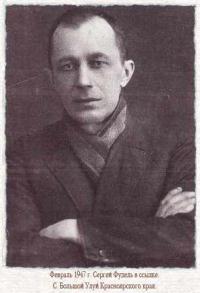
Myself, I have little to say right now, but to pass on to others the words of the saints I am privileged to know. I cannot stay away from Sergei Fudel, and once again I turn to him by reading his short book Light in the Darkness. Sergei is "one in a million," a man in whose eyes I see the light of Jesus. Just to be near him is a healing, because he never leaves Jesus' side. Here's what Sergei says about prayer…

Prayer is born of love.
Is it not the same as to say, "Prayer is born of tears?" I realized this quite recently when I heard a young girl answer a question addressed to her. "How can I learn to pray?" The question did not puzzle her, and she said unhesitatingly, "Go and learn to weep and you'll learn to pray." She completed the words of the Fathers.

Bishop Theophan the Recluse used to say that praying only with words written by another is like trying to talk in a foreign language using only textbook dialogues. Like many other Church Fathers, he said that we must look for our own words in order to pray. I suppose that this is truly possible for us only in moments of desperate need, real anguish, either for ourselves or for others. In such moments we do not "recite" prayers, we simply cry out to God, "Lord, please come to him and comfort him!" The audacity of prayer is born only in the audacity of love. Saint Macarius [Abba Makarios] said, "Love gives birth to prayer."

"Love gives birth to prayer," therein lies the mystery and the meaning of prayer. We can recite endless litanies, we can endlessly finger our prayer beads, but unless we have love, unless we have learned to grieve for others, we have not even begun to pray. We can thus go through all our life without having begun to pray.

Unless we are truly sympathetic to human suffering, we are merely carrying out a "prayer rule," not really praying.

"Pray constantly!" is a direct admonition of the Apostle.
There is a logic, a spiritual kind of logic, to constant prayer.
Constant prayer serves to establish in us an absolutely sincere humility. I cannot not pray constantly, because I constantly need divine help. Why should I be proud of constantly calling for help?
We do not feel pride because we breathe without interruption, we do not even notice it! We should not evaluate the process, we must just pray. Our prayer must acquire the unwitting simplicity of constant breathing.

Yearning to pray is what a simple heart needs more than anything else.

I sleep, but my heart is awake.
I hear my Beloved knocking.
"Open to me, my sister, my love,
my dove, my perfect one,
for my head is covered with dew,
my locks with the drops of night."

—The Song of Songs 5:2 Jerusalem Bible

New ikon of Chiune Sugihara 杉原千畝

Newly written ikon of Japanese ‘Righteous among the nations’
Chiune Sugihara 杉原千畝
The verse reads: Let the righteous rejoice in the LORD and take refuge in him.
I just received the link to this ikon from my Serbian brother Bojan. He says it will likely be displayed in the chapel of St. John Chrysostom in Belgrade's Student City. For the story of this ‘righteous among the nations’ uncanonised saint, see 杉原千畝 Chiune Sugihara. Thank you sincerely, Bojan, and to Svetlana, the ikonographer, a sincere thanks.

The Blind Man

The following was posted by Aunt Melanie at Old Pages - New Life, just one of many thoughtful and inspirational gleanings from her spiritual reading…

Let us imagine to ourselves the mental state of this blind from birth. He cried out, called. They pushed him, maybe even forced him to be silent, but he still cried out, begged. Speaking in our terms, he was praying. Finally, that Miracle-Worker Who was invisible to him approached. But He did not perform an immediate miracle. On the contrary. He did something which according to human understanding might appear humiliating, unpleasant. He spat and made clay from the saliva and earth, and smeared the eyes of the blind man. But this wasn’t enough; He sent him with this clay on his eyes to go wash in the pool of Siloam (which means “sent”). But the blind man didn’t object, he went feeling his way, stumbling, exposed to the mockery of the passersby. Finally he reached the pool and washed. And here, fulfilling all this, enduring all this, he finally recovered his sight and returned seeing.

This is a model of prayer for you and me. After all, we too are spiritually blind and cannot see the Lord. But we know that He exists. Let us call to Him, cry out to Him, begging for help. And let us not despond if this help is not immediately given to us. Maybe we still have to go a long way, not an easy way, like the way for the blind man to the pool of Siloam. On this path we might meet unpleasant things, humiliations, like the clay for the blind man. Let us endure everything. Let us be obedient. Let us do what He orders us to do; let us go the way He showed us, like the blind man’s way to the pool of Siloam. And here, when we have fulfilled all this, then the Lord will answer our prayer, and if it pleases Him, will fulfill it. And the same will happen to us that happened to the blind man. When, through the circumstances of our life, the Lord asks us, “Dost Thou believe on the Son of God?” (Jn. 9: 35), we will answer: We believe Lord! and we will worship Him.


Only let us avoid all images during the time of prayer. We must not imagine anything to ourselves; but like the blind man, let us just know that the Lord is near and that He can do anything. And if things seem to turn out opposite to our prayers, let us not despond. But let us hope, hope against hope. And He will do what is beneficial for us. Let us keep the state of mind of the blind man—this is the best form of prayer.
— Archbishop Andrei Rymarenko (1893-1978),
The One Thing Needful

No matter what it takes

This is the project of the rest of my life…

If Jesus meant it when He said, ‘Father, forgive them, for they know not what they do,’ and if He was serious when He said, ‘I am with you always, even unto the end of the Age,’ then why would He send us up a blind alley by saying, ‘I tell you the truth, anyone who has faith in me will do what I have been doing. He will do even greater things than these, because I am going to the Father. And I will do whatever you ask in my name, so that the Son may bring glory to the Father. You may ask me for anything in my name, and I will do it. If you love me, you will obey what I command’ ?

I am always on the lookout for anyone and anything
that can open the door to this kind of faith for me.
I believe it's possible.
I keep asking the Lord to lead me out of my unbelief,
no matter what it takes.

Monday, December 12, 2011

It is for God to be strong

The human condition, my condition… When I can forget myself, all is well, I live for the Other, grace has blinded me to my failures and to my accomplish- ments, to my sins and to my virtues, to my weakness and to my strength. When I look at myself, all is lost, as I find myself either skillfully descending into sin, or painfully arising from having committed it. I say to myself, ‘I am so small, so weak, one among so many, with nothing and no one to save me except God, but He is so great, so beyond me, perfect and righteous, maintaining all, why should He even notice me? I am nothing.’ Whether slipping into sin or climbing out of it, or even while committing it, thinking of and looking at myself, I say these things, a sick man, paralysed and blind, naked before myself, before all, and like many others I cry ‘Have mercy on me, a sinner!’

I detest myself, I loathe myself. My only hope, my only desire, is in God, but He is far off, or He looks that way when I am looking at myself, I loom so large in my own eyes, great and sinful, and He appears so small, though my mind shows me that only my distance from Him makes Him appear so, like a distant star. I see myself, and my thoughts of God magnify Him and tear my own flesh in self-deprecation. Even that, I see, is sinful. It seems to me that the problem, the gigantic disconnect with what I know is right and righteous, is that I exist at all. Therefore, I repeat again and again, ‘I do not exist, I am nothing,’ desiring annihilation to end my misery. Just knowing that there is a perfect God seems to be enough, if only I could disappear forever.

The solution to all this is salvation: To look up, to receive my sight, to forget myself, to remember God, to turn away from the wrath that I know I am, to turn to the voice I hear roaring from somewhere behind my back like many waters, to fall down before His feet as though dead, to listen to the First and the Last speaking to me, like waves, like breakers rolling over me, till I am no more, only He, only He is, only Him see, only Him know, only He the I am, and no more ‘I, me and mine.’The psalms for the 12th Day speak as they always have, the words of the King that only kings can pray, no one else. We have been recreated a nation of kings and priests to the Most-High, the Only God, and so we are beckoned to enter in. The words envelope us as water envelopes us as we enter, as with trepidation the diseased would enter the healing waters of Bethesda, seeking the angel’s touch, changing us utterly, and arising no longer we look the same, no longer we see the same, anymore unto the ages.

Psalms for the 12th Day
62 63 64 65 66 67

In God alone there is rest for my soul,
from Him comes my safety,
with Him alone for my Rock, my Safety,
my Fortress, I cannot fall.
Psalm 62:1-2

God has spoken once,
twice I have heard this:
It is for God to be strong,
for You, Lord, to be loving;
and You Yourself repay
man as His works deserve.
Psalm 62:11-12

God, You are my God, I am seeking You,
my soul is thirsting for You,
my flesh is longing for You,
a land parched, weary and waterless;
I long to gaze on You in the Sanctuary,
and to see Your power and glory.
Your love is better than life itself,
my lips will recite your praise;
all my life I will bless You,
in Your Name lift up my hands;
my soul will feast most richly,
on my lips a song of joy and, in my mouth, praise.
On my bed I think of You,
I meditate on You all night long,
for You have always helped me.
I sing for joy in the shadow of Your wings;
my soul clings close to You,
Your right hand supports me.
Psalm 63:1-8

All flesh must come to You
with all its sins;
though our faults overpower us,
You blot them out.
Happy the man You choose,
whom You invite to live in Your courts.
Fill us with the good things of Your House,
of Your holy Temple.
Your righteousness repays us with marvels,
God our Saviour,
Hope of all the ends of the earth
and the distant islands.
Psalm 65:3-5

Come and listen, all you who fear God,
while I tell you what He has done for me:
when I uttered my cry to Him
and high praise was on my tongue,
had I been guilty in my heart,
the Lord would never have heard me.
But God not only heard me,
He listened to my prayer.
Psalm 66:16-19

The soil has given its harvest,
God, our God, has blessed us.
May God bless us, and let Him be feared
to the very ends of the earth.
Psalm 67:6-7

The recovery of the Gospel

If Orthodox Christians should understand anything, it is this: Salvation is a concrete, existential encounter with the living God.

Moreover, this Lord gives gifts, including wisdom, knowledge, insight, and courage—all the elements needed to confront the maelstrom of confusion in which our culture finds itself, and all meant to be applied
in the work of daily life, whether as mother, researcher, mechanic, priest—whatever our vocation
may be.


Salvation is
not understanding the correct theological concepts;
it is not nostalgia for civilizations past;
it is not formal membership in a long-standing parish;
it is not social activism;
it is not morally appropriate behavior;
it is not mastery of the moral vocabulary.

Further, it is not enough to recall the certainty of the past.
Nostalgic impulses, as comforting as they may be (including the Orthodox variants, such as the longings for Hellenistic Greece or Holy Russia), simply won’t meet the challenge.

Orthodox leadership today requires great courage.
Courage, said Winston Churchill, is the one quality that lets all other virtues flourish.


When Solzhenitsyn delivered his address three decades ago, he spoke not as a philosopher, but as a voice crying in the wilderness. He cried out against the dehumanization of men he experienced in the East and saw advancing in the West. Only people with moral clarity and courage could successfully challenge it, he exhorted. What the world needs is not more philosophers, but moralists.


The exhortation drew from a supreme confidence in the power of truth. Solzhenitsyn believed that truth is self-verifying. When the truth is spoken, its veracity is self-evident to the hearer. This is a profoundly Christian notion rooted in the teaching of the apostle Paul: When the Gospel is preached, Christ (who is Truth) is revealed.


Any Orthodox response to the cultural challenge must first presume a recovery of the Gospel of Jesus Christ.

The wisdom of the Fathers, the artistry of the poets, the healings of the miracle workers, the courage of the martyrs, the knowledge of the scholars, the patience of the teachers, the foresight of the bishops, the faithfulness of the priests—all the elements that shaped and forged the moral tradition that founded Western civilization and must renew it today—
start with the recovery of the Gospel.

As Jesus said, ‘I am the vine, you are the branches. He who abides in Me, and I in him, bears much fruit; for without Me you can do nothing’ (John 15:5).

Against the spirit of every age


Christian compromise in thought and word
and negligence in deed
have opened the way to the triumph
of the forces of the absurd,
of Satan, of Antichrist.
The present age of absurdity
is the just reward
of Christians
who have failed to be Christians.

As to the fatalism
of those who believe that man must be a slave to the ‘spirit of the age,’ it is disproved by the experience of every Christian worthy of the name, for the Christian life is nothing if it is not a struggle against the spirit of every age for the sake of eternity.

— Fr Seraphim Rose (1934-82)

Made ready and fitted

If the whole of your life has passed smoothly and without care,
weep for yourself.

For both the Gospel and human experience
assert with one voice that no one has,
without great sufferings and trials,
left behind him any great work on earth
or been glorified in heaven.

If your earthly road has been bathed in sweat and tears
for the attaining of righteousness and truth,
rejoice and be glad,
for your reward will indeed be great in heaven.


Never entertain the foolish thought
that God has forsaken you.

God knows exactly how much you can bear,
and measures your sufferings and trials accordingly.

‘When men know,’ says St. Nil Sorsky,
‘how much weight a horse can carry, or a donkey or a camel,
and load them according to their strength;
when a potter knows how long to leave the clay in the kiln
for it to be neither shattered nor under-cooked,
how could God not know
how much temptation a soul can bear
to make it ready and fitted
for the Kingdom of Heaven?’


— Prologue from Ochrid, July 4

If we abandon our own desires and opinions, 
and endeavor to fulfill God's wishes and understanding,
we will save ourselves,
no matter what our position,
no matter what our circumstance.
But, if we cling to our own desires and opinions,
neither position nor circumstance will be of help.

Even in Paradise, Eve transgressed God's commandment,
and life with the Savior Himself
brought the unfortunate Judas no good.
As we read in the Holy Gospels,
we require patience and an inclination to pious living.

— Fr Ambrose of Optina monastery, Russia