Thursday, April 4, 2013

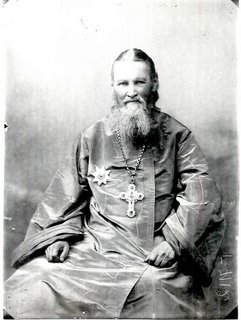
Mother Gavrilía

God had sent her to India. At the time, she herself did not know why. What is important, though, is that all who came to know her, whether Indians or Westerners, saw and recognized in her a completely different way of life. They saw and discovered the ascetic character, the humility and deep spirituality that Orthodoxy has preserved through the centuries. Those of the East saw another West. Those of the West saw their own East, the existence of which they did not even suspect. Had any other «missionaries» identified themselves, to such an extent, with those they served?
Who had ever eaten, drunk, slept or travelled the way these people ate, drank, slept or travelled? Who else had done that? In those days, too, almost all the «missionarizing» lived, wherever they went, under exceptional conditions—good hotels, special food and water, comfortable travelling arrangements—so as to care better for «their» Locals. Who were these people they were calling «theirs»? By never assuming this (sometimes imperceptible and latent in Missionary work) attitude of superiority towards those one is ministering [to], she always tended and helped without hurting… Yes… This is why her passage left a deep mark. «Indeed, I have become everything in turn to men of every sort». Actually, she never preached Orthodoxy, but rather, catechized with the heart, without words, with the unique example of her own life.

—The Ascetic of Love, p. 47,
a biography, with her sayings and personal testimonies,
of Gavrilía Papayánni (1897-1992)

Some of the sayings, numbered as in the book…
4. Orthodox spirituality is knowledge acquired through suffering, rather than through learning.
7. There is nothing cheaper than money.
29. True inner progress begins only when a person stops reading anything but the Gospel.
45. The faculty of judgment (Greek, krísis) comes naturally to man. Criticism (Greek, katákrisis) and reproval spring from malice. Discernment (Greek, dhiákrisis) is a gift from God, and we should pray for it; it is essential to our protection and progress.
48. When we must be helped, God will send someone to us. We are all fellow-travellers.
58. We are the first to feel the joy we give to others.
63. Miracle is the normal course of events according to God's will. What we call a Miracle is only what is natural to God.
81. Do what you must do, and God will do what He must do.
85. We must not «surrender» to His will. This is what soldiers do. We, who are His children, must offer Him our own will along with all our being—and tell Him: «Lord, take all my faults and imperfections and set them right».
99. Some of the sailors on a ship may quarrel and fight each other, but the ship sails on and reaches its destination. The same is true of the Church, because Christ Himself is at the helm.
101. Love alone is enought to make a miracle happen. Neither prayer nor the komboskini (prayer rope) have such power.
115. If we are interrupted while speaking, we must not continue. It means that what we were about to say should not be heard. The Angels do this.
124. To love someone with all one's soul is to pray for him. Whoever has this experience is in Paradise.
157. Never take part in a conversation when someone is being criticised or commented upon.
173. If you want to do something, do not announce it openly. In this way it will materialize in words rather than in reality. So, keep it secret from everybody until the last moment.
175. Speaking spontaneously about God comes truly from God, whereas in «preaching» the Ego comes first. In the first case, the seed takes root, in the second it does not.
201. Two things are of great importance: «Love one another» and «Do not be afraid; only have faith».
244. Only men of God who make no compromises can recognize each other.
258. Every person is «sent».
386. We should be interested neither in the other person's response nor in the results of our efforts. We must simply try—God will do the rest.

Wednesday, April 3, 2013

The Asker and the answerers

Δομήνικος Θεοτοκόπουλος, ‘El Greco’ - The Resurrection
Who is this obscuring My designs with his empty-headed words? Brace yourself like a fighter. Now it is My turn to ask questions and yours to inform Me.
Job 38:2 Jerusalem Bible

Who is the Asker, who the answerers?

We always assume that we ask the questions, and God answers them, but in actuality it is He who asks, we who must answer. Yes, must. That’s the one thing in which we do not have free choice,
whether to answer or not.
It is the very price of our being.
Put off answering for a time we may, but not indefinitely.

And what does He ask? Will He ask us a question for which He has not prepared us, of which we had neither inkling nor warning?
No, the question He will ask is one He has already asked.
It has been written down.
We can read it for ourselves before we will hear it from His lips.

What our answer will be is the sole determiner of who we were,
who we are, and who we will forever be. Yes, will, not shall.
We have freedom to answer what we choose,
but not to withhold our answer.
It is His very question that brings us into being,
and it is our very answer that makes our being eternal.

Jesus turned around, saw them following and said, ‘What do you want?’ They answered, ‘Rabbi,’—which means Teacher—‘where do you live?’ ‘Come and see,’ He replied…
John 1:37-39a

When Jesus saw him lying there and knew that he had been in this condition for a long time, He said, ‘Do you want to be well again?’ ‘Sir,’ replied the sick man, ‘I have no one to put me into the pool when the water is disturbed…’
John 5:6-7a

Looking up, Jesus saw the crowds approaching and said to Philip, ‘Where can we buy some bread for these people to eat?’ He only said this to test Philip; He Himself knew exactly what He was going to do. Philip answered, ‘Two hundred denarii would only buy enough to give them a small piece each…’
John 6:5-7

Jesus heard they had driven him away, and when He found him He said to him, ‘Do you believe in the Son of Man?’ ‘Sir,’ the man replied, ‘tell me who He is so that I may believe in Him.’ Jesus said, ‘You are looking at Him…’
John 9:35-37a

Jesus said, ‘I am the resurrection. If anyone believes in Me, even though he dies he will live, and whoever lives and believes in Me will never die. Do you believe this?’ ‘Yes, Lord,’ she said, ‘I believe that You are the Christ, the Son of God, the One who was to come…’
John 11:25-27

His disciples said, ‘Now You are speaking plainly and not using metaphors! Now we see that You know everything, and do not have to wait for questions to be put into words; because of this we believe that You came from God.’ Jesus answered them, ‘Do you believe at last?…’
John 16:29-31

That we may receive the King

St George Antiochian Christian Orthodox Church - Choir
We, who mystically represent the Cherubim,
And chant the thrice-holy hymn to the Life-giving Trinity,
Let us set aside all earthly cares
That we may receive the King of all,
Who comes invisibly escorted by the angelic hosts.

As I was thinking about the protest of certain Christians against the display of an image of Cesar Chavez on (Western) Easter Sunday in the Google logo, I suddenly noticed that playing in my mental background was the cherubic hymn as I heard it sung last Sunday by the choir of my parish, St George Antiochian Christian Orthodox church, in Portland, Oregon. The text that is sung is given above.

Standing in the congregation along with others, I also sing this much beloved hymn. For years I sang it in the original Greek in the various melodies I learned in the Greek church. I still sing it when I am home alone, or walking through a peaceful forest nearby. It really surprised me to hear our wonderful choir singing it in my mind—that has never happened before—but in a different way I am not surprised.

I have written on this subject many times before: Christians standing up for their faith and traditions against the encroachment and denial by the worldly authorities. Remember the removal of the Ten Commandments from various public buildings? Or the banning of Nativity scenes from display in front of the same? Well, this is really no different. It’s just that it’s in the electronic world.

I read somewhere that Google last used an Easter themed logo around the year 2000. I’m not sure why they did it even then, but to be sure, it was really quite innocuous, an unspiritual, merely cultural expression of ‘Easter’—Easter eggs and bunnies, perhaps—absolutely no mention of Christ. Well, how could they? To even mention Jesus Christ, except as a swear word, is considered proselytizing.

My mind wanders back to the cherubic hymn, ‘We, who mystically represent the Cherubim…’ Except in the Orthodox Church, hardly any Christians even know that human beings represent the cherubim during divine worship, hardly know even what a cherub is (certainly not a chubby baby with wings!), and saddest of all, hardly know what true worship is, that is, as Christ says, ‘worship in spirit and truth.’

‘Let us lay aside all earthly cares that we may receive the King of all.’ This line of the hymn comes to mind often, when I encounter people, especially Christians, striving and struggling and standing up for their rights. It’s not mine to judge which earthly struggles are worth pursuing and which are not, but it seems to me that those that are worthy of us are few. It seems better to ‘lay aside all earthly cares…’

This is not escapism, but the exercise of Christian discernment. Under the inspiration of ‘the still, small voice’ we are guided to choose our battles rather than let our passions or baiting by the enemy draw us into hopeless confrontations. Why hopeless? Because even if we were to win, what good would it do? What if Google were to use a logo incorporating the Orthodox ikon of the Resurrection on Pascha?

Well, yes, some people might become curious and there would be more hits on Wikipedia topics having to do with Eastern Orthodoxy, ikons, and the like—maybe. But there would also be an outcry about favoring one religion over another. Does Google show a festal logo for the holy days of other faiths? It wouldn’t hurt if they did, but where might they draw a line? Major faiths only? Which are major?

Once again, in protesting what we have no right to protest, we prove to the world that we are every bit as self-interested and biased as is the world. Is it really an instance of disrespect to the Christian community for an internet company not to have an Easter logo? Do Christian churches display images of Marx, Lenin, or Darwin on their respective anniversaries? Of course not! Why should they?

The Lord warns us not to throw our pearls in front of pigs. This is not calling non-Christians ‘pigs’ but merely stating an obvious fact. Pigs (or any other animals) are not likely to have the slightest interest in jewelry that is set before them. What they want is food to fill their stomachs. This is a characteristic of those who are worldly. Scripture says that they make their bellies their god. But this is not true of us.

Cram their bellies from Your stores,
give them all the sons that they could wish for,
let them have a surplus to leave their children!
For me the reward of virtue is to see Your face,
and, on waking, to gaze my fill on Your likeness.
Psalm 17:14b-15 Jerusalem Bible

Yes, ‘let us set aside all earthly cares
That we may receive the King of all…’

Tuesday, April 2, 2013

Truly merciful and loving

If we as followers of Christ are willing to lay down our lives for each other, what is it to us to lay down mere material things in order to share in the sufferings of our brothers?

It's easy to share in someone's joy, to party with him, to enjoy his company and stay with him when he seems to have everything, every blessing.

And what of the opposite?
Is it easy to share in someone's pain, sadness or loss?
Well, yes, it is, it has to be.

Help me, Lord!
I want to live my life as John of Kronstadt lived his. I want that kind of life in me, the life that Father John and others have received from their Father, their only Father. 


Listen to what John of Kronstadt says…

He truly gives charity who gives from his heart, and with a loving heart. He is truly merciful who converses with everyone heartily, and not only with the intellect and lips, but who renders sincere, hearty respect to everyone; in a word, he who embraces all and carries all in his heart by love, despising everything material that may become a hindrance to love between himself and his neighbor; such a one is truly merciful and loving.


“Remember who your teachers were…”

2 Timothy 3:14

Although one falls

Although one falls, he does not forget the love of his Father; and although he is loaded with trespasses of every kind, his zeal for the service of good is not held back, nor does he desist from his course, nor abhor to stand in struggle against these things anew and with the same chance of being vanquished, nor cease from demolishing every day his building and beginning a (new) foundation.

And the word of the Prophet is in his mouth: ‘Till the hour of my departure from this world, rejoice not against me, O mine enemy; when I fall, I shall rise; when I sit in the darkness, the Lord shall be a light unto me.’ And he will not cease to struggle until his death.


“Remember who your teachers were…”

2 Timothy 3:14

Unwalled city

It seems to me, from my limited experience of sixty-two years, that if you really trust Jesus completely, you are unafraid to trust yourself to people, situations, and the world in general, as they come your way.

By this I don't mean that you entrust yourself into everyone's keeping. But you are somehow able to discern, even without giving it much thought, and without anxiety, what is appropriate in every encounter.

You seamlessly entrust yourself to others in exactly and only those areas where trust even has meaning at all. You can be fearless because there is no longer anything to gain or lose. Why? Because of Christ.

He has you, and you have Him. Beyond both need and want, unopposed and defenseless, you are an unwalled city defended, like Rome, by that invincible weapon, the peace of Christ.

Monday, April 1, 2013

What price, salvation?

There is a strange disconnect between what people say they want and what they really want, and yet they claim to be honest in their convictions. They declare their intentions and then go about laying down plans that cannot possibly bring them to their destination. What is wrong with us? Why do we try so hard to live up to our built-in law of failure?

We all know what the Church is, at least we ought to know, if we read our bibles, if we pray, and if we try to follow Christ in everyday life.

When we are honest with ourselves, how much of what we experience in the church ‘we go to’ is like what we know the Church is?

True, that may be an unfair question, but only in minor respects. We are used to massive failure in human society at large, and in human relationships up close. We have learned to adapt, ‘to roll with the punches,’ to be forgiving and indulgent, to accept the fact that ‘nobody’s perfect.’

We’ve taught ourselves not to expect the best, even when our faith in Christ keeps telling us to expect, not just the best, but ‘the resurrection of the dead,’ as we used to say in the Symbol of Nicaea before they ‘retranslated’ it to conform with modern churchly ‘norms’—it is now, ‘I look for,’ instead of, ‘I expect.’

Hey! I don’t look for the resurrection of the dead, I expect it! And it’s not my human pride, my ego or my flesh telling me to expect this: it’s the Spirit of the living God, living in me, who teaches me to expect it, and not merely look for it.

What do we find in church, then? They say that the Church is a hospital, that it is a place where the sick go to be healed. A nice metaphor, coming from the Orthodox East where sin is considered not so much a crime to be punished as it is a sickness to be cured. This is not an unhealthy attitude. It gives hope and relieves us somewhat of our natural instinct to blame and guilt-trip ourselves.

So we’re sick, that’s all it is!
Well, that means we can slow down, take it easy, follow instructions, take our medicines, and presently we will be well again. Not only that, we have this beautiful hospital, with beautiful procedures, we are simply surrounded by beauty, and we’ve been told, ‘Beauty will save the world,’ so we can be comfortable and content, as we wait to be made whole. This is the view from the patient’s bed.

We are told to be patient and follow instructions, and everything will right itself, almost magically, and we will be well again. But how long have we been lying there? Do we even know what being healthy feels like? And most importantly, do we really want to be made well?

A church says that they follow Christ, that He alone is Holy, that He alone is Lord. They say that they have seen the Light, that they have found the true faith, and that the Trinity has saved them. That’s great! But what of the others, those who can’t say these things? Those who don’t even know these things are possible? Who is supposed to tell them? Who to show them? We already know the answer to that—‘Here I am, send me!’ (Isaiah 6:8)

We go to church, and we hear the priest or deacon say—if they are good preachers—that we are the Church, not just the priests, and that ‘the great commission’ to ‘make disciples of all nations’ is our responsibility, not just theirs.

Fine rhetoric, this exhortation, very evangelical, but nothing more than fine rhetoric if it is not backed up by actions.

What happens if some of us take this responsibility to heart, and go forth two by two into the world to fulfill it? Are we supported by these same preachers? What preparations are they willing to take on behalf of our ‘mission’ and our ‘ministry’? Do they even know what preparations to take? Can it be, that all we have to offer the outside world looking in on us, is a once or twice yearly lecture series on such things as the history of the Church or its teachings ‘in our tradition, we…’, an invitation to come and ‘help us to get ready for the next festival,’ and of course, ‘just come and worship with us’?

I used to think the last one—just come and worship with us—was the best, and that it was enough, but honestly, it isn’t. We are not medieval Eastern Europe, where illiterate, barbaric people can come and be ‘awed by the beauty’ of our liturgical services. For them, perhaps, this wall of beauty was a real window into the Eternal, because they had little other possibility of access. For us today, it really can become just a wall.

Why? Because we have advantages, yet we don't make use of them. We can read. Bibles can be picked up in any language or dialect. Among us are experienced and knowledgeable ‘lay’ people, as well as clergy. If we rely on just the services to somehow magically inform and transform people, we are not giving them their true value, and we are lying to ourselves.

Christ came to make an end of magic, as holy father Ignatios of Antioch wrote to the church at Ephesos, “…every kind of magic was destroyed, and every bond of wickedness disappeared; ignorance was removed, and the old kingdom abolished, God Himself being manifested in human form for the renewal of eternal life. And now that took a beginning which had been prepared by God. Henceforth all things were in a state of tumult, because He meditated the abolition of death” (Ignatios to the Ephesians, ch 19).

If this was true and well-understood in the time of the early fathers, before the onslaught of the ‘dark ages’ submerged the Hellenic and Christian spirit, and continuing from the gospels and the apostles, how much more true today, when we have finally overcome those ‘dark ages’?

Where does this leave the churches?
Back to the statement made at the outset, there is a strange disconnect between what people say they want and what they really want, and yet they claim to be honest in their convictions.

What does the Church exist for?
Whom does it exist for?

They say it is a hospital for the sick, and that Christ is the Physician. Well and good.
Have they removed all obstacles to that purpose?
Have they laid out plans that facilitate it?
Have they got the priorities right?
Are the sick able to meet the Physician?
Are the instructions and medicines they are being administered working?
Are people being made well?

Or are secondary needs taking priority?
Are people being allowed to develop addictions to the medicines, dependence on the clinical staff, and diverted from getting to know their Physician personally?
Are the patients being administered cosmetic solutions to their real ailments, making them ‘look good’ to themselves and each other, while their critical illnesses remain untreated, because there’s no time for that, and no need?
Is a kind of spiritual homeopathy being applied, smaller and smaller doses of the same poison that created the symptoms, until these very ‘medicines’ have become nothing more than placebos, and health and recovery are redefined as ‘what the doctor tells you’ is healthy—not the Physician, but those who say they represent Him?


We are told that salvation comes through Christ. It doesn’t matter what church or denomination is speaking, the Message is the same, because we all use the same Book. “Here is a trustworthy saying that deserves full acceptance: Christ Jesus came into the world to save sinners—of whom I am the worst” (1 Timothy 1:15), and “God so loved the world that He gave His only-begotten Son, that whoever believes in Him shall not perish but have eternal life” (John 3:16).

Isn’t this what the whole mission of the Church is about, salvation through Jesus Christ? And isn’t this mission accomplished by following the simple command, “Therefore go and make disciples of all nations, baptizing them in the name of the Father and of the Son and of the Holy Spirit”? (Matthew 28:19).

Go, make disciples, baptize.
Can it be acceptable that churches do anything above and beyond these three things? Can it even be possible? Can we really think that we can add to the mission that Christ has already given us? Can we set priorities of our own that supersede what the Word Himself commands?
Go, make disciples, baptize.


A church says that we want the salvation of all, that we are offering the fallen world around us the gift of eternal life, vouchsafed to everyone who comes to Jesus and believes in Him.

Well, why aren’t they coming? Is that really how the Message entrusted to us works? Does the church go, do we make disciples, do we baptize, in that order? What have we put ahead of what we say we want? How can we have failed to realise that if we really want something, we remove all obstacles, and pursue it relentlessly?

We understand priorities in lesser things. How have we failed to apply the same principle to what we say is most important to us?
If we have to, what are we willing to give up to accomplish our mission? Have we really considered the question?
For there is really only one:

What price, salvation?

On these the universe is established

In the news coming daily from the European continent, churches, that is, Christian houses of worship, even Roman Catholic ones, are being offered for sale because they have no congregations, and they are being bought up by Muslims. Some of these properties are even very historic. It seems only a matter of time before even the great Gothic cathedrals—Cologne, Beauvais, Ypres, maybe even the Sainte-Chapelle—will be converted into mosques, just as the great church of Hagia Sophia in Constantinople was, only without the violence and carnage of military conquest.

Christians are justly concerned, but there is nothing they can do about it. Their numbers are dwindling, not all over the world to be sure, but in parts of Europe. Natural increase is insufficient to replace those who are dying off or just falling away. Religious indifference, combined with new personality-centered movements claiming to be Christian, have taken their toll. Yes, Europe as a ‘Christian continent’ has probably already been replaced by Latin America and Africa, but institutions change very, very slowly, wishing they were still alive, claiming to be, when in fact they are dead.

Nikolaj Velimirović, Bishop of Ohrid and Žiča, wrote of the ‘three ages in the history of the Church’…

There are three ages in the history of the Church: the Golden Age, when the Church was opposed to political governments; the Iron Age, when she was politically directing Europe’s kingdoms; and the Stone Age, when she has been subdued to the service of political governments. What a humiliation for the present generation to live in the Stone Age of Christianity!

It seems that we cannot have sunk lower than the Stone Age, but I think we have. The political governments have now in most places thrown away the Church, seeing that she is no longer of any value to them at all. In fact, in many places the Church is seen as an impediment to the progress of mankind and civil liberties. Ironically, however, having sunk below the Stone Age we do find ourselves—those of us who are still part of the confessing Church—back in a position very similar to the Golden Age. Whoever thinks that the Church is dead, or that we are post-Christian, is, I think, mistaken.

But that doesn't help those who are anxious for the fate of Christianity. In reality, they are grieving for the loss of what is essentially Christian real estate, not the loss of faith. Yes, the faith of Jesus Christ, used to power building projects throughout the ages instead of being allowed to transform and liberate humanity from bondage to sin and death, has produced a lot of beautiful, even awesome, things. But wherever the faith is alive, its works usually pass nearly unnoticed by the world, and even by the Church, whose leaders often pay lip service to virtue while trampling it in practice.

Human nature is fickle and weak. It is, we are, also very, very lazy. Having as a race abandoned our partnership with God in tending this garden universe, all our work is tedium, which we try to escape in various diversions, even—no, especially—in religious activities. And why? Seeking to serve the Lord, to harmonise our wills with His, to follow His true commandments (not those we make up), does not produce religion in us. It produces relationship. (There was no religion in Eden.) This is not easy. Religion gives us an easy way.

We offer God vegetables, like Cain did, and slay our brothers as he slew Abel. And why? Because we want to do things our way. God, if He does exist, should accept whatever we want to offer. This spirit is to be found in every religion, including Christianity. In the long run of Christian civilisations, the spirits of both Cain and Abel are present, just as the Lord tells us when He speaks, in another metaphor, of the field sown with wheat that has been also secretly sown with tares by the enemy. Religions come and go, wax and wane in the spiritual realm, just like wars and revolutions do in the earthly.

Christ says, ‘Do not be alarmed, the end is not yet’ (Mark 13:7).

Soon, it is said, Europe will become an Islamic continent. It is the Muslim belief that Muhammad's religion supersedes Christianity much as many Christians believe that their faith has superseded Judaism. Yet there are the faithful among the house of Israel worshipping, praying, studying the Torah, carrying out the commandments, as they always have, and with whom Christ has no quarrel. In the same way, there are the faithful Christians, worshipping in spirit and truth, rightly dividing the Word of God and applying it to their lives, loving mankind without condemnation, praying for those who hate them.

It is when the world no longer sees such as these, servants of the Most-High, sons of our Father who is in heaven, that those who remain unenlightened by the Gospel will have cause for anxiety, for it is on these the universe is established (as we publicly proclaim on the Sunday of Orthodoxy), and we should hope to be among them. They have no time to quibble and mourn over church properties, even the holiest shrines, because they know where their Treasure is. They know that their Kingdom, as Christ's, is not of this world. They know who it is they have trusted, and why.

Some religions are very long-lived, even when they are false, even when they don't really work, because people do not know, by nature, how great are those things which God has prepared for those who love Him, and they settle for less. Again, this is human weakness, frailty, desire for comfort rather than truth, wanting the feelings of solidarity even when unity is only an appearance, not the truth. Followers of Jesus Christ, wherever they find themselves, in whatever circumstances, are anxious for nothing, not that the Church will ever be lost, nor that anything that the Lord has willed shall fail to come to pass.

Yes, for Christ says, ‘These things I have spoken to you, that in me you might have peace. In the world you shall have tribulation: but be of good cheer; I have overcome the world’ (John 16:33).

Too much death

A few days ago my son wrote that he was upset by the number of deaths that have occurred within our circle of family, friends and acquaintances. Between us both, since December, I am sure that as many as eight people we know have died, one way or another. Within our own family, the two surviving grandparents finally passed away, my father in late January, my mother-in-law in early March. Two young people we knew of committed suicide, both young women, one of them being the mother of a six year old boy. It's one thing when the elderly pass away—two others were also aged grandmothers of friends—but when the young, or even the middle aged (like me!) pass away, it seems somehow tragic. In the case of the young because their potential was never realised, in the case of the middle aged, because they worked their whole lives and were cheated out of enjoying their ‘golden years.’

Of course, we can piously say, ‘God is in control, and He knows what He is doing.’ Of course He does, yet even God doesn't desire the death of anyone, as scripture says, ‘Death was not God's doing, He takes no pleasure in the extinction of the living’ (Wisdom 1:13). Myself, I have somehow escaped the feeling of grief when it comes to the death of my loved ones. I sometimes wonder, was it because I never loved them at all? That can't be it. It's quite possible that years of trusting in the promise of Christ that ‘If anyone believes in me, even though he dies he will live, and whoever lives and believes in me will never die’ (John 11:25-26) has worn down any possibility of me feeling grief. Probably not. I think my prayers to God to protect and prolong the lives of my loved ones have been answered. To me, our God has been a truly gracious God, and though His blessings have sometimes contradicted my desires, He has never ‘left me lying in the dust of death’ (Psalm 22:15c).

I wrote my son that death doesn't have to be awful, that it can be beautiful, and that those who are truly alive have nothing to fear in death. That may sound alright on paper, and such an explanation may work for the dispassionate person, but I think, for most people it simply doesn't hold water. In fact, even for Jesus Himself, such an explanation doesn't work. How do we know? Because in the shortest verse in the bible, considering the death of his beloved friend Lazarus, scripture says of Jesus, ‘He wept’ (John 11:35). Yet this same God-man—though at the time He asked this question, no one knew for sure or exactly what or who He was—said to the sister of Lazarus, ‘whoever lives and believes in me will never die. Do you believe this?’ At the same time that He truly grieved and really wept for the death of His friend, He still knew that He could, and would, raise him.

Martha said, ‘I know he will rise at the last day.’ Well, to her that was no consolation, and by her words and tone she let Jesus know that that was not enough. She wanted her brother back alive, now, though she didn't say it aloud. Christ, knowing everything about her just as He knows everything about all of us, testified, ‘I am the resurrection,’ even though He knew that unless He demonstrated it, what He said was just words. People then and now had some kind of belief in the afterlife, though no one ever has a clear picture of it. Some say it's just an extension of life on earth, where we appear the same and know each other, and live forever, carrying on as we did on earth, only without end. Just as the resurrection on the last day was not enough for Martha, so this kind of imagination about the afterlife is not enough for me.

God is real. Jesus Christ the God-man is real. Paradise is real. Therefore, all that we can think about or imagine of the life hereafter is at best a kind of pill we swallow to keep our anxieties quiet. The fact is, we can't know, we can only believe, and so sometimes we let our beliefs carry us away into fantasy. Whatever else death is, it is without doubt the end of our lives on earth, all that we are and were is no more. We will be seen here no more. There is only one of each of us, and nothing about us or anything else in the universe really repeats itself or can continue forever as it was. I once wrote, ‘The perfection of anything solely human consists in the fact that it must end,’ and I meant what I wrote. We exist only to run our courses to the finish line. When we break through that line, our utter exhaustion from the final effort to finish sends us careening into ‘the great cloud of witnesses’ who catch us as we fall, completely out of breath and, if we were still alive, close to suffering a heart attack.

But we are dead—thank God!—and so a heart attack is simply out of the question. We made it to the finish, but we're no longer what we were, not at all. As we lie there dazed for a moment in the arms of the heavenly host, for a moment we remember what we were on earth as one almost remembers the figments of a waking dream, and then, as we come back to ourselves, we are as different from our earthly identity as uncreated is from created. Where once we were contained in our bodies, now our bodies are contained in us. It would not be an exaggeration to say we are no longer human, but only as we say that an oak tree is no longer an acorn. Lord have mercy! Here I go imagining the afterlife and what we will be just like the next guy! And after all I just said! What I really wanted to write was something I just feel, something I just ‘know in my knower,’ but there aren't any words for it. Holy apostle Paul writes something that gives me the same feeling, ‘We shall not all die, but we shall all be changed’ (1 Corinthians 15:51).

It's that word ‘changed’ that comes closest, without defining, to what it is that we are, after we have expired in the body of flesh. But, back to grief. We are right to be sad, to mourn, the death even of an aged parent or grandparent, just as we grieve for the death of a child or still-born. Why? Well, again, because He who created all, who knew us all before we appeared on earth, and who by knowing us after we have disappeared holds us forever suspended in a new and unknowable life, He too grieved, He wept, He was sorry that His beloved friend had to physically die. And did He weep knowing Lazarus was just dead, or even more so, because He must raise him temporarily again so that he must endure that same disembodiment and transformation again? Only God knows all, including the answer to this. ‘Memory eternal,’ that hymn with the haunting melody, tingeing the air of purply pre-dawn with expectation and transformation: ‘Awake, my soul, to the real life!’

God became man, that man might become God. We can say the words and even imagine, but there is nothing we can say truly, until happens to us what holy apostle Paul wrote, ‘No eye has seen, no ear has heard, and no mind has imagined what God has prepared for those who love him’ (1 Corinthians 2:9).

Sorry

When you can’t apologise, when you can’t ‘say sorry’—as we taught our boys when they were little—what a mess things become!

Were you the one in the wrong? You don’t think so. You think it was ‘the other guy’? And he’s not willing to apologise, and so you shouldn’t have to? He’s weird anyway, as he usually is. Not quite right in the head. That’s why it doesn’t bother you to talk about him behind his back. After all, who is he to you, really? Just a nobody and a nothing. You were just putting up with him, helping him out in bad times. Now it’s all over. Goodbye and good riddance!

I wonder how much of this kind of thing goes on inside us ‘behind our backs.’ I know that’s a funny way to put it, but I wonder just how much we let ourselves ‘off the hook’ when it comes to personal relationships. Perhaps this is where ‘the rubber meets the road’ in the life of a Christian. We think it's better to ‘just say nothing’ and maybe the problem—or the person—will just go away. Of all that can go wrong in our lives, this is about the worst.

When we know we're right, all that matters to us is who is wrong. We hold ourselves aloof from our neighbor as though from filth. And why? Because he deserves it! This happens between friends and neighbors, but worse yet, it happens between members of the same family. My only brother, for example, has cut off all contact with me for over thirty years, and without even letting me ask him why. This is not a complaint, but a lament. Yet, life goes on.

The way I was brought up, one didn't worry so much as to who was right or wrong in a situation. We were taught to apologise quickly, to restore peace between ourselves and another. We were expected to put the relationship above the reputation. But teaching and even personal example can't be passed on, despite all our best efforts. People seem to almost want to be offended so they can justify themselves in pursuing revenge, even if it is only to ostracise.

Lord, I do not understand it. I do not understand. How can anyone have such hatred for their neighbor? their brother? their parent? Who is the enemy here? Who has offended? Who has done harm? We say we walk in the footsteps of Jesus, but in truth we don His robe and want to snatch up the crown He did not want but traded for thorns, so that we can sit not at His right and left—no, it gets worse even than that!—so we can sit in the judgment seat.

We want what we want, and if we cannot have it, someone must be to blame, anyone, just as long as it is not ourselves. We put ourselves first at all costs, banishing fear of God and replacing it with our righteous rags, little realising that salvation or damnation lies with our fellow man. As the bible and the fathers teach, he who loves his fellow man, truly loves him, will be saved, but he who hates his neighbor has never seen life, and never will. He has killed himself.

Sorry is not just a word, but a condition, a state of soul. To be sorry is to seek peace with all men whom we may have offended without knowing it or intentionally. To apologise in words and actions is impossible unless we are sorry within. Of all the places where we can lose, we lose the most here, when we pretend to be sorry, but within reserve the right to murder our brother with everything that is in us. Who needs a knife? Even so soft a weapon as the tongue will do the trick.

Lord have mercy on us! Without our brother we are lost, and true are the words handed over to us by Holy Church, ‘You can be damned alone, but you cannot be saved alone.’ Teach us to count how few days we have left, Father, to love and serve You in humility, loving and serving the people around us, being sorry for ourselves and them, for our having offended You. Give us time to repent, so that in falling behind we can be found running ahead.

Running after You, running after Jesus.

Tuesday, March 26, 2013

Most of all, trust

So it's easy, you say, to not believe in God, to tell people you don't believe, and to say you don't care what others think. Do you really think it's as easy as that? Without knowing for sure whether something or someone does or doesn't exist, to just say, 'I don't believe'? Do you think that by not believing in God, He (or she, or it) will just go away? Well, if God doesn't exist, yes, that works just fine. But, what if He does?

You can no more throw away the floor that you're standing on than throw away God. Whether or not you can see Him, or hear Him, it is He that is holding you up, He that is the ground under your feet that lets you stand at all. Ever try to stand on thin air? It simply doesn't work. If you've nothing to stand on, you don't stand at all. But aha! you are standing, I see! So, there has to be something under you.

True, if you're blind you can't see the floor, but you're still standing on it, and if you just bend down, you can touch it. You can feel its texture. You can't know its color, maybe, but you can tell if its hard or soft, hot or cold, wet or dry. Yes, even a blind person can tell a lot about something just by feeling it.

But there's sound too. The floor doesn't make much sound when you walk on it, just a squeak here and there, now and then. But if you fall flat on your face against it—now, there's something more than just sound! Ouch! Yes, you can feel the floor very well when it meets you face to face, even if you can't see it, and there's the sound—actually two sounds: the thud of you hitting the floor, and your own voice cursing the darkness.

So much for floors. God, if He does exist, is certainly more than a floor. The bible says He is the ground of our being. If you'd ever read the book and take what it says seriously, you might be in for a surprise. Almost everything about God that makes you not like Him, not be interested in Him, not want to believe in Him, is simply not there.

Oh yes, you can read your own ideas into those ancient words, and pat yourself on the back, and be smug and tell Him 'I told you so' and 'I knew it all along—you hate me.' But you've muzzled the ox while it's treading out the corn, and you're the ox! Everything that God has placed in the manger is for us, His animals, to eat. If it were just ordinary corn, we should've been satisfied. But no, He has filled the manger with—Himself!

So that old, dust-covered book that someone (maybe a parent who loves you) gave you and which you've been using as a book-end or a coaster for your drink is actually a manger full of food, full of the most delicious food, but all along you've believed it was just full of damp straw and maybe a moldy turnip or two, and you're still not about to eat from it, because that's all you believe is in there.

Ah yes, back to not believing in God. Anyone can say that, but if you actually try to walk that road you'll find, not that it leads nowhere, but that it declines into oblivion, not like a smudged impressionist painting of God-knows-what, but a mental tunnel that gets narrower and darker as you are pulled into it. Yes, I did say pulled. Black holes are not only found in the depths of outer space, but inside our depths as well.

That's because—I know you didn't ask and could care less, but—everything that we can see, hear, taste, feel and touch outside ourselves has a counterpart, a mirror image, inside us. Even that dusty old book I mentioned is inside you, even though you're not interested in reading it, outside or inside. But that's okay, because like the God you say you don't believe in, that book isn't going to go away either. It can't. If it did, you'd have nothing to stand on. And here you are, still standing.

So the time is Easter, and the tra-la-la of spring and chocolate bunnies and colored eggs rolling down grassy slopes has infiltrated and camouflaged the event that remakes all of time and space, all of nature, everything visible and invisible, yes, even you. Everyone fails in their flying leap to adulthood the first time they try—everyone. And most people continue failing on and off for a long while, but that's part of the training. Yes, the God you say you don't believe in is, has been, and will be training you for a very long time.

You're in something more than a foreign language class that you can pretend to take and then forget as soon as you graduate. No, you're going to be learning His language for a very, very long time. You'll never be able to speak it fluently by just reading the dialogs to yourself. You actually have to try speaking what you want to say, and to Him. Not too soon nor too late, one of these days, the God you don't believe in will start talking to you because you've learned enough of His language to start to understand.

I hope when that happens you won't do what I tried to do—tell Him I knew He was there but didn't want to believe because I had too much invested in things I liked that I didn't want to give up. If you hear such things going through your mind or passing your lips when you finally stand before Him and not only hear but feel His voice, you'll know what to do. I did, and I'm no different from you. I couldn't believe in Him until I knew for sure that He believed in me. After that, it wasn't a question of belief anymore at all. Knowing, yes maybe, but most of all, trust.

Dread, a story for Pesach

Like everything else he said and did, it didn’t make sense at the time, and we began to understand the significance of his words and deeds only much later, only when it was too late.

Yochanan, the youngest of his disciples, the one who gave me the name by which I was to be forever known after that day, Ari, had given me the instruction to do the impossible. On the Master’s orders, to find and buy a large leavened loaf and bring it before sunset to our upper room, where he would eat the Passover with his disciples. His exact words were, ‘The Master says, my time is near. It is at your house that I am keeping Passover with my disciples.’ I was standing right there when Yochanan delivered the message to my widowed mother. The Master to share the seder with his talmidim at my house? I was stunned, but not for long. Yochanan took me aside and gave me his astonishing instructions.

‘Where am I to find unleavened bread on a day like this?’ I protested. ‘We just burned every last bit of chametz we had in the house, and no baker will have anything but unleavened matzah on the first day of Unleavened Bread!’

‘Ari Shim’on! Come on, I’ll go with you. If the Master has instructed us to do the impossible, we can do the impossible. He never sets anything before us we can’t handle.’ I always marveled at Yochanan. No matter what Jesus asked of him, he always rose to the task with a confidence I wish were mine. The other disciples, well, they might sometimes doubt, some of them, but never Yochanan, and never me, either. He’d never let me. As the youngest disciple of Jesus, the others wouldn’t listen to him, but I was even younger than he, and scrawny and timid at that. Yochanan had noticed me following them all at a distance whenever they were in my street, and one day he took me by surprise and cornered me. I thought I was in for a beating. That was the story of my life.

My father—may he rest in the peace of Hashem—died before I was old enough for him to teach me how to defend myself, and in my boyhood, brotherless, there were many who mocked and even beat me. One day—may the name of Hashem be forever blessed—I was following after the talmidim of the man from Nazareth, and one of his disciples broke ranks and approached me. ‘Who are you? And why do you keep tagging along behind us? If you want to be with us, just join in!’ Instead of running away, which is what I wanted to do, I stammered, ‘Sh-shim’on, I am called Shim’on.’ Yochanan suddenly laughed. ‘Here it comes,’ I thought to myself, ‘he’s going to mock me for not even being able to say my name.’

‘Ari! Ari’el! God’s little lion, that’s the name for you! Look at that head of hair, like a lion’s mane! I bet you can really roar, and take down a whole gang of elilim that came against you!’ And he grabbed me by the shoulders, looked me squarely in the eye, and said, ‘Brother, I like you! Come on, join us!’ I couldn’t believe my eyes and ears, but here was a boy just a few years older than me, like all the others, energetic, handsome, confident, only he wasn’t shaking me and then knocking me to the ground with a cruel guffaw. It was at that moment, that my constant feeling of dread vanished, and the world suddenly looked new and different to me. I liked him. No, I loved him, even then, and now, years later, even more.

These memories always assail me when the year comes round to the days before Pesach, the Passover. From that first encounter with my new brother, the one I never had, my life began to change. It wasn’t just having Yochanan as my friend, my special friend, but watching how the Master’s love for him, he passed on to me in exactly the same way. My father and mother loved me as best as they could, but the love that Jesus and his disciples had for each other, and for me, was different. It wasn’t a sour kind of love, always judging, always bossy, hateful of the stranger, bullying. No, it wasn’t that kind of love at all. In fact, I never knew what love really was, until I saw how the talmidim of Jesus from Nazareth loved each other, and how he loved them.

But it is getting close to the Passover, and my heart is full of dread. Remembering that day when I was sent on the errand to find the impossible, at the time full of wonder, ‘What’s he going to do with that? It’s the Day of Unleavened Bread!’ I didn’t understand, but I did it, we did it, anyway, we did what Jesus commanded. I can’t even remember where we found that loaf, but Yochanan made me promise to bring it safely home and place it on the seder table that my mother was getting ready. He had to run, no doubt, to fulfill a mitzvah that the Master gave him. Jesus was always full of love for us, but mitzvot, commandments, too.

My heart is full of dread, not remembering that night—what happened after the seder is too awful for the eyes of my mind to look upon. My heart is full of dread, remembering the Master’s eyes and voice, after he raised his friend Lazarus from the tomb. At the supper that Martha prepared to celebrate her brother’s resurrection, Jesus should have been full of joy, but the same look he had when, seeing the tomb of his dear friend, he wept, never quite left him from that moment. I could sense, though I did not understand, that there was some dark cloud advancing towards him, and toward us. Once again, as it was with me before I met Yochanan and Jesus, there was dread.

Yochanan is the only one remaining of the Twelve now, though he left to follow the Lord Jesus to Ephesos in the north, to follow him in a land far from our home in Jerusalem. The world is changed forever after what happened the third day after that strange seder. At least, it changed forever for me. Yochanan did not abandon me. His love for me is as secure and true as Jesus’ love for him. He joked with me that day I saw him off at Joppa, when he took ship with Miryam of Nazareth, to follow her son beyond Galilee of the Gentiles, to the Greeklands.

‘You know, Ari, how the Lord’—yes, now we call him not only Master, but Lord, for that He was proven to be by his rising from the dead—‘you know how the Lord told big Shim’on’—that’s Kephas. With so many named Shim’on among his followers, we all had nicknames—‘you know how he told Shim’on “Feed my lambs”? Well, brother, I will tell you a little secret. He may have told Kephas to feed the little lambs, but he told Yochanan to feed his little lion—and that is you! Remember, brother, that wherever I go, I will always love you and feed you by my prayers, because Jesus said so, and because he loves us, always, and for ever.’ And after sealing me with the love of God, and with his own love, he thus departed.

And remembering that love, the dread that dismayed me
too has departed.

Chag Pesach Sameach
to all the brethren of the house of Yisra’el
who are celebrating the Passover.

Πιστευω εις ενα Θεον…

Pistévo ís éna Theón… I trust in one God…

Orthodoxy is knowing that love has entered the world in the man Jesus Christ, and living in that love no matter where it takes us.

He who loves father or mother more than Me 
is not worthy of Me. 
And he who loves son or daughter more than Me 
is not worthy of Me. 
And he who does not take his cross and follow after Me 
is not worthy of Me. 
He who finds his life will lose it,
and he who loses his life for My sake will find it.
Matthew 10:37-39 NKJV

Orthodoxy is knowing that faith is not belief, but trust so certain that we know there is no loss with Jesus, and are fearless to do whatever He asks. It is knowing that obedience is love and draws us into the very life of God, where Father, Son and Holy Spirit all live together with us in one house. It is seeing with unveiled faces Him whom the world cannot see even through a veil. Yes, Orthodoxy is knowing that Love has entered the world and remains here among us, as long as we obey His teaching, no matter where it takes us.

I tell you the truth, anyone who has faith in me will do what I have been doing. He will do even greater things than these, because I am going to the Father. And I will do whatever you ask in my name, so that the Son may bring glory to the Father. You may ask me for anything in my name, and I will do it. If you love me, you will obey what I command. And I will ask the Father, and he will give you another Counselor to be with you forever—the Spirit of truth. The world cannot accept him, because it neither sees him nor knows him. But you know him, for he lives with you and will be in you. I will not leave you as orphans; I will come to you. Before long, the world will not see me anymore, but you will see me. Because I live, you also will live. On that day you will realize that I am in my Father, and you are in me, and I am in you. Whoever has my commands and obeys them, he is the one who loves me. He who loves me will be loved by my Father, and I too will love him and show myself to him." Then Judas (not Judas Iscariot) said, "But, Lord, why do you intend to show yourself to us and not to the world?" Jesus replied, "If anyone loves me, he will obey my teaching. My Father will love him, and we will come to him and make our home with him…"
John 14:12-23 NIV

More than a lifetime

Then I saw another angel flying in midair, and he had the eternal gospel to proclaim to those who live on the earth, to every nation, tribe, language and people. 
Revelation 14:6

If you look carefully at the language actually used in scripture, you will find that it is very flexible in application, so much so, that every age adapts it to its mentality and culture. It is conservatism inherent in the religious mindset that perpetuates the images of one age in another, making scriptural truth appear unpalatable, and hence unbelievable, in successive, more sophisticated ages. Yet that truth is meant to be universal and eternal.

Imagery associated with the judgment, for example, is drawn almost exclusively from Christ's description of the separation of the sheep and goats, adding to it elements of other biblical passages. We think this blending of texts is the way the Bible should be interpreted, sometimes even at the cost of reversing the literal meaning, yet this can divert us from eternal truths meant to be applicable, and credible, to every age and culture.

Yes, there is a day of judgment. It is a singular event, yet it is not one day, does not consist of twenty-four hours, cannot be located on a map or chart in space or time.

Yes, there is a judge, and a throne of judgment as well as mercy, yet neither He who sits on it, nor the seat itself, are what our human minds conceive or our mortal eyes envision.

Scripture is admittedly a testimony for mankind in our language. Christ alludes to this when He tells the Jews that it is not He who will judge them for their unbelief, but rather the words He has spoken; they will be their judge. How can this be? What has become of our creedal profession that ‘He shall come again with glory to judge the quick and the dead’? Again, He says, ‘these words are spirit and life,’ unhinging thus our dependence on what language and imagery alone can convey.

The moment of judgment for us is, as Christ says, both inaugurated and accomplished by our hearing the words that He speaks. How can it be otherwise? How can we be guilty of the sin of ‘law-breaking’ if we are not even aware of the content or existence of the law? True, the apostle Paul says we are judged guilty of sin even without knowing the content of the law, and as the Psalm declares, ‘in sins my mother conceived me.’

For everyone, not just the Pharisees of Christ's time, His word holds true, ‘Blind? If you were you would not be guilty, but since you say ‘we see,’ your guilt remains.’

Sin and righteousness, hell and heaven, the significance of all our thoughts, words and deeds in the light of holy and divine scripture—none of these are wholly encompassed within the meagre scope of our understanding. We are on a learning curve whose length we are loathe to admit. It is just too long.

Yes, ‘the best truths take a lifetime to set in’ [*], and even more than a lifetime, at least in earthly terms. What we have here is only the foundation, but what a foundation!

He is the living stone, rejected by men but chosen by God and precious to Him; set yourselves close to Him, so that you too, the holy priesthood that offers the spiritual sacrifices which Jesus Christ has made acceptable to God, may be living stones making a spiritual house. As scripture says, ‘See how I lay in Zion a precious cornerstone that I have chosen’ and ‘the man who rests his trust on It will not be disappointed.’
1 Peter 2:4-6

Sunday, March 24, 2013

Sharers of the Divine Nature

I am not a religious syncretist.
I don’t believe in combining religions, or that all religions lead to God, and so on. But I am not afraid of experiencing religions other than my own, learning about them, even seeing the world through their eyes, either. And why should I?
I know for sure that not only do all religions not lead to God, but that none does, not even my own. I am a Christian, yes, and that is the religion I adhere to, but that is only a technicality.

Technically, I am a Christian. I confess the Orthodox faith. I am very happy with that faith, and sometimes very unhappy about the community that espouses it. But I know for sure that religion does not lead to God. Only God leads to God. He comes down from heaven to seek us, find us, forgive, heal and remake us, yes, remake us into the beings He intended us to be, capable of living in eternity as He does, and wanting that kind of life.

And what or who is this God that I say I know is the only thing or being that leads to God? Well, as a Christian I have only one answer: Jesus Christ. Yes, an historically verifiable man who lived about two thousand years ago in a small country where Asia and Africa meet, the land of Israel.
He was an Orthodox Jew with a very unorthodox lifestyle, and a teaching that went with it. He irritated the religious establishment, and was executed.

His life didn’t end there, however, and you all know what I am going to say next. He didn’t stay dead, but came alive again, remained on earth for forty days teaching His disciples the last few things He couldn’t tell them before, and then He was taken up into heaven, where ‘He sits at the right hand of the Father’ until He comes back to earth someday. If you’re a Christian, you know this story. If you’re not a Christian, you may still have heard about it. Makes sense?
No, not really.

Not until you go past the story and enter into the Reality that spawned it. And what is that Reality, or rather, Who is it? Are we back to ‘Jesus Christ’ again? Well, yes, and—for the non-Christian, for those of other ‘religions’—no. Sorry, Christian brothers, but though I claim to not be a religious syncretist, I am also not a liar. Yes, Jesus Christ, the Son of God, the single historical blending of the Divine Nature with the human nature, He is the ‘God that leads to God.’ But there’s only One God, right?

Yes, and no.
The Jews and the Muslims are right. ‘Hear, O Israel, the LORD our God, the LORD is One,’ and ‘There is no God but Allah, and He has no partner.’

But human experience, whether it can be theoretically acknowledged or not, confesses that the Divine Nature, though One, can only be made known to us, and can only validate, redeem, save and transform us, by somehow being a Triad.
The Divine Nature, God, is so utterly One, that His Oneness is not compromised by being Three.

This cannot be admitted by those who consider themselves monotheists, believers in One God, except for the Christians, who without claiming to understand it, say He is One and Three at the same moment. But Hindus also confess something very much like it. So did the ancient Egyptians. Even my ancient, pre-Christian ancestors, the Slavs of Baltic Europe, knew of Triglav, a three-headed god. Yes, a monstrosity if you saw his statue. The real God couldn’t possibly resemble that idol, could He?

Back to my topic. I am not a religious syncretist. I don’t believe that all religions lead to God. In fact, I don’t believe that any religions lead to God. Only God leads to God. What are the practical implications of this? Well, I can tell you first what are not the practical implications. Actually, let me ask a question. If only God leads to God, then by what right or feeling of superiority do the adherents of formally monotheistic religions subjugate and triumph over the others, calling them ‘infidels’?

Pagans they may be, in that they are ‘the nations’ as opposed to the worshippers of the biblical God. Even idol-worshippers they may be if they believe that a god resides in a stone, but is this as idolatrous as believing that God resides in personal power? Infidels they are not, because to whom are they unfaithful as they carry their offerings to strange shrines and altars? How can they worship a God they don’t know? Like humans everywhere, they worship the best they know. And ours is better?

But there is no ‘good, better and best’ when it comes to the Divine Nature, to the living God, the God ‘who saves us and bears our burdens’ (Psalm 69:19). We can speak of religions in these terms of comparison, but not of Him. And though a people or religion or race may not know the facts of the living God, they recognize His acts, what He does for them, and even to them. They have recorded this in scriptures without number, though their books may be myths, yet Truth is One.

And what or who is this Truth? Again, I am a Christian. I confess the living God in the God-man Jesus Christ, yet I know that the Divine Logos, the Word and Son of God, even wearing His humanity in eternity, because of that Divine Fact is present among us, from the Day of His disappearance right up to the very last Day, and that He hasn’t ceased walking among us, living among us, not just in us Christians, but among us human beings, ‘from every nation, race, tribe and language’ (Revelation 6:9).

That’s why I think, when I go to Bali, an island of the sea in which a form of Hinduism is practiced, that we who know the ‘God who leads to God’ have only to show these people Him who has been walking among them, who has been present in their shrines, at their altars and in their offerings, for two thousand years. We have only to show these people, and all who worship What they do not know, His face, His wounded head, His pierced hands and feet, His gashed side, from which we come.

Not crushing, not demanding, not punishing, lying or stealing, not ruling and not forcing ourselves on the nations, not doing what Caesar does, but doing what Jesus does: loving the people and sacrificing Himself for them, in us, in our witness, in our meekness, our willingness to meet all men as brothers, as sharers of the Divine Nature, ‘Who was, Who is, Who is to come,’ coming to them as beloved John came to them, ‘I am your brother and share your sufferings, your kingdom, and all you endure’ (Revelation 1:9).

Not being offended by the religions and gods of the nations, nor offending them, but showing to them Who it is that is asleep in the boat with them, Who it is that impresses on their hearts all devotion to goodness, to beauty, to light, touching that One in the willingness to share with them in their sufferings, bringing them to the knowledge of the Kingdom by what we endure for them, being ourselves men just as they are, in need of mercy, in need of affirmation, in need of Truth.

This is what I mean when I sometimes say, we are not post-Christian but post-Church, yet even this saying doesn’t meet the Truth where He stands, but falls short, as does everything I say and do. We are still dealing in truths, second-hand, still not meeting Him where He walks today and every day and everywhere, still using our religion to cover us and to hide us from Him, instead of letting Him cover us and reveal Himself in us, to us, and to the world. Still not understanding our own words, ‘God is with us.’

Again I plead, for myself the lowest of sinners, that I see Christ in my neighbor, coming to meet me where I stand, or even where I fall, coming to raise me up; that I not give offense to Him hidden or asleep in my neighbor who, like myself, seeks the good, the bright, the beautiful, the true; that I hide myself that Christ be revealed in me, that I let sleep my pride that Christ awake in him, even that I die to myself that my neighbor live. Yes, brothers, for ‘the only purpose of this instruction is that there should be love…’ (1 Timothy 1:5).

The triumph of Orthodoxy

...is not what we so boldly play it up to be on the Sunday dedicated to this name. Yes, they fought hard battles and long, the victors now becoming the victims later, then exchanging places as readily as dancers, as imperial and sacerdotal whims gave way to one another, and crowds of old men, some saints and others mere savants, dissecting each other's brains to an atomic level, and straining each other's syllables spoken, sung or scribed through sieves of partiality so clogged with flesh and blood, that it's a wonder anything came through.

It's not really about whether we make ikons or break them, whether we fellowship with saints above or only with those below. Nor is it about whether we can name a faithful virgin of Israel the mother of the ineffable God or only of the God-Man she bore, or whether Himself He had at all times an unobstructed and single will, nature, and being, or only appeared so.

It's not really about whether the Spirit can come on whomsoever He wishes with the anointing that teaches everything infallibly, or on all who call upon Him, or only on those upon whom human hands have been laid, over whom human tongues have prayed, generation after generation, unbroken, from the beginning.

The triumph of Orthodoxy is to be put on trial, tested by every antagonist, human and inhuman, visible and invisible, rational and irrational, using every temptation, to glory, to humiliation, to wealth, to poverty, to power, to weakness, to joy, to sorrow, to health, to sickness, to life, and to death, and thus tried, to come forth as a Bride made beautiful for her Bridegroom, without any flaw, dressed in spotless white, with a heart purged of all malice, forgetful of all injury, seeking only to love, to love all without measure, without exception, unaware of her exaltation, her eyes fixed forever on her Beloved.

Unless we are put on trial in this way, we will never triumph.
Today we are one day closer to it than we were yesterday.
Are we ready?


Originally posted on Cost of Discipleship on July 30, 2009.
This weekend we observe the Sunday of [the Triumph] of Orthodoxy.
We are always learning what it means
to be Orthodox Christians.
Lord, have mercy!

Saturday, March 23, 2013

Rubrics of love

Salvation is not about doctrine, but about love.
There is, in fact, no salvation outside of love, because God is love,
proven by His becoming one of us,
and everything that follows from it.

We approach God always through love and never through doctrine.
Does this mean that doctrine is pointless or of no importance?
Not at all.
But it is always love that gives doctrine its true meaning and value.

Loving God will always bring you to Him,
but thinking about God at best brings you to the threshold of love,
at worst locks you into a mental prison.

The invisible God becomes visible through love,
but the visible God, our brother and sister,
can become invisible through doctrine.

What is ‘the first and great commandment’?
And what is ‘the second, that is like unto it’?
And on what ‘hang all the Law and the Prophets’?

‘With the fear of God, with faith and love, draw near!’
intones the priest or deacon,
announcing the readiness of God to receive us unto Himself
in the Holy Mystery of His divine and life-giving Passion,
fed to us spiritual infants on golden spoons.

‘You have only to open your mouth, for Me to fill it,’
says the Lord Almighty through His holy prophet, the psalmist.
And, ‘precious in the eyes of God is the death of His saints.’

Yes, with fear, that is, utmost respect, even awe,
approach God in your brother and sister.

Yes, with faith and love,
trusting in the One who upholds all faithfully
and who loves both you and them
with an unconditional mercy.

We can do no more, and no less,
than what we see our Lord and Savior Jesus Christ doing
every moment of every day,
not just in His ‘little Book’ the written scripture,
but also in His ‘great Book’ the world.