Wednesday, September 19, 2012

Righteous, justified by faith

God does not want those whom He will save, who seek His mercy, to be ignoramuses, unmanly, cowardly, or spiritually untested. It is a matter of divine inheritance stored up for experienced Christians. So He places temptations before us so that our obedience to His commandments may be demonstrated. His illumination is within us; knowledge of His will is taught by the Scriptures; furthermore, our conscience guides us like a compass. All of the above enlighten us in the face of temptations. But when evil prevails over our will, we do not obey His commandments.

We were created with free will, and free will cannot be controlled by others. As such, if we feared God, we would not fall into temptation. If we did not love ourselves more than God, we would not tend towards sin. But His goodness did not leave our falls without a rectifying remedy, whereby we return once again and a victory occurs in spite of our fall.

All who compel themselves to be saved, the Scriptures call righteous, justified by faith. God will not let them fall, for they are struggling properly. He will not let them be tempted beyond their strength when they are making every effort to be patient. But when we are cowardly and lukewarm, when we have a slothful will, this constitutes an occasion for a temptation beyond our strength.

Your grumbling is sinful; it is a result of self-love and unmanliness. Have patience in everything; thank God; blame your lukewarmness, and not God, Who was crucified for you and, consequently, must love you. Since He loves you, how can He let you fall into temptation? Seek forgiveness from Him, and secure yourself with patience.

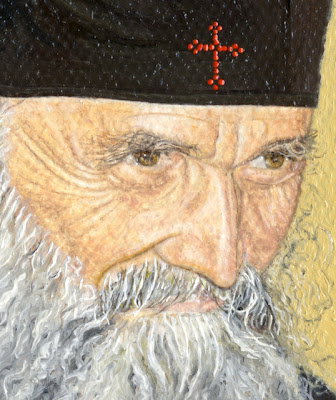
Elder Ephraim of the Holy Mountain (Athos)  
“Remember who your teachers were…”
2 Timothy 3:14

Acts of mercy

Even the dead sense and know the good deeds that are performed for them. Christians need not have any doubt in this. A good deed spreads through the heavenly world like an electrical current.

An imperial clerk, Magistrian, was sent by the emperor on an important errand. Along the way, Magistrian saw a poor dead man, completely naked. He was moved with pity, removed his shirt, dressed the dead man, and buried him honorably.

After a while, Magistrian had an unfortunate accident: he fell from his horse and broke his leg, and lay sick in bed for a long time. On one occasion, several doctors gathered around him to take counsel concerning his illness. The doctors agreed that his leg would have to be amputated.

That night Magistrian could not sleep, but grieved and wept. At midnight a man suddenly appeared in his room and asked him, ‘Why are you weeping?’

When Magistrian explained his condition, the unknown man then rubbed the infected leg with his hand and the leg was healed. ‘For God's sake, tell me… who are you?’ asked Magistrian.

The unknown man replied, ‘Look at me, and see, is not this your shirt? I am he whom you saw naked and dead, and whom you dressed in this shirt. And behold, for your good deed God has sent me to heal you. Give thanks to God!’

October 2nd (New Style) • September 19th (Old Style)

Saturday, September 8, 2012

Astonished

I am always astonished whenever I turn back and read the poetry of David Dickens. Poetry as this is true theology, and answers the question posed by C. S. Lewis, ‘Is theology poetry?’ Well, yes, at least it can be. Here are two of my favorites, but there are others, and each becomes my favorite as I read it. These poems are posted at the blog Nothing Hypothetical.


There Will Be No Rain

There will be no rain but by my word
O Man of God have you come to slay my child?
You filled the pitcher, you filled the cruse
Will you not fill my son?

Are you the one troubling Israel?
The land is cursed by dead men
Limping around two altars with two feet
Whom will you follow?

Is he sleeping?
Is he about?
Has he traveled?
Now give a shout?

Nothing but a quiet prayer and a troff
Nothing but faith and eyes aloft
Nothing left of the mountain side
Truly God is God.


From Tyre and Sidon

From Tyre and Sidon my feet have journeyed long
Come to touch the hem, come to be healed

His voice gives to all without ever diminishing
Come all you are weary and rest

The kingdom is for the persecuted
The kingdom is for the rejected in Him
The kingdom is for the crying
The kingdom is for the starving
The kingdom is for the poor

Through the trees the Spirit passes
Bringing all things of Itself
Nothing has ever been said against it
It causes men to lift each other up

The harvest comes with self-control
The harvest moves with gentleness
The harvest is known by its faithfulness
The harvest is seen in its goodness
The harvest is shared in kindness
The harvest has proven its longsuffering
The harvest brings peace
The harvest frees the heart for joy
The harvest is love

Wait! There are more…Were I Lost
Sell All You Have
Don’t Be a Fool
Lord God of Israel, There is None Like You
…and they go on and on!

I am a Christian

Many months ago I noticed a popup on the internet from a group inviting people to 'sign the pledge' and 'boldly proclaim' that 'I am a Christian'. The group is in the name of an evangelist for whom I have always had a lot of respect, namely, Billy Graham. Why do I have a great deal of respect for this evangelist? At one 'crusade' of his that I personally attended in my home town, I noticed that after the 'altar call' those who came forward to be prayed for and counseled were then directed to a local congregation of the church or denomination to which they belonged or formerly belonged. This included Orthodox and Catholic as well as non-Baptist denominations. I assume that, if a person's religious background or affiliation was non-Christian, they were directed to ministries affiliated with or approved by Billy Graham's organization. Somehow, I found this reassuring, that Mr Graham was not promoting his version or anyone's version of Christianity. He was simply doing what he sees Jesus doing, preaching the good news. Another way of putting it, as I often do,
'I witness for Christ, and He witnesses for the Church.'

What irks me—no, it doesn't irk me, it repels me—is that anyone who professes Jesus Christ and believes in the plain meaning of the Word of God can even say such a thing as 'boldly proclaim' that one is a Christian. When I first saw the ad—and I saw it again today, captured it 'on film' and present it here—it immediately made me think of this scene from the 2009 historical film Agora, which portrays the Christianization of the Roman province of Egypt during the reign of emperor Theodosios II and Alexandrian pope Kyrillos. I know that many will say that this is an anti-Christian propaganda movie coming on the heels of the evidence of contemporary Islamic militancy, as a way to discredit both religious faiths, but I don't see it that way. As a student of history, I know that when one digs more deeply into Christian history, what one finds is fewer and fewer followers of Jesus, and more of those who use Christ and the Christian faith as means to other ends. We see this today. We have seen it happen in recent history. Why should it have been different in the first few centuries of Christianity?


Without making judgments or taking sides, I merely want to present this film clip of the scene where a Christian servant, finding himself in the midst of a sectarian riot and commanded to take part as an assumed pagan against the Christians, kills the pagan who tries to force him to kill, and then, seeing his master watching him, throws out his hands and proclaims, apologetically at first, then with increasing fervor, 'I am a Christian,' as he falls upon his master with a weapon and nearly beats him to death. The servant's life is ended quickly by the rescuing hand of a pagan student of the philosopher Hypatia, who later becomes the Christian prefect of Egypt. All these details are, of course, the work of the screenplay writer, informed by history and his own imagination, but things such as this no doubt have happened, as they continue to do. Though we look upon certain religious faiths as violent and others as pacifistic, most have had a violent aspect at some time or another, and many still do, including Christianity.

No wonder John Lennon wrote in his song Imagine, 'and no religion too,' and in a very ironic way, he was telling the truth.

Friday, September 7, 2012

I love this man

We have to hand it to Christian Orthodoxy for its honest willingness to make room for non-conformity. Unlike other forms of religion, Christian or not, that allow, nay, even demand, that their followers put up with all kinds of immoral and irrational individualism in their midst, Orthodox inclusiveness and its live-and-let-live mentality is not based on ethical, philosophical or dogmatic relativism. Believing themselves to be the heirs and custodians of unchanging truth in their Head and members, they make room for the unlimited personal expression of that truth among them. Any deviation from this practice and principle can be traced to an unconscious adoption of unorthodox attitudes and always results in an alienation from Orthodox identity that, once noted, is just as unconsciously corrected by mass reassertion of Christian liberty.

What's the practical application of the above?
Even geeks can witness.

The painting reproduced above depicts the Russian priest and martyr Pavel Florensky (left) walking with the philosopher Sergei Bulgakov. Although both men are notable for their Christian witness, it's Pavel Florensky, the geek and martyr, that is the subject of this post.

Pavel Alexandrovich Florensky was born in 1882 into a middle class family in western Azerbaijan (Russian Caucasia). After graduating from Moscow State University in 1904, he refused to accept a teaching position at the University. Instead, he proceeded to study theology at the Ecclesiastical Academy in Sergiyev Posad. Together with his fellow students Ern, Svenitsky and Brikhnichev he founded a society, the Christian Struggle Union (Союз Христиaнской Борьбы), with the revolutionary aim of rebuilding Russian society according to the principle of Vladimir Solovyov. Subsequently he was arrested for membership in this society in 1906. However, he later lost his interest in the Radical Christianity movement.

After graduating from the Academy, he taught philosophy there and lived at Troitse-Sergiyeva Lavra until 1919. In 1911, he was ordained into the priesthood. In 1914 he wrote his dissertation About Spiritual Truth. During his life he published works on philosophy, theology, art theory, mathematics, and electrodynamics. Those who are interested in finding out more about Pavel Florensky can read the article about him in Wikipedia, but our interest in him is not for his ideology, writings or other accomplishments, but his simple, matter-of-fact Christian lifestyle, which was a potent witness to those around him, and which led to his martyrdom in 1937.

After the Russian Revolution he formulated his position thus:
‘I am of a philosophical and scientific world outlook developed by me, which contradicts the vulgar interpretation of communism... but that does not prevent me from honestly working for the state service.’

Can you tell from this that he was a geek? Well, I can.

After the closing down, by the Bolsheviks, of the Troitse-Sergiyeva Lavra (1918) and Sergievo-Posad Church (1921) where he was the priest, he moved to Moscow to work on the State Plan for Electrification of Russia (ГОЭЛРО), under the recommendation of Leon Trotsky who strongly believed in Florensky's ability to help the government to electrify rural Russia. According to contemporaries, Florensky in his priest's cassock, working alongside other leaders of a government department, was a remarkable sight.

Can you imagine that? In a country controlled by atheistic, anti-Christian communism, here was a man who was not only a practicing Christian, but an ordained priest, working a secular job, doing his best for bosses who he knew hated everything he believed in and was, dressed in the visible garments of his true profession, and doing his best! And he really was a geek, thinking and knowing things that he could only have learned from his conversations with God, things others can hardly understand to this day. Among other things, for example, he proclaimed that the geometry of imaginary numbers predicted by the theory of relativity for a body moving faster than light is the geometry of the kingdom of God. Somehow, he was even able to publish his books during those awful times.

But there he was, as the record shows, ‘in his priest's cassock, working alongside other [communist] leaders of a government department.’ Even if he didn't witness to them in words (though he probably did), his presence among them was witness enough. And among people, let's remember, who were his declared enemies.

Pavel Florensky is an extreme example, maybe, but the fact of his witness for Christ among his contemporaries is a challenge, and an encouragement, to me every day. Like Christ, he did not run away from the world of sin and death. Instead, again like Christ making His descent into Hades, Florensky descended to the prison of his lost neighbors, at work and in the street, a priest of God without a visible church in a God-hating land.

In 1928 Florensky was arrested and exiled for ‘agitation against the Soviet system and publishing agitation materials against the Soviet system.’ What were these ‘agitation materials’? His monograph about the theory of relativity…

Later, he was moved and served at the Baikal Amur Mainline camp until 1934, when he was moved to Solovki, where he conducted research into producing iodine and agar out of the local seaweed. In 1937 he was transferred to Saint Petersburg (then known as Leningrad) where he was sentenced by an extrajudicial NKVD troika to execution. He was shot immediately after the NKVD troika session in December 1937. Most probably he was executed at the Rzhevsky artillery range and was buried in a secret grave in Koirangakangas near Toksovo together with 30,000 others who were executed by NKVD at the same time.

I love this man.

Anyone who loves his life loses it; anyone who hates his life in this world will keep it for the eternal life. If a man serves Me, he must follow Me, wherever I am, My servant will be there too.

John 12: 25-26a Jerusalem Bible

What we come up with

Yes, most of the time what we 'come up with' astonishes me.

What we come up with? Yes, I mean, what we Christians come up with, the stuff that we show the world to let them know about us… oops! I mean, about Christ!

Oversimplified, it can be called ‘churchianity.’ Gosh! I wonder sometimes if all words ending in ‘anity’ have a touch of unreality in them. Nothing unique to our day and age. It's a wonder that Christians a thousand years ago didn't trip over the Goddy—read ‘gawdy’—stuff they had hanging from their necks.

What does one convert to, now or in any age of the world? Is it Christ, or Christianity? These seem to be two doors to Somewhere, marked Entrance and Exit Only, like the doors at my local WinCo or Home Depot.

On an old Jesus Freak comic from 1973, the cover shows a cartoon of a city marked City of Peace!

Standing in the doorway is a white-robed cartoon Jesus with His arms outspread in welcome. Beside the door is another sign, Admission Free!!! Meet Receptionist with an arrow pointing back to Jesus.
Click on the image to enlarge it.

Two methods.
(1) Know Jesus first, and then join the Church.
(2) Join the Church first, and then meet Jesus.

As a Catholic Christian, I was processed using the second method. I didn't meet Jesus in the Church, however. I had to go back out and let Jesus find me ‘out there.’ Then, thanks to method 2, I came to know Jesus, and He sent me back to the Church.

It is because of my personal life experience that I prefer method 1. But that method almost always owes its victory to method 2.

My saying (forgive me, I am not the first, I'm sure) is ‘I witness for Christ, and He witnesses for the Church.’ And believe me, when I say ‘witness,’ I don't mean ‘big business’ or anything systematic. I don't have a missionary society or call myself ‘we’ when I outline my beliefs and programme. Why? because my beliefs are unimportant, and I have no programme. And I am not a ‘society.’ It's just me—right now, ‘just another blogger.’

It seems when we witness for the Church, people sometimes respond for the wrong reasons. When we witness for the Church, things can go wrong on both sides, the convert's and the Church's.

When we witness for Christ, if someone responds with a desire for conversion, we can rely on the living God who really is there to deliver that person into the Church. How can He not? for Christ Himself says, ‘No one can come to Me unless the Father draws him.’

No fear for mistaken appearances.
God alone is faithful,
and by His mercy alone,
so are we.

The fall of the Republic

And why must the Republic fall?
For the very same reasons that the original Republic, Rome, fell.

We were founded on virtuous principles, and we flounder on virtual laurels. Rome did the same. Before her, Athens did the same, and ancient Israel, and countless other civilisations known and unknown.

Yet why?
You and I know the answer due to the mercy of our man-loving God, who doesn't hang for long on a cross or sleep long in a tomb, but who once dead lives now and forever.

And we, without the solace of mere myths, do indeed live in our testimony, surrounded by walls the enemy cannot scale or breach; and that City not made with hands cannot fall, now or ever; and that heritage is what was handed over to us, and what we will hand over when our time comes, to our children, yes, but to the King, to whom our Republic and all true cities pointed.

What an honor, indeed, what a blessing, to live in these times, and to share with even one other, and to witness, the end of all things.

For the perfection of humanity is nothing else but to end, end so that it can finally begin. Our Republic existed to await the true King, so that it could die in the establishment of His Kingdom.

Faithfully He brings true justice; He will neither waver, nor be crushed until true justice is established on earth, for the islands are awaiting His law.
Isaiah 42:4 Jerusalem Bible


Thursday, September 6, 2012

My child, just read!


This is what Abba Arsenios says about God's Word…

A monk complained to Saint Arsenios that while reading Holy Scripture he did not feel, neither the power of the words read, nor gentleness in his heart. To that the great saint replied to him…


‘My child, just read! 
I heard that the sorcerers of serpents, when they cast a spell upon the serpents, the sorcerers are uttering the words, which they themselves do not understand, but the serpents hearing the spoken words sense their power and become tamed. And so, with us, when we continually hold in our mouths the words of Holy Scripture, but even though we do not feel the power of the words, evil spirits tremble and flee, for they are unable to endure the words of the Holy Spirit.’

‘My child, just read!’ The Holy Spirit Who, through inspired men, wrote these divine words, will hear, will understand, and will hasten to your assistance; and the demons will understand, will sense, and will flee from you. That is, He Whom you invoke for assistance will understand, and those whom you wish to drive away from yourself will understand. And both goals will be achieved.

[Originally posted on May 8, 2009.]

Following You

Numbed and crushed and overcome,
my heart groans, I moan aloud.

Lord, all that I long for is known to You,
my sighing is no secret from You;
my heart is throbbing, my strength deserting me,
the light of my eyes itself has left me.

My friends and my companions shrink from my wounds,
even the dearest of them keep their distance;
men intent on killing me lay snares,
others, hoping to hurt me, threaten my ruin,
hatching treacherous plots all day.

But I am like the deaf, I do not hear,
like the dumb man who does not open his mouth;
I am like the man who, hearing nothing,
gives no sharp answer in return.

For I put my trust in You, Yahweh,
and leave You to answer for me, Lord my God.
Psalm 38

Hide me in Your wounds,
in Your wounds I take refuge,
Lord, hide me,
though I am as the nail
that pierced Your hands and feet,
though I am the cause of Your suffering,
hide me.

Open the gate of Your body, Lord,
open Your side to receive me,
though I am as the lance
whose head tore You,
Lord, receive me.
I am Yours,
save me.

For I put my trust in You, Lord,
and leave You to answer for me.

Lord my God, have mercy.

Wednesday, September 5, 2012

Seek His face

“Seek His face.” 
Psalm 27:8 Jerusalem Bible

Psalms for the 5th Day:
Psalms 24 ~ 29


The psalms of the fifth day include many, many prayers. Reading them this evening ushered me into my prayer room like a welcoming old friend. Let me share some of the verses from this evening…

Who has the right to climb the mountain of Yahweh,
who the right to stand in His holy place?
He whose hands are clean, whose heart is pure,
whose soul does not pay homage to worthless things
and who never swears to a lie.
 

Psalm 24: 3-4 JB

The next verses form the text of the consecration service of an Orthodox house of worship. The epískopos raps the butt of his staff against the closed western doors reciting the first part. A voice from within asks the question. The epískopos answers. This is done three times, and then the doors swing open, and the congregation, waiting outside, enters the newly consecrated temple.

Gates, raise your arches,
rise you ancient doors,
let the King of Glory in!

Who is this King of Glory?
Yahweh the strong, the valiant,
Yahweh valiant in battle!

Gates, raise your arches,
rise you ancient doors,
let the King of Glory in!

Who is this King of Glory?
He is Yahweh Sabaoth,
King of Glory, He!

Psalm 24:7-10 JB

Psalms 25 to 28 are full of prayers.
These are some that speak for me…

Yahweh, make Your ways known to me,
teach me Your paths.
Set me in the way of Your Truth, and teach me,
for You are the God who saves me.

Psalm 25:4-5 JB

Do not remember the sins of my youth;
but rather, with Your love, remember me.

Psalm 25:7 JB

Let innocence and integrity be my protection,
since my hope is in You, Yahweh.

Psalm 25: 21 JB

Test me, Yahweh, and probe me,
put me to trial, loins and heart;
for Your love is before my eyes,
and I live my life in loyalty to You.

Psalm 26:2-3 JB

One thing I ask of Yahweh,
one thing I seek:
to live in the House of Yahweh
all the days of my life,
to enjoy the sweetness of Yahweh
and to consult Him in His temple.

Psalm 27:4 JB

Yahweh, hear my voice as I cry!
Pity me! Answer me!
My heart has said of You,
“Seek His face.”
Yahweh, I do seek Your face;
do not hide Your face from me.

Psalm 27:7-9a JB

This I believe: I shall see the goodness of Yahweh
in the land of the living.
Put your hope in Yahweh, be strong, let your heart be bold,
put your hope in Yahweh.

Psalm 27:13-14 JB

Yahweh is my strength, my shield,
my heart puts its trust in Him;
I have been helped, my flesh has bloomed again,
I thank Him with all my heart.

Yahweh is the strength of His people,
a saving fortress for His anointed.
Save Your people! Bless Your heritage!
Shepherd them; carry them forever!

Psalm 28:7-9 JB

The last verse above, ‘Save Your people…’ I remember well the beautiful roar of song that the mighty man of God, bishop Anthony, let out when he was with us at Aghía Triás, blessing us with this verse, in English and in the original Greek, ‘…και ευλογησον την κληρονομιαν σου.’ Though he has gone to be with his Lord, I can hear him singing still…


The last psalm for the fifth day, Psalm 29, didn't have the meaning it has for me today, until I heard the Jews at the Sephardi synagogue of Ahavath Achim, ‘brotherly love’, singing it, in Hebrew of course, during the Shabbat evening service. Since then, I have also taken to reading and praying the psalms in Hebrew at home from my copy of the Tehillim. You can read it, and even hear it being read, in Hebrew at my Tehillim blog, here.

Pay tribute to Yahweh, you sons of God,
tribute to Yahweh of glory and power,
tribute to Yahweh of the glory of His name,
worship Yahweh in His sacred court.

The voice of Yahweh over the waters!
Yahweh over the multitudinous waters!
The voice of Yahweh in power!
The voice of Yahweh in splendour!

The voice of Yahweh shatters the cedars,
Yahweh shatters the cedars of Lebanon,
making Lebanon leap like a calf,
Sirion like a young wild bull.

The voice of Yahweh sharpens lightning shafts!

The voice of Yahweh sets the wilderness shaking.
Yahweh shakes the wilderness of Kadesh.
The voice of Yahweh sets the terebinths shuddering,
stripping the forests bare.

The God of Glory thunders.
In His palace everything cries, “Glory!”
Yahweh sat enthroned for the Flood,
Yahweh sits enthroned as a King for ever.

Yahweh gives strength to His people,
Yahweh blesses His people with peace.

Psalm 29 JB

End of the Psalms for the 5th Day.

Tuesday, September 4, 2012

Truly merciful and loving

If we as followers of Christ are willing to lay down our lives for each other, what is it to us to lay down mere material things in order to share in the sufferings of our brothers?

It's easy to share in someone's joy, to party with him, to enjoy his company and stay with him when he seems to have everything, every blessing.

And what of the opposite?
Is it easy to share in someone's pain, sadness or loss?
Well, yes, it is, it has to be.

Help me, Lord!
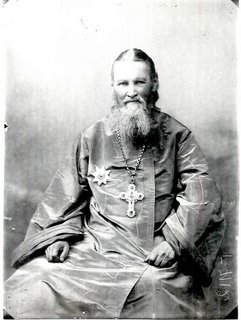
I want to live my life as John of Kronstadt lived his. I want that kind of life in me, the life that Father John and others have received from their Father, their only Father. 


Listen to what John of Kronstadt says…

He truly gives charity who gives from his heart, and with a loving heart. He is truly merciful who converses with everyone heartily, and not only with the intellect and lips, but who renders sincere, hearty respect to everyone; in a word, he who embraces all and carries all in his heart by love, despising everything material that may become a hindrance to love between himself and his neighbor; such a one is truly merciful and loving.


“Remember who your teachers were…”

2 Timothy 3:14

What would happen?

Jakarta skyline
Why must we always be checking and examining each other, to make sure that we are all ‘on the same page’ and believing everything in exactly the same way, so that we can feel safe, so that things seem to be ‘in control’?

When encountering another Christian who does not confess the ‘Orthodox faith’ it doesn’t really matter if I agree or disagree with him. It isn’t like I am calling him forth into a new ‘nameless non-denomination’ if I try to share some fellowship with him ‘outside of’ confessional boundaries. He can stay whatever he is, and I will remain Greek Orthodox, but in Christ our unity goes beyond labels or concepts like ‘catholic’ or ‘orthodox’ which were never spoken by the Lord Himself. 

Our unity in Christ isn’t affected by our formal theologies, which can do nothing, nothing! 
Salvation is through knowing only Christ, not by what we believe about Him, all of which pales when compared to our knowing Him and His knowing us. That is ‘the one thing needful.’

Let a man say Christ is not con-substantial with the Father, and ‘I don't believe in the Trinity.’ Let him even say that Jesus is a man.
He is ignorant, that’s all. But if he confesses Christ as Lord, believes in His resurrection as the Bible plainly describes, and fulfills His commandments, is an ignorant man to be denied salvation in Christ? And who would keep him out? You and me, who know so much about Him? Everything we know about Christ, think about Christ, believe about Christ is nothing compared to what He is, and what He does for us, here and now, and in the world to come.


Let’s tear off the costumes we wear in front of each other as we go into battle. Why? Because our battle has thus far been against each other, and not against ‘the powers of wickedness in the heavens,’ as it should be. If we want to fight each other, let’s strip ourselves of our defenses and see what is under them—Look! We’re all the same after all!

Then, let’s put on the only garment worth having, because He gives it to all who believe in Him, His own skin! ‘All who have been baptized have put on Christ,’ as the scriptures say. And what baptism is that? Being buried with Christ in His death, so as to rise with Him in His glorious resurrection.

As for me, I’m trying to move beyond thinking about God, so I can just live in Him. I’m trying to untie for me, and maybe for you, the knots of tangled lore that have kept us encamped on the devil’s playground so long, fighting each other.

Just imagine the following scenario…


What would happen if, suddenly, the various Christian missions and denominations in a majority Muslim country like Indonesia or Malaysia—which still allow the existence of Christianity—suddenly were seen to absolutely and without reserve support each other in everything, and without coalescing into one uniform institution?

Everything that they disagreed about, they would agree to just pray and ask the Lord to intercede for each other’s folly, and then, with that out of the way, they would just ‘go, and make disciples of all nations, baptizing them.’

Hey! But what if they can’t agree on how and whom to baptize, and when? Well, that’s just some more pieces of folly, to ask the Lord to forgive and correct. Meanwhile...

Let’s all just go into the harvest field, and work, because ‘night is coming when no one can work,’ and because ‘the time is close.’

Yes, what would happen?

Let us also go


It’s really quite impossible to save a man. It takes all that God can do to deliver him. Everything that a man’s neighbors do to try to save him is really of no help. As well-intentioned as they are, when mothers and fathers, husbands and wives, brothers and sisters, friends, neighbors, teachers, pastors, co-workers, psychiatrists and social workers try to save a man, they can do little more than alter his outward complexion, and that’s the best they can do. The worst they can do is push him to profound despair and death, and this despite their good intentions.

But how then can a man be saved?
It’s certainly not by his own efforts, nor is it by the will of the people around him, but it is by God alone. All that is needed on his side is to keep saying ‘yes’ to whatever God asks of him.

How does He ask?
It is by His acts, what He send us, the people, the situations and circumstances that He places in our path. Knowing that God uses everything that happens to us to be for our benefit, regardless of appearances and human judgment, we can rely on Him to save us, unconditionally. This is true, whether we trust God or not, He is out to save us. When we say ‘yes’ to what He sends us, we let Him save us. When we say ‘no’ to what He sends us, we don’t trust Him, we tell Him in effect that we know best, that we can save ourselves—an impossibility.

This seems to be a hard road and, yes, it is the way of the Cross, and following it, as did Mary the Lord’s mother, we are led to a place where the unthinkable happens—the betrayal and sacrificial death of the Good—but that which is beyond all thought and imagination, that which we can only hear told with wonder, happens to us. We are saved. Yes, by His stripes we are healed, and saved. We believed His Word, ‘I am the Resurrection and the Life’ and when He asked us, by these acts in our lives, ‘Do you believe this?’ our response was, ‘Yes, Lord, I believe that you are the Christ, the Son of God, who was to come into the world.’

‘Let us also go, that we may die with him.’
John 11:16 NIV

Saturday, September 1, 2012

We are set free

‘Words… words, Bernardo!
There was a time when I believed in words!’


Francesco di Bernardone, in the cold of a snowy winter morning standing barefoot atop the stone wall of the ancient, consecrated ruin of San Damiano church, where he was carefully placing stones to rebuild it, responded to his sincere but confused best friend, Bernardo da Quintavalle, a knight just returned home from the Crusades, who had ambiguously offered, ‘I want to help you,’ without really understanding what that help would mean.

What started out as a vague offer of help spoken out of sympathy, in the end became a life-long devotion not only to his friend, but to a life of poverty and chastity, following the example of Jesus Christ.

How little we know what the words we think and say really mean. We live in mental and emotional worlds whose boundaries and rules are maintained by words that we have established by repeated use, half the time knowing that they were never intentional, never what we really wanted to say or think, but were forced to, by words coming at us like an armed assault by others. An army of words can capture whole nations to harness them for good or evil.

A most difficult word is ‘love’, because to say it unhinges huge doors and evokes from ourselves and others immense commitments, most of which we do not understand and cannot truly fulfill. When this becomes clear to us, gradually, we find ourselves saying ‘love’ with new meaning, or even with no meaning at all. The doors we removed from the walls of our hearts, once doorways lavished with garlands, become gaping holes resulting from bombardment.

Technically, our words can be quite specific when we speak of concrete things. It’s when we use them to express immaterial things that we get into trouble. Yet social life, even inner life, without them is impossible. It is here that words can become means of unity or division, both resulting from their vagueness and liquidity. Here words are either symbolic, bringing together, or diabolic, splitting apart, ‘a time for throwing stones away, a time for gathering them up’ (Ecclesiastes 3:5).

Hence we have to call the confession of the Christian faith the ‘symbol’ of Nicaea, not the ‘creed’ as many others do. It is not the Truth, but speaking its words unites us to the Truth in a way that mouthing the words of a mere belief system cannot do. We needn’t have to call upon God to distract us from building heaven-reaching towers by dividing our tongues as at Babel. It is obvious that we have already divided our own tongues. That’s why He reverses our work with the Nicene symbol.

So we are captive to the words we speak whether in knowledge or ignorance, whether in clarity or cloud, and what results from our captivity is either heaven on earth, or hell, but mostly in between. The Lord says openly, ‘So I tell you this, that for every unfounded word men utter they will answer on Judgment Day, since it is by your words you will be acquitted, and by your words condemned’ (Matthew 12:37). Calling the Word of God to mind, in fact living in Him, from captivity we are set free.

Thursday, August 30, 2012

Rescued by wedding guests

Whenever I return to a stint of reading the early fathers, that is, those before and just after the peace of the Church wrought by Constantine, I’m always struck by their modernity and the freshness that leaps out at me as I read. It makes me wonder just what ‘modern’ means.

I’ve read somewhere that the beginning of ‘modern’ times occurred in different centuries in different places. Some say in Europe they began in AD 1300 with Dante, others that Francis of Assisi is the first ‘modern’ man in the West: it all depends on when the writer thinks the medieval age ended. In the Far East, modern times are said to have begun during the Northern Sung dynasty, around the year AD 1000, and the criteria are such things as the appearance of printing, paper money, and machinery.

In my view, what I mean as ‘modern’ has to do with machinery definitely, but even more with the frank and unafraid willingness to question everything to get at the root of truth. This is something that I think we lost during the ‘Church Age’ in the West, when other priorities were substituted for it. The religiosity of medieval Christianity did not even make room for real questions to be asked, hence, the stagnation that took centuries to overcome.

Back to my topic, the written testimonies of the early Christians.

Eusebius’ History of the Church was my leisure reading matter this morning. His text reads as fluently and frankly as if it were written just yesterday, and the events he recounts are both easy to picture and believe as accurate. What a far cry from the miracle stories of Christian piety, always avid to believe anything as long as it’s monstrous—like St Nicholas of Myra reassembling and revivifying the bodies of some boys who had been hacked to pieces and concealed in barrels of pickles—or was it wine?

I read for a long while about the Church Father Origen of Alexandria who escaped being canonized as Saint Origen for some of his eccentricities of belief or at least of expression. One of his funnier speculations was that our resurrection bodies would be perfect spheres, but he also speculated on pre-existence of the soul and other ideas bordering on pagan philosophy. This speculation, in spite of his sufferings in the Decian persecution, earned him the indignity of being a suspect of heresy. Looking at him through the ‘modern’ approach that one finds in Eusebius’ history, I’d say that Origen deserves better from his ‘carping critics’ as Eusebius calls them. I guess Origen will just have to be classed with Martin Luther, who also falls under the axe of true piety, as he cries out, ‘Let the saints canonize themselves!’

Now, for the real topic, a story that I found both exciting and interesting, written in History of the Church, Book 6, Chapter 40, entitled What happened to Dionysius. The account itself was written in a letter by Dionysius, and it is quoted in the book.

I speak as in the presence of God, who knows whether I am lying. I did not act on my own judgement or without God when I made my escape; but even before that, when Decius announced his persecution, Sabinus then and there dispatched a frumentarius to hunt me out, and I stayed at home for four days waiting for him to arrive. But though he went round searching every spot—roads, rivers, fields—where he guessed I was hiding or walking, he was smitten with blindness and did not find the house; he never imagined that when an object of persecution I should stay at home! It was only after four days, when God commanded me to go elsewhere, and by a miracle made it possible, that I set out along with the boys and many of the brethren. That this was indeed a work of divine providence was proved by what followed, when perhaps we were of use to some.

Let me interject two observations:

Dionysius tells, almost casually as if it were nothing remarkable, that God commanded him to go elsewhere. These early Christians like us had, and knew they had, direct access to God, without having to resort to a chain of command as later develops in the Church, eventually making it unimaginable in the Dark Ages that anyone but a perfect saint could actually talk to God and get His personal attention, as does Dionysius. This, to me, is a sign of modernity.

The other thing I want to notice is his use of the word miracle. As he continues to tell his story, the miraculous aspect reveals itself to be the acknowledgment that God was personally and intimately directing the flow of events. This too strikes me as modern, that is, frank and honest, not given to exaggeration or tale-spinning.

Now, to finish the story, Dionysius continues…

About sunset, my companions and I were caught by the soldiers and taken to Taposiris; but by the purpose of God it happened that Timothy was absent and was not caught. When he arrived later, he found the house empty except for a guard of servants, and learnt that we had been captured without hope of release…

And how was God’s wonderful mercy shown? You shall hear the truth. As Timothy fled distracted, he was met by one of the villagers on his way to attend a wedding-feast—which in those parts meant an all-night celebration—who asked why he was in such a hurry. He told the truth without hesitation, whereupon the other went in and informed the guests as they reclined at table. With one accord, as if at a signal, they all sprang to their feet, came as fast as their legs could carry them, and burst in where we were with such terrifying shouts that the soldiers guarding us instantly took to their heels. Then, they stood over us, as we lay on bare mattresses.

At first, God knows, I thought they were bandits who had come to plunder and steal, so I stayed on the bed. I had nothing on but a linen shirt; my other clothes that were lying near I held out to them. But they told me to get up and make a bolt for it. Then I realised what they had come for, and called out, begging and beseeching them to go away and let us be. If they wanted to do me a good turn, they had better forestall my captors and cut off my head themselves. While I shouted like this, they pulled me up by force, as my companions who shared all my adventures know. I let myself fall on my back to the floor, but they grasped me by hands and feet and dragged me out, followed by those who witnessed the whole scene, Gaius, Faustus, Peter, and Paul, who picked me up and carried me out of the village, set me on a donkey bareback, and led me away.


Now, in conclusion I ask you, brethren, isn’t this a great story? Doesn’t it ring true, and even entertain us in a way that doesn’t offend true piety, by the candid artlessness of the author? Here we have an example of what a Christian was like in the third century, before the beginning of the Church Age. There’s a lot here to be learned, and also to help us examine ourselves, to make sure that the faith that we have is the same as that of these early Christians. Reading books like these makes me think that what we have known as the ‘modern’ age has not so much to do with an era of chrónos time, but rather with moments of kairós time scattered through human history.

If this be true, what of those who call the present ‘post-modern’? Must we, like Dionysius, have to be yanked out of our resignation by Christ’s wedding guests, flung bareback on an ass, and set free?

Giving it up, or just giving up

Any religion, any religious version of Christianity, can be a definite obstacle to the following of Jesus Christ. One of my premier mentors, martyr Dietrich Bonhoeffer, writes in his book Cost of Discipleship that the Church of his time and place, Germany between the world wars, made real discipleship, real following of Jesus Christ, almost an impossibility. It is this kind of Christianity, as religious observance, that taught me the doctrine and the discipline of Christian life, but didn’t deliver me into the hands of the living God. Maybe that is simply not what the Church in its institutional form is meant to do.
I don’t know. Maybe for some of us at least, we have to ‘make the journey out and in.’ In my case, I didn’t go very far out before I realized I was alone, alone because without Him. That realization quickly led to the moment when the Lord called out to me, and I responded, doubtfully at first but trusting, with ‘Yes.’

One of the chief obstacles many people have to becoming a Christian is the notion that they must ‘give up’ their former way of life. Now, it’s true that the holy apostles say this very thing, but they do not say it, nor does the Church, in order to make our lives difficult. It’s not as though it were up to us to do the impossible: That’s God’s job, more specifically, Christ’s. The impossible? Yes, of course, the impossible: Turning mortal men and sinners even at their best, into immortal, divine and holy beings who are not only worthy of eternal life with God, but who actually want it. I think that when we follow the gracious call of Christ ‘for real,’ we aren't worrying any longer about what we're giving up, but looking forward to what we are receiving—from Him, His friendship, His love, and yes, especially His life—eternal life. Hence the saying, ‘keep your eyes on Jesus’ and the certainty that whatever happens, ‘there is no loss with Jesus.’

Honestly, there is such an impassable and clean break with my childhood religious faith, with all of its ‘give up this, give up that,’ that ever since I met the Lord and received His call, I have never felt that I am giving anything up, but that only and always I am on the receiving end of His unquenchable love and inexhaustible grace. The Son of God gave up all for me, and in following Him I have no consciousness of loss or deprivation. Everything is pure gift, pure love lavished in abundance. Well, was I a desperate sinner before I met the Lord? I don't know. I lived a pretty straight and narrow life. You can't wander far or misbehave much when you're raised in the straight-jacket of religious Christianity. But the depth and faithfulness of Christ's grace in my life tells me that whatever I might’ve looked like on the outside, I must’ve been desperately sinful for Him to cover me so completely with His forgiveness and mercy.

And He continues to do that, not only for me, covering my sins, forgiving me when I fall, but for all, for everyone, for you. He says,
‘I have not come for the righteous, but for the sinners.’ What a gracious love! Proven because he who has been forgiven much, loves much. Wait a minute! I guess there is one thing I’ve had to sacrifice after all: Hating my brother. But then hating is so hard, it takes so much out of you, that giving it up is a pure pleasure. And yet even this ‘sacrifice’ was not of my own power or even of my own volition. As the Bible says in some manner on almost every page, ‘It is not I, but Christ who lives in me, who can do all things,’ and I’ve found that following Him is not so much about ‘giving it up,’ but just ‘giving up.’ Yes, ‘Father, into Your hands I commit my spirit, for You have redeemed me, O God of Truth’ (cf. Psalm 31).

Glory to You, O God, glory to You.

These thoughts were inspired by reading this poem by brother Jim Swindle at Vine and Fig.

That which we have sown

But while everyone was sleeping, his enemy came and sowed weeds among the wheat,
and went away.
Matthew 13:25


Blessed are the peacemakers, for they will be called sons of God.
Matthew 5:9

How great it must be to be called a son of God! The only one who was ever worthy to be called the Son of God now gives His disciples the dignity of sharing with Him the divine nature. Though He is One of the Holy Triad, He has flung open the gates of paradise to those He calls friends, even brothers, welcoming them into the life of the Father, Son and Holy Spirit. Blessed are the peacemakers, for they will be called sons of God. The Heavenly Kingdom of Great Peace, who is it for, if not for them?

Do we take it for granted that if we say we are followers of Jesus, that we are also peacemakers?

In this saying of the Lord, along with the others in what is called ‘the Beatitudes,’ there doesn’t seem to be any blanket requirement to ‘believe in Jesus.’ In fact, He is teaching not His disciples, but ‘the crowds.’ Does this mean that they, that just anyone, can be recipients of the blessings He is proclaiming? It almost seems that His words are the preamble to belief in Him.

He is giving the crowds their first glimpse of what they’re in for, if they follow Him. Yes, by the end of this passage, He lets the cat out of the bag, ‘Blessed are you when people abuse you and persecute you and speak all kinds of calumny against you on My account. Rejoice and be glad, for your reward will be great in heaven; this is how they persecuted the prophets before you’ (Matthew 5:11-12). Christians are quick to assume they are the ones Christ calls blessed, but what if they are the other ones?

Christians are not perfect. Sometimes they have misunderstandings, disagreements. Sometimes they have arguments. Sometimes they take offense at each others’ words or deeds. Sometimes through weakness they even give offense, sometimes blind to their own sin they accuse others. When this happens, we can depend on other Christians to step in and be peacemakers, step in voluntarily, not be forced in by one side or the other. But we can depend on one of them to be a peacemaker, right?

It would never happen that any of those who confess Christ and follow Him would even think of doing anything other than being a peacemaker when brothers are at enmity, right?

So what does a peacemaker do?
Encourages each side to approach the other in repentance and humility, to forget for the moment whatever it is that seems to have caused the trouble, to abandon self-righteousness, for each to put himself in the other’s shoes, to let love cover any perceived offenses.

Yet this is not what some Christians do. Not only do they not work for peace, but they themselves are the cause of division, of strife. They plant seeds of suspicion, distrust, and evil motives, trying to disrupt holy fellowship between brothers that they themselves cannot have because of the spirit of envy that is in them. Holy fellowship shames them, and so they do all in their power to disrupt it, following the father of lies, planting lies, hoping not for peace but for judgment and calumny.

Where there once was love and trust, they plant hatred and suspicion. ‘There is not just one offended person in this situation. At this point, he has offended you repeatedly by his refusal to read communication, refusing to meet…’

They try to manipulate others and egg them on in their fratricidal fury, ‘You didn’t ask him to mediate, but to be your witness that he is in the wrong.’ Instead of working for peace, they demonize and slay with slander, ‘That whiny conniver has subtly turned the tables on this—he is an expert at that—and suddenly the man you wanted to be your witness against him is his witness against you!’

Rather than seeking peace and reasons for reconciliation, they fuel the fire of hate, ‘He’s not innocent in this. He’s been childish, foolish and recalcitrant. He will not hear, he will not see. He sees only his man-made religion and his self-styled images of Jesus. He loves what he thinks Christianity is, having made it into something palatable. But the raw reality of face to face service is not in his religion. He wants to be thought of as an innocent martyr, but rather than accept rebuke from you in a Christ-like manner, he doesn't even consider the possibility that he is wrong. No, he is offended, not by what you say, but that you didn't say it right, or with the right attitude, or in a church, or with your pants on, or in a synagogue, or holding your mouth just so or some other such thing.’

Yes, there are Christians who talk like this not to make peace but to make war, jealous of a unity in the spirit that they cannot have themselves, so they attempt to destroy it in others. New Nicolaitans, they make use of their age, authority, or some other advantage, to conquer others in secret, just as the devil does, ‘divide and conquer.’ Their work is just the opposite of the work of Christ, yet while they perform it they crown themselves with righteousness, and they trample brotherly love and all other good. I have seen this happen again and again, and I always ask myself, ‘How can they have such hatred?’

It makes me really sick at heart when I consider these things, how those whom we trust to love us and present us with prayer to our heavenly Father sometimes seek to slay us, thinking they are doing God a favor. What kind of earthly parent does that to his own child? It is not for nothing that our Lord warned us, ‘a man's enemies will be the members of his own household’ (Matthew 10:36), yet we do not listen, we do not watch, but gladly let ourselves be marched back into prisons of flesh and spirit, herded by hate against our brothers.

‘Peacemakers who sow in peace raise a harvest of righteousness’ (James 3:18), but what about those who sow in war?
What do they harvest?


Sad when we see the workers of enmity unleashing their rage in the world, but more than sad when they call themselves Christians. We cannot stop them, they will keep going from bad to worse, disheartening the brethren with their accusations and lying spirits, but as for us, ‘let us not grow weary of doing good, for in due season we will reap, if we do not give up’ (Galatians 6:9).

And what will we reap? What else, but that which we have sown.

Apostles

It is true that some preach Christ out of envy and rivalry, but others out of goodwill. The latter do so out of love, knowing that I am put here for the defense of the gospel. The former preach Christ out of selfish ambition, not sincerely, supposing that they can stir up trouble for me while I am in chains. But what does it matter? The important thing is that in every way, whether from false motives or true, Christ is preached. 
And because of this I rejoice.
Philippians 1:15-18

What a strange thing for holy apostle Paul to say! How much stranger that even in the first generation of disciples the spirit of dysangelical competition arises, at a time when there are many still alive whose testimony includes knowing Jesus Christ ‘in the flesh.’ This is before the Church had taken on an institutional form. Even ‘imperial church’ is centuries in the future. Human nature, somehow tricked into the sin of betraying one’s teachers instead of remembering them (cf. 2 Timothy 3:14), asserts itself from the very start. Yet Paul, a genuine apostle, ‘called to be’ what he is, says he rejoices, because ‘Christ is preached,’ no matter what the motivation.

Such incredible faith! He doesn’t stop to fill our ears with recrimination. He doesn’t tell us who is teaching what false doctrine or compare ideologies of salvation. He knows that the Message will get through to those who are looking for it, even if the delivery is ‘from false motives or true.’ The seeds of factionalism sown by the enemy of mankind are always taking root in hearts full of envy and rivalry which, despite their flowering piety and religious fragrance, bear hateful fruit, hidden under biblical foliage. It is a dreadful fruit of judgment that is offered, though it seem ‘good for food and pleasing to the eye, and also desirable for gaining wisdom’
(Genesis 3:6).

Since, then, we know what it is to fear the Lord, we try to persuade others. What we are is plain to God, and I hope it is also plain to your conscience. We are not trying to commend ourselves to you again, but are giving you an opportunity to take pride in us, so that you can answer those who take pride in what is seen rather than in what is in the heart. If we are ‘out of our mind,’ as some say, it is for God; if we are in our right mind, it is for you. For Christ’s love compels us, because we are convinced that one died for all, and therefore all died. And he died for all, that those who live should no longer live for themselves but for him who died for them and was raised again. 

So from now on we regard no one from a worldly point of view. Though we once regarded Christ in this way, we do so no longer. Therefore, if anyone is in Christ, the new creation has come: The old has gone, the new is here! All this is from God, who reconciled us to himself through Christ and gave us the ministry of reconciliation: that God was reconciling the world to himself in Christ, not counting people’s sins against them. And he has committed to us the message of reconciliation. We are therefore Christ’s ambassadors, as though God were making his appeal through us. 

We implore you on Christ’s behalf: Be reconciled to God. God made him who had no sin to be sin for us, so that in him we might become the righteousness of God.
2 Corinthians 5:11-21

What is lacking in those who take it upon themselves to deceive and be deceived regarding divine things is, as the apostles writes, ‘to fear the Lord’—in modern terms, what we mean by ‘awe’—and that permits them to erect religious prisons in which they bind themselves and others. They may call their creations ‘ministries’ or ‘societies.’ They may paper their walls with Hebrew and Greek to affect an air of antiquity and authority, but they ‘take pride in what is seen rather than in what is in the heart,’ and so betray not only their teachers, who themselves are only disciples, but the Teacher Himself.

Like the apostle before he meets the Lord on the Damascus road, they ‘live for themselves’ while persecuting the believers. As Paul is struck blind by the One whom he is, in fact, persecuting, they regard not only Christ, but the faith, and everyone to whom they preach ‘from a worldly point of view.’ Being thus blinded, even speaking the words of holy and divine scripture, they worship the words they speak, not realizing that ‘all this is from God,’ nor knowing that ‘if anyone is in Christ, the new creation has come: The old has gone, the new is here!’ And what is this ‘new creation’? Christ living among us.

Reconciliation—a word and an idea that eludes them who ‘preach Christ out of envy and rivalry’—is the only ‘ministry’ given to the disciples by the Lord. How can that be? We can do only what we see Jesus doing, and He does only what He sees the Father doing, ‘who reconciled us to himself through Christ and gave us the ministry of reconciliation.’ How is this ministry expressed? Reconciliation to God in heaven is accomplished by reconciliation to the brethren on earth. ‘Whoever does not love their brother and sister, whom they have seen, cannot love God, whom they have not seen’ (1 John 4:20).

Just as the holy apostles, as various as they were in personality, opinion, educational level and social status, worked together as sýnergoi, co-laborers, without dividing themselves or competing against each other, we live with them and with each other the life of the Holy Triad on earth, ‘not counting people’s sins against them,’ but for the sake of divine love ‘convinced that one died for all, and therefore all died,’ being willing to lay down our lives for each other. This is what the Holy Church was, is, and always shall be, everywhere ‘on earth as it is in heaven.’ There is no envy or rivalry among us in the Holy Trinity.

So, do not believe every spirit, but test the spirits to see whether they are from God, because many false prophets have gone out into the world. This is how you can recognize the Spirit of God: Every spirit that acknowledges that Jesus Christ has come in the flesh is from God, but every spirit that does not acknowledge Jesus is not from God. This is the spirit of the antichrist, which you have heard is coming and even now is already in the world.

You are from God and have overcome them, because the one who is in you is greater than the one who is in the world. They are from the world and therefore speak from the viewpoint of the world, and the world listens to them. We are from God, and whoever knows God listens to us; but whoever is not from God does not listen to us. This is how we recognize the Spirit of truth and the spirit of falsehood.

Let us love one another, for love comes from God. Everyone who loves has been born of God and knows God. Whoever does not love does not know God, because God is love. This is how God showed his love among us: He sent his one and only Son into the world that we might live through him. This is love: not that we loved God, but that he loved us and sent his Son as an atoning sacrifice for our sins. Since God so loved us, we also ought to love one another. No one has ever seen God; but if we love one another, God lives in us and his love is made complete in us.

This is how we know that we live in him and he in us: He has given us of his Spirit. And we have seen and testify that the Father has sent his Son to be the Savior of the world. If anyone acknowledges that Jesus is the Son of God, God lives in them and they in God. And so we know and rely on the love God has for us.

God is love. Whoever lives in love lives in God, and God in them. This is how love is made complete among us so that we will have confidence on the day of judgment: In this world we are like Jesus. There is no fear in love. But perfect love drives out fear, because fear has to do with punishment. The one who fears is not made perfect in love.

We love because he first loved us. Whoever claims to love God yet hates a brother or sister is a liar. For whoever does not love their brother and sister, whom they have seen, cannot love God, whom they have not seen. And he has given us this command: Anyone who loves God must also love their brother and sister.
1 John 4

Wednesday, August 29, 2012

Κρισις και ελεος

People seldom judge you for your real faults. Instead, they judge you for their own faults which they apply to their image of you, or they judge you for not living up to their expectations, or because they think you are not following the rules—not their rules, of course, but the Rules.

Your real faults—and here you may or may not know them—usually go unnoticed, uncriticised. It takes too much time and trouble to look at people as they really are. It’s easier to imagine them. It’s easier to worship—or to demonise—them, but to take them ‘as is’, we haven’t time.

Ever afraid to come home? If the answer is ‘yes’ then it is a question of having a home at all, because home is all about welcome, acceptance, affirmation, interest in one another, love. ‘Foxes have holes and the birds of the air have nests, but the Son of Man has nowhere…’

He wasn’t talking only about a comfortable spot to rest. In all the world, no such place was found for Him, or offered, until a rich man offered His newly excavated tomb, and there, He was finally able ‘to lay His head’. Is this the only home we have to offer those we say we love?

Brethren, let us love one another, as the holy apostle says, quoting His Divine Master who also says it to us. He never said, ‘Judge one another as I have judged you,’ but rather, ‘Love one another as I have loved you. Then you will be My disciples. Greater love has no man than this…’

Judgment is the law of this present age.
Mercy is the law of the age to come.
‘How blessed are the merciful,
for they shall have mercy shown them.’


* Κρισις και ελεος, krísis ke éleos, ‘judgment and mercy’