Thursday, October 12, 2006

For a thousand years in Your sight…

These words come to us from Ioanna Miller, who died August 23, 2001 at the young age of 21. She wrote them just a few months before she ‘fell asleep’ in the Lord during the throes of her heroic battle against leukemia. Let us remember our life’s single and only purpose is to enter into the mystery of the Cross, to accept the simplicity of God’s plan for us, Who “so loved the world that He gave His only Son.” (John 3:16

“For a thousand years in your sight
are like yesterday when it is past
and like a watch in the night
You carry them away like a flood.”
Psalm 90: 4-5

It is much too easy to forget the reality of these words and how quickly this life can pass. The world can consume us in its material, its entertainment and obligations, making us forget that we walk on a tight rope with eternity beneath us. We worry about hours, days, years, but what are these? Are they not only tiny drops in the infinite ocean of eternity? Where is our peace? The answer, of course, lies in Christ.

Our poor souls can get squashed under the concern of the world, so what can we do but cry out to Christ: “Lord Jesus Christ, have mercy on me!” He will always hear. Our prayers never fall on deaf ears. It seems like if we make the smallest effort to love God, He showers us with mercy, but we do not always know the manifestations of His mercy. My prayers are often inconsistent and distracted, but even these little supplications God hears. Throughout the time I have been sick, prayer has been my only source of true peace and patience. God has so much mercy to give if we only ask for it.

Cancer, although I would never wish it upon anyone, is a great blessing in my life. Although it takes its toll on my body and may take my life, it nurtures my soul. This illness is teaching me how fleeting this life is. It also came at a time in my life when I was beginning to think that everything was in my control and that any good in my life was the result of my own efforts. At nineteen, I felt pretty invincible. When I was diagnosed, I had to look mortality in the eye and ask myself, “If I were taken now, what would I have to show that would be pleasing to Christ? Am I worthy of His mercy?” It made me consider my soul and how much more important it is than my body. Also, by seeing how quickly my health can change from wholesome and sound to lingering near death’s door, I am learning to try and “overlook the flesh, for it passes away, but to attend to the soul, since it is immortal.”

Another benefit of my illness is a forced pause in my busy routine, leaving me plenty of time to reflect. Until I was diagnosed, my life was very busy and stressful, not unlike many people’s lives. Going to college, working, thinking about career choices and making time for friends and family added up to a full plate. I sure was not thinking of Christ as much as these other things. Time away from unnecessary distractions has been a great blessing when I spend it with my spiritual eyes on Christ. I spend hours alone and do not have much energy. I have learned that unless I am watchful; I easily fall prey to temptations like despair and anxiety. Keeping myself relatively busy also helps. I have turned to activities like knitting, writing, reading, working a little with stained glass and trying to pray to fill each day.

I have also realized that it is much more beneficial to discuss my thought and concerns with another Christian than to ponder them silently within myself. I realize that I am not strong enough to fight off the voice of the enemy, who seems much louder to me when I am by myself. The company of others and spiritual conversation have been a great help to me. While this is true, I still do not want to discredit the benefits of solitude, because with watchfulness and prayerfulness I believe it can also bear much fruit.

When dark and depressing thoughts come and leave me feeling distraught, scared, sad and lonely, the remedy that brings peace to my heart is calling on the Name of Jesus. Appealing to the Mother of God and the Saints also help ward away dark feelings. Prayer gives such a great assurance of God’s mercy and love. How many times have I not turned to prayer and let gloominess settle into my soul? Why do I do that when I have such a powerful weapon at hand, the Name of our Lord and Savior Jesus Christ? I only know the difference between the consolation that God gives us when we are humble and pray, and the anxiety that results from battling our weaknesses on our own.

The thought of death stings. But when I remember the loving promise Christ left us by His incarnation, death and resurrection, death is transfigured for me into a gate through which the humble and righteous enter into the Kingdom of heaven. In saying this, I cannot escape the image of the royal gates centered in the iconostasis. The Church is the whole, encompassing the living and the eternal Kingdom. The living Church passes through death, which is like a royal gate into heaven, joining the splendor of the Saints and Angels, and partaking of the sacred mysteries for life eternal. I know death is only a gate, because Christ unshackled that gate by His death and resurrection. On our part, however, faith and action are key. As Christ said, “Most assuredly I say to you, he who hears My word and believes in Him Who sent Me has everlasting life, and shall not come into judgment, but has passed from death into life.” Christ says that first, we have to hear His word, which I think are His teachings and actions. We must take up our crosses and follow Him, living in Him and Him in us. We must be like sheep on His right side that were saved because they were humble and loved their brother as Christ would. Then He says that we must believe in Him Who sent Him. We have to believe and love God with all our strength, heart and soul. Faith is becoming more obviously important to me, especially now that life is looking much more transitory. When my faith scatters, I feel desperate and scared, but again, when I turn to God for help, He hears me, and I find peace.

Please do not think I write these things because I practice them and am in a state of uninterrupted peace. I struggle and fall a lot. It is just that being sick has taught me so much about the importance of getting up after the struggle, living my life according to Christ, and keeping my heart in the eternal Kingdom more than in the earthly.

When we sing the Cherubic Hymn, do we not repeat three times “let us set aside all the cares of life” before we sing “that we may receive the King of all?” I am beginning to realize now that this is not meant to be a suggestion for us only during the moments before receiving Holy Communion, but during every moment of our earthly time. I think it is possible to keep the eyes of one’s soul, or the nous, in heaven even while living amidst the cares and troubles of the world. That is what all Christians should strive for. How else will we be able to accept God’s mercy in the end unless we lived in Him and loved Him during our lives? Lately, I have been thinking of how terrible it would be to stand in front of Christ, who wants to give me His mercy and a place in His Kingdom, but these thoughts make me shudder, since I have not always lived properly. I cannot think of any worse agony than being shut out of God’s Kingdom. On the contrary, think of the humble and righteous that have passed before us, those who lived according to God’s Word. What inexpressible joy they must feel as they pass through those royal gates! After carrying their crosses during their lifetime with patience, selflessness, and God’s love, they are welcomed into heaven by a host of Angels. Their hearts are open to God’s love and mercy, since they have already lived with Him in their hearts during their temporal existence in this world.

God has given each of us time and a wondrous creation with which to shape our souls. We must not forget, though, how temporary this life is. Leukemia has made me more aware of this perspective. Thank God not everyone has a serious illness, but I thank God that I have been given this trial. I am afraid that I would never have experienced God’s infinite love and mercy had it not been for cancer. When I think of the whole of my twenty years of life and how quickly and vainly they have passed, what would have prevented me from living another fifty years in the same way? A whole lifetime is worthless, no matter how many years it consists of, if it is not lived as an investment in eternity. We spend so much time, energy and resources on our bodies, but we ignore the soul. Although the body is important, how much more precious is the soul! Only since my body has been sorely afflicted with leukemia have I been able to discover the importance of my soul. Thank God for His incredible mercy! The sadness that often comes from the constant reminders of my mortality is swallowed up in Christ’s victory and in my hope for His Kingdom. I am thankful to have had the opportunity to share any insights my illness has afforded me with anyone who reads this. Please remember me in your prayers.

— Ioanna Miller († 2001)

Aionía sou i mními, axiomakáristos kai aeímnistos Adelphí imón.
May your memory be eternal, dear Sister,
for you are worthy of blessedness and everlasting memory.

Monday, October 9, 2006

End Times

Again, I have nothing of my own to say or share, but this excerpt from my oldest son's webpage. There's a link to his webpage in the side panel of my blog. Jacob is a student of the prophets of Israel.

When a government establishes itself as the source of life for its people, it becomes the anti-Christ. This is represented in Revelation by the wearing of a sign on the right hand and forehead. Such decorations in antiquity are a form of social and religious insurance – they indicate that a person’s thought and deed are guaranteed and protected by what that symbol represents. If you agree to the assurance, you transact. This is the meaning of the statement that “without the symbol no one will be able to buy or sell.” It doesn’t mean that they will be immature. It means those with the sign will not be capable of trusting those who do not have it. The sign on the person’s body is reflective of who they rely on for safety and protection, the brand they believe in, the cause that they believe will assure them of life, safety, security and comfort.

In our past history there have always been alternatives to earthly regimes. Every regime has its symbol. The Nazis had the swastika. The Romans had the eagle. The Jews had nothing: For many years, their aniconic sympathies prevented the use of a symbol to represent their deity. Instead they would have a piece of text affirming their resignation to the Lord as the source of life for His people. For many early Christians, this practice translated into the use of scriptural texts in talismans as a form of protection. The sign of the cross was a proof, not an ideological symbol. For some Jews and all Christians, their faith communities represented movements that resisted earthly alliance in favor of a faith in divine providence and deliverance from all sources of death.


What happens, then, when those faiths ally themselves with earthly campaigns? What happens when church and synagogue fuse their motivations with the state? The romantic citizen believes that this brings the fruits of divine economy to civilization. However, prophetic scripture has always claimed the opposite. Theocracies are terminally mundane and, what’s worse, they displace God as the ultimate provider of all things to all of creation.

The “end times,” then, represent the final prophetic path, the cycle where all representation of the faith of God on earth falls into the mundane, where there is no longer an assembly to appeal to, that is not tainted by the ambitions of humanity. Every hand reaching to God is grabbed by something else. It is the only prophetic path where grace is wholly inaccessible, and all are lost.

Are we there? Are we drawing closer to it?
We may not have to make martyrs of those who are faithful to what they cannot see. In our modern world all we have to do is stop teaching the gospel. Those who know it will die, just as Joseph died, just as the whole generation who knew Joseph died, and the knowledge of God will stop. And we will find ourselves like the Hebrews making bricks for some walking god-man ruler like pharaoh. We will find ourselves awakened from the slumber by a final return of the true God to deliver those, who have been asleep, out of their slumber. And like the Hebrews, some of us will stumble forward, following a God we do not know, to a place we have never heard of. Yet many will opt to stay in Egypt: They’d rather die than change.

It is easy to see how, within this prophetic framework, life and death, location and specific personalities and players fall away into irrelevance. The “end times” are not about these kinds of specifics. They are the ultimate case of a protypical drama that we live out in small portions every day of our lives.

The question is, when all paths end in the same place and the age of freedom is over and done, will we have the wisdom and courage to leave all that we know and rely on behind, to embrace deliverance from beyond our known world in order to attain life? Or will we dwell forever wanting, in pursuit of our own shadow?

Jacob Aaron Gorny

Sunday, October 1, 2006

Chronía pollá! Many Years!

October 1st, commemorating Romanós the Melodist, the first time I can remember my name day not falling during the Greek Festival and being ‘forgotten.’ The original Romanós was a great hymn writer, of Syrian Jewish descent. He lived in the late 5th, early 6th century, and served as a deacon and cantor in Beirut, Lebanon. Today, one person came up to me when I entered the temple for worship, and wished me "Chronía pollá!" I responded quietly, "Evcharistó!"

This evening at sundown begins Yom Kippur, the Jewish “Day of Atonement.” It's significant to me that this year my name day and this Jewish holiday coincide, and at a quiet time, the calm before the storm. Today at sundown I commemorate inwardly the anniversary of my conversation with the Lord, which occurred last year on the evening of Yom Kippur. So much has happened in these twelve months, my meeting takes on even for me an almost mythological aspect. In short, this is what happened. After pondering for many days my life and where it had led me, I went into my arbor (pictured below) and presented to the Lord an account of it. I was very, very sorry, not despairing, but hopeful that the Lord would accept my repentance and accept me, even me, back into His fold, and let me begin to serve Him.


Sure, I go to church and I have never willfully missed a Sunday service that I can remember. Sure, I do all the ‘expected’ things. I even did some volunteer work. But over the years, my cowardice in answering the call of Christ to the extraordinary life had resulted in a life with little or no fruit. The extraordinary, “perissós” in Greek, comes from Matthew, in Greek…

και εαν ασπασησθε τους φιλους υμων μονον τι περισσον ποιειτε; ουχι και οι τελωναι ουτως ποιουσιν;
“And if ye should salute your brethren only, what do ye extraordinary? Do not also the Gentiles the same?”

(Matthew 5:47 Darby)

So, although I had lived the first 30 years of my Christian life as an unprofitable servant, I asked the Lord for another chance, this time to make good on my original decision to follow Christ at the age of 24. Though I joke about it, the impression was quite serious. “Forty-nine years.”

“What? I have 49 years? But I'm 54 now!” I pondered again, what can this mean? “For the first 5 years, I was not accountable? The next 49 years were mine to give, and I lost them? So now, I have 49 years to make it up?” No, that's not really how God works. That might be how my miniscule mind has to verbalize it, to even begin to understand, but no, that's not how God works. What I knew for certain, what I know for true, is that the Father accepts my repentance through Jesus Christ, our true and living High Priest. He accepted my life, and let me start again.

From that day on, I made it my will to seek His will, to act on the Word, to not suppress the Spirit, to not draw back my hand when asked for help (not by men, but by God, who alone is humble enough to ask for our help!). This is what I have tried to do for the past year. And here I am, still standing, like a tree after heavy pruning, stripped of most of my leaves, all the unfruitful branches cut away (they were dead wood), waiting for the next season. Waiting for the Lord to call forth from me what I still have to give.

The reading in today's service was 2 Corinthians, 6:1-10. Nothing could be more appropriate to my life in Christ today:

As God's fellow workers we urge you not to receive God's grace in vain. For he says, "In the time of my favor I heard you, and in the day of salvation I helped you." I tell you, now is the time of God's favor, now is the day of salvation. We put no stumbling block in anyone's path, so that our ministry will not be discredited. Rather, as servants of God we commend ourselves in every way: in great endurance; in troubles, hardships and distresses; in beatings, imprisonments and riots; in hard work, sleepless nights and hunger; in purity, understanding, patience and kindness; in the Holy Spirit and in sincere love; in truthful speech and in the power of God; with weapons of righteousness in the right hand and in the left; through glory and dishonor, bad report and good report; genuine, yet regarded as impostors; known, yet regarded as unknown; dying, and yet we live on; beaten, and yet not killed; sorrowful, yet always rejoicing; poor, yet making many rich; having nothing, and yet possessing everything. (2 Corinthians 6:1-10 NIV)

One of the things that has happened to me in the year just completed is that I have become, strangely, more and more ‘invisible.’ I was even going to call this post “Invisible Man”, because this is how I feel much of the time. Now that I have been trying to live a repenting life, now that I am openly following the call of Christ, what I told my wife Anastasía when I shared this moment with her is coming true: I will follow the call, wherever it leads me, whether it makes my earthly life better or worse, whether people love me or hate me, whether I am approved or disapproved, praised or slandered… What I have actually discovered is, many of those I counted on to be supportive have fled. What I find is that I am invisible even when I am with them in the same physical space. In this last age, the politically correct way of killing someone is to pretend they don't exist…

Thank you, Lavrenty, for wishing me “chronía pollá”. Evcharistó, adelphós mou!

Forgive me for this pitiful ramble, but one more thing.
Today being the commemoration of Romanós the Melodist, the choir sang (in Greek only) an apolytikion in his honor. It ran,

“God's image was perfectly preserved in you, O Father, for taking up the Cross you followed Christ. You taught us by example to disdain the flesh, a passing thing, but to see the soul which is immortal. Wherefore, O holy Romanós, your spirit rejoices with the angels.”

I want to join my namesake and live my life as he lived his. Notice, no mention at all of the 800 hymns he wrote, or of the miracle by which he was given the gift of hymnography. Only that he took up the Cross. And in closing I want to honor the brother who wrote this new kontakion, and may it be true,

“By faith, Romanós shouldered his cross and followed the "man of sorrows", even to the end. By faith he saw the "one like a son of man" coming with the clouds. And by his faith in Christ, Romanós conquered and overcame and was not hurt at all by the second death.”

Saturday, September 30, 2006

All for one and one for all

“All for one and one for all” is best known as the motto of the characters in the book The Three Musketeers, by the nineteenth-century French author Alexandre Dumas. All the members of a group support each of the individual members, and the individual members pledge to support the group. At the end of a very long day, as two friends and I sat together in a coffeehouse, just before we broke up our session, those words came to mind, “All for one and one for all.” I blurted them out, because somehow they indicated for me what we had just experienced—a session—sitting together in the presence of the Lord and worshipping “in Spirit and in Truth” by letting ourselves communicate and share what the Lord is doing with us. In a coffeehouse? Yes.

There, in a coffeehouse, we met together, and our invisible Lord was in our midst, teaching us His precious and all-powerful Word through our discourses with each other, helping us to understand that our lives, which we three had given to Him, really are now in His mighty and yet tender hands. There, a few hours of chrónos time were plucked out of this plummeting age and, transformed into kairós time, were laid up for us in the “city not made with hands.”
One of us, a man I know in Christ, spoke at one point with such calm passion and Christ-like simplicity and order, about the lives we have been given back by Jesus, lives of willingness to suffer for His name, all I could say, over and over, after each pause in his voice, was "Ameen" but softly, so as not to interrupt him. He spoke like the “good angel” I know him to be. Almost never have I heard such a discourse from a priest, and certainly never from anyone, except in the writings of the Fathers, expressed with such God-imploring humility.

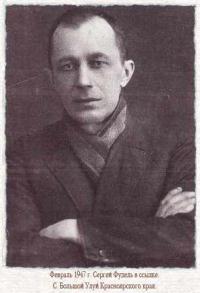
Kept coming to my mind the remembrance of the new martyrs of Russia who, though young in years like my brother, were wise like the ancient Fathers. They struggled against an atheistic Christ-hating state, refusing to take the “mark of the beast” in any form. They suffered for the Truth, and the wonder-working faith that was the fruit of their endurance, fed each other as they were, one by one, led as Christ's innocent lambs to the slaughter. Two of the young men pictured met this fate, one came through it alive. Yet their three-fold unity mirrored the three-fold radiance of the all-holy God, the Almighty, the Deathless, the unearthly Triad, Father, Son and Holy Spirit.

What is my purpose in writing this? I need to memorialize those moments which I shared with my brother and sister in Christ. I cannot evade testifying that there is Truth on earth, even now. Defying the barking dogs in their mangers who do not go into the Kingdom of Heaven themselves yet prevent those who want to from going in, Jesus walking among us still casts the money-changers from His Father's house, crying out, “Suffer the little children to come unto Me, for to such as them belongs the Kingdom of God!”

When I was not much older than you, adelphós mou kai adelphí mou, while persecution still raged in Russia, there was a book, Russia's Catacomb Saints, by I. M. Andreyev, that had this symbol in the frontispiece, saying “This book is dedicated to the Christian Martyrs, today in Russia, tomorrow in America.” I pondered then what form this martyrdom would take. Now, thirty years later, the words are coming true, and the form of our martyrdom is gradually appearing, and I am alive to see that this will be your cross, and I want to share it with you. What is different and perhaps even more cruel than an atheistic Christ-hating state is what we have to face now, in America… I cannot even say it, but you know what it is, because you have already seen in your young lives what the divine, God-breathed scriptures was telling us of, when Jesus said, “They will put you out of the synagogue; in fact, a time is coming when anyone who kills you will think he is offering a service to God. They will do such things because they have not known the Father or Me. I have told you this, so that when the time comes you will remember that I warned you.” (John 16:2-4 NIV)

The time is now very close. “O gar kairós engýs” (Revelation 1:3). That is why we are reading the Apokálypsis more and more, even in Greek, to understand its message intimately and spiritually—not like the expounders of end times theoretica—but as men and women of faith, “who follow the Lamb wherever He goes” (Revelation 14:4). How can we know that the time is very close? We can see what is happening to the churches. Though we do not abandon our institutional churches, we cannot let ourselves be trapped in them. The time is now very close. We do the work we see our Father doing and, following Jesus, in company with Him, we know and accept His great commission, to go forth with Him to seek that which was lost. And where Jesus is, there is the Holy Spirit, there is the Church. “With so many witnesses in a great cloud on every side of us, we too, then, should throw off everything that hinders us…” (Hebrews 12:1 JB).

“It is all clear to me now, either Christianity is fire,
or there is no such thing.
I just want to wander through the world, calling,
‘Repent, for the Kingdom of God is at hand.’
And to accept it if people revile me and say all manner of evil against me.”

Monday, September 25, 2006

Love gives birth to prayer

Myself, I have little to say right now, but to pass on to others the words of the saints I am privileged to know. I cannot stay away from Sergei Fudel, and once again I turn to him by reading his short book Light in the Darkness. Like another friend of mine who is still here with me, Sergei is "one in a million," a man in whose eyes I see the light of Jesus. Just to be near him is a healing, because he never leaves Jesus' side. Here's what Sergei says about prayer…

Prayer is born of love.
Is it not the same as to say, "Prayer is born of tears?" I realized this quite recently when I heard a young girl answer a question addressed to her. "How can I learn to pray?" The question did not puzzle her, and she said unhesitatingly, "Go and learn to weep and you'll learn to pray." She completed the words of the Fathers.

Bishop Theophan the Recluse used to say that praying only with words written by another is like trying to talk in a foreign language using only textbook dialogues. Like many other Church Fathers, he said that we must look for our own words in order to pray. I suppose that this is truly possible for us only in moments of desperate need, real anguish, either for ourselves or for others. In such moments we do not "recite" prayers, we simply cry out to God, "Lord, please come to him and comfort him!" The audacity of prayer is born only in the audacity of love. Saint Macarius [Abba Makarios] said, "Love gives birth to prayer."

"Love gives birth to prayer," therein lies the mystery and the meaning of prayer. We can recite endless litanies, we can endlessly finger our prayer beads, but unless we have love, unless we have learned to grieve for others, we have not even begun to pray. We can thus go through all our life without having begun to pray.

Unless we are truly sympathetic to human suffering, we are merely carrying out a "prayer rule," not really praying.

"Pray constantly!" is a direct admonition of the Apostle.
There is a logic, a spiritual kind of logic, to constant prayer.
Constant prayer serves to establish in us an absolutely sincere humility. I cannot not pray constantly, because I constantly need divine help. Why should I be proud of constantly calling for help?
We do not feel pride because we breathe without interruption, we do not even notice it! We should not evaluate the process, we must just pray. Our prayer must acquire the unwitting simplicity of constant breathing.

Yearning to pray is what a simple heart needs more than anything else.

I sleep, but my heart is awake.
I hear my Beloved knocking.
"Open to me, my sister, my love,
my dove, my perfect one,
for my head is covered with dew,
my locks with the drops of night."

—The Song of Songs 5:2 Jerusalem Bible

Sunday, September 24, 2006

Catch Them Alive

Then Jesus said to Simon, "Don't be afraid; from now on you will catch men." So they pulled their boats up on shore, left everything and followed him. Luke 5:10-11 NIV

…from now on you will catch men.
In the Greek original, this is:
απο του νυν ανθρωπους εση ζωγρων
Apó tou nín anthrópous ési zogrón.

This was the theme of Fr. Jerry's sermon this morning, with emphasis on the call to everyone within hearing, that we are all called by Jesus, just as the fishermen disciples were, all called by Jesus to be fishers of men. There aren't "two churches", the church of the catchers of the fish, and the church of those who watch the catch from shore.

Even though the disciples had already accepted the call of Jesus, they still had lives to live, they had to support their families and continue their trade, fishing for a living. That represents the first stage of the call—they followed Jesus, but then they still had lives to live, responsibilities in the world. Jesus came to the lakeside and saw them, His disciples, washing their nets and putting them away for the day (since the best fishing was at night, near the shore, on the Sea of Galilee). They had toiled all night but caught nothing.

Jesus had come to find them there, and because there were already crowds following Him around to hear the Word of God, He stepped into Peter's boat, and had Peter put out a little from the shore, so He could teach without being mobbed. After teaching awhile, the Master (for that is what Peter calls Him, proving he already was following the call) told him to put the boat out to deeper water and pay out the nets for a catch.

What? Pay out the nets in deep water, in the daytime? Peter knew better. He was a "professional." He tells Jesus that this is not "conventional wisdom," but still he said, "but if You say so, I will pay out the nets." (Luke 5:5 JB) And that is what Peter did.

What happened? Peter, the fisherman, got the "blessing" of probably the biggest catch of fish he had ever had in his life! He even had to call his companions in the other boat to come help, pull the catch in… and it nearly sank both boats!

Peter's reaction? He fell at the knees of Jesus, saying "Depart from me, for I am a sinful man!" (Luke 5:8) When faced with the wonder-working power of God, the abundance even in the material world that is the Lord's to give as He chooses, mere mortal man comes face to face with his utter sinfulness, and begs the Lord to depart from such a creature as himself.

Jesus Christ's response? "Do not be afraid…" (Luke 5:10) The Lord is now calling Peter, and us, to the next stage of discipleship.
He wants us. He has to tell us up front, "Don't be afraid!" And why is this? Because now it really is the unknown that we're heading for, Jesus really is going to take us where no man has gone before. No man, except Him, and with Him, us.

These are some of the points Fr. Jerry brought out in this Gospel, and I hope I'm reporting them correctly and sharing them with you clearly. As with any good sermon, though, there's always a rhíma, a "living word" that stays with you. What stayed with me, and even grew a little in me, was the passage I started with, the part I wrote in red, which Fr. Jerry also emphasized by referring to the Greek of the Bible, and which I've made the title of this post, "catch them alive."

Zogréo, "to catch alive" as in the sense of catching an animal for the zoo, as Fr. Jerry put it. What caught my attention was this irony—that when the disciples caught fish, they took an animal which was alive (in the water) and killed it (took it out of the water) so they could eat it. That's what a fisherman does. No judgment intended. We have to eat to live, and God has given us everything. But what the Lord said in making His disciples "fishers of men" gave them the job of "taking alive" the men whom He would be sending them. As fishers of men, we take an animal which was spiritually dead (out of the water) and in catching it make it alive (in the water and Spirit) so it can feed on God. This is another example of the Great Reversal (as C. S. Lewis calls it), the rolling backwards of death itself, the resurrection unto Life eternal.

Have I lost you by my wordy explanation? Sorry, if I have. Just go back to the top and read the Bible passage again. The Lord has commissioned us to "catch them alive."

That's really all I wanted to say, anyway.
And that's really all I want to do.
Glory to God!

Saturday, September 23, 2006

Man is a Theological Rock

Here are a couple of passages from two books that I keep near me, alongside my Bible. The first is from the book "Hymn of Entry" by Archimandrite Vasileios.

What unites the saints is the freedom of the Spirit. They are free from their wills, from themselves. This is the proof and assurance of the genuineness of their truth. It is not the man speaking, but the Spirit of God. Thus a trinitarian balance reigns within them and flows round about them because in them is no "individual" initiative, no arbitrary dealings, no partial view, but a universal manifestation. The Lord's judgment is just because He seeks not His own will, but the will of the Father who sent Him (cf. John 5:30). The Comforter consoles the people of God and leads it "into all truth" because He does not speak of Himself. What is important is not that we should achieve the project we have set ourselves to achieve, but that the Holy Spirit should do with us and within us what He wishes, when He wishes, regardless of whether this seems, or is, disastrous for our projects and our good resolutions.

This release from his own will and total captivity to the freedom of the Comforter means that man's theological testimony can be heard, like a message of resurrection, from the whole of his behavior and his being. It makes the course of his life into a script which can be clearly read, theologically mature and universally saving. Theology is a creation, a superabundance of life, a gift, an overflowing, an involuntary movement. It emanates from the whole body of the life of those who are spiritually liberated, like the sound that comes from all the vibrating metal of a bell.

"And I should like to be silent (if only I could!), but the terrible wonder moves my heart and opens my sullied mouth, and against my will makes me speak and write," says St. Symeon the New Theologian; not to mention once again the great Apostle, who confesses: "Necessity is laid upon me. Woe to me if I do not preach the Gospel!" (1 Cor. 9:16). He was incapable of not preaching, of not creating theology, of not manifesting in word and deed the wonders of God which he was tasting and which were being revealed in him. Theology wells up; and man is a theological rock. When struck with the rod of the new Moses, he can send streams gushing forth, soaking his desolate land and making meadows where there was no water.


The second is from the book "Light in the Darkness" by Sergei Fudel.

When the circle draws to its close, there will remain on earth, unconquered, the "two or three" holy ones, the Church of Christ; and the light of their holiness will be too strong for human history. This will be the end of history. These unconquerable "two or three" will show that the Kingdom of Heaven and the Will of God are fulfilled in them "on earth as in heaven" and that all of humanity could have been such as they.

We usually know (that is, when we're in our right mind, we know) that the easy way is to follow the call of Jesus and make His Word our home, to seek first the Kingdom of Heaven and His righteousness, and we cannot understand why this isn't clear to everyone, why our fellow Christians turn to the consolations of mere religion or the self-bestowed righteousness of their works. We know that "all humanity could be" as the unconquered, unconquerable ones that Sergei writes about. And I hope there are going to be more than "two or three", no, I know that there are more than this. Where my hope lies is in the thought that I also may be one of them.

Wednesday, September 20, 2006

Waiting

I’ve been taken for a fool so many times before.
I’ve been taken for a ride by so many people.
I’ve fallen in love too much to tally the score.
I’ve been wearing out the scars of so many battles.
O God, where is all this leading to?
Will I ever come at the sight of you?
Will this cross I’m wearing so close, next to my skin
so close, so close, you know the state I’m in,
will this cross I’m standing under save me in the end?
Will your body finally be the door to let me in?
‘Cause I’m tired today, last night I watched with you,
‘cause I’ve got no fire today, it went out when you left me
sitting there for hours, alone, in the rain,
waiting, praying, to see your face again,
waiting for something, for someone, too good to be true,
waiting, waiting, waiting for you.

The season for glad songs has passed, has passed away.
I’ve been singing down a dark well and searching so hard.
At the bottom I might see my own face some sunny day,
but it’s you I wanted to see smiling back at me, O Lord.
Please tell me, where is all this leading to?
Why can’t I stop singing these songs to you?
Will I ever find a moment just to catch my breath?
This fool, this fool will sing himself to death.
Will the burden of this loneliness cancel all my debt
or will my body always be the victim of your wrath?
‘Cause I’m tired today, last night I watched with you,
‘cause I’ve got no fire today, it went out when you left me
sitting there for hours, alone, in the rain,
waiting, praying, to see your face again,
waiting for something, for someone, too good to be true,
waiting, waiting, waiting for you.

—Romanós

Friday, September 15, 2006

A Word on Fasting

A young Christian brother wrote me, asking for a word on fasting, which he is trying for the first time. My response consists of the very basics, not about Orthodox Christian fasting guidelines, but gleaned from my own prayer life and the experiences of the abbas, the Desert Fathers, and others. I want to share this with others who are growing up in Christ outside the Orthodox kinonía (fellowship).

Fasting is something that you do when you want to unleash your power of prayer.

Take this for an example… Have you ever had a friend or family member in such trouble or danger that it just drove all thoughts for food or entertainment or sex right out of you? I mean, all you could do was strain for them in prayer and sympathy, stretching yourself out in supplication. Perhaps it was even yourself that was in serious trouble, and you could do nothing but watch and pray, stretching your soul out to the Lord… the very thought of eating or any bodily or sensual enjoyment just left you? Well, this is true fasting. We fast because we cannot do anything else. Our prayer drives out the demands and even the needs of the body. Then, our bodies, emotions and minds being unconcerned for gratification, the power of prayer grows even stronger.

Another kind of fasting is more deliberate. You eat little (but usually not nothing), and try to calm your body down so you can maintain a state of quiet, for your spirit to gain a place of prayer. Unfortunately, this is very difficult to do, because our social interaction defeats some of its goals. I mean, you cannot admit to fasting, yet you sometimes are feeling weak and even sick.

A good kind of fasting to practice, for beginners, is to content yourself with bread (in a fixed amount, plain bread) and water (in amounts as needed). Another way to fast is to not eat in the day time, but to arise before dawn for a beginning prayer, then eat something nourishing (but vegetarian, like a bowl of cheerios with soy milk), and go without eating until after sunset, then pray and study the Bible, and afterwards take some green tea and a bowl of rice with some veggies. These are just suggestions.


The thing to avoid is anything that will endanger your health. Push the body gently into a state of alertness caused by hunger, but not into a state of acute discomfort. Stop fasting if you become sick, if you begin to praise yourself for your asceticism, if you begin to judge others, or if you are called upon to offer or partake of hospitality. Fasting means, no food gleaned from pain, therefore no animal products (except dairy, for some people), and never eating to fullness (always eat 2/3 to 1/2 of the quantity of food that you want to eat).

I wonder, does any of this help? Fasting is to make us hollow for God, so He can play us like a flute, so we can feel His breath within us, and sing for joy to the glory of His name. Fasting is to make our lives 100% prayer. I hope whatever it is you are seeking, you will succeed.

When you fast, do not look somber as the hypocrites do, for they disfigure their faces to show men they are fasting. I tell you the truth, they have received their reward in full. But when you fast, put oil on your head and wash your face, so that it will not be obvious to men that you are fasting, but only to your Father, who is unseen; and your Father, who sees what is done in secret, will reward you. (Matthew 6:16-18 NIV)

Monday, September 11, 2006

Books, Books and More Books!

I visit the blog of a local (non-Orthodox) young adults pastor occasionally, and today I noticed he had a wish list. When I opened it, I found it contained a listing of 44 books that presumably he would like to have. Now, I don't know when he'd find time to read them all if he got them—that would be little less than a book a week. Looking at the list, I was surprised both by some of the titles and the topics. I wondered also why a Christian pastor would want to read some of these books. One of them is a book on building a successful company; my boss has a copy on his desk! Some others also had titles that just left me incredulous. In the list there might be one or two that I thought could be helpful reading. The rest seemed like a lot of seminarians publishing the papers that got them their degrees, so somebody had better read them.

As in the days leading up to the Reformation, the Church seems to be pickling its clergy in the brine of bibliocracy, both when they're still in the cooker (seminary) and then when they get out. The Word of God, the Holy Scriptures, whatever you call the Book (you know which one I'm talking about), just seems like it isn't good enough… Books, books and more books! But where's the Book?

Perusing this long list of titles and contemplating the state of mind of the young pastor who unashamedly proclaims them on his wish list, I felt a twinge of sorrow—it seems like our shepherds have now gone back to farming, trying to get a bigger, better yield.

Abel is slain, and Cain offers vegetables to God while crying, "Am I my brother's keeper?"

Businessman have to keep up with the latest trends, they have to stay in the fast lane or lose their position, and who knows? maybe they'd never get back in. But for ministers of the Gospel to abandon that God-breathed, all-sufficient living scripture, to join in the paper chase! As holy prophet Jeremiah wrote, "They have bartered their glory for shame." And as Martin Luther wrote in his Open Letter to the Christian Nobility of the German Nation, "Whoever is not ceaselessly busy with the Word of God must become corrupt."

Here's the list of books I referred to above. I admit I'm ignorant of the contents of all of them, and I don't want to be acquainted with any of them. I know this makes me a hopeless cop-out in today's "Christian" world. I don't condemn these books or their authors; perhaps many are great saints and their writings venerable.
Who knows?
I confess, I am just an ignorant Orthodox village muzhik.

After looking over the list of books, pray for Romanós the sinner, and an ignorant one at that!

"All I want to know is Christ and the power of His resurrection…" (Philippians 3:10 Jerusalem Bible).

1. The Last Word and the Word after That: A Tale of Faith, Doubt, and a New Kind of Christianity (Brian D. McLaren)
2. The Modern Preacher and the Ancient Text: Interpreting and Preaching Biblical Literature (Sidney Greidanus)
3. The Revolution: A Field Manual for Changing Your World (Jim Wallis, et al.)
4. On Beauty and Being Just (Elaine Scarry)
5. Organic Church: Growing Faith Where Life Happens (Neil Cole)
6. The Hidden Power of Electronic Culture: How Media Shapes Faith, the Gospel, and Church (Shane Hipps, Brian McLaren)
7. Treasure in Clay Jars: Patterns in Missional (Lois Y. Barrett)
8. Heaven Is Not My Home: Learning to Live in God's Creation (Paul A. Marshall, Lela Hamner Gilbert)
9. For All God's Worth: True Worship and the Calling of the Church (N. T. Wright)
10. Kingdom of God Is a Party (Tony Campolo)
11. Sacred Rhythms: Arranging Our Lives for Spiritual Transformation (Ruth Haley Barton)
12. Reflecting the Glory: Meditations for Living Christ's Life in the World (N. T. Wright)
13. The Rising: Living the Mysteries of Lent, Easter, and Pentecost (Wendy M. Wright)
14. Eastertide: Prayers for Lent Through Easter from The Divine Hours (Phyllis Tickle)
15. The Next Christendom: The Coming of Global Christianity (Philip Jenkins)
16. Ancient-Future Time: Forming Spirituality through the Christian Year (Robert E. Webber)
17. Transforming Mission: Paradigm Shifts in Theology of Mission (David Jacobus Bosch)
18. The Gospel in a Pluralist Society (Lesslie Newbigin)
19. The Continuing Conversion of the Church (Darrell L. Guder)
20. Missional Church: A Vision for the Sending of the Church in North America (Darrell L. Guder, Lois Barrett)
21. To Own a Dragon: Reflections On Growing Up Without A Father (Donald Miller, John MacMurray)
22. Christ Plays in Ten Thousand Places: A Conversation in Spiritual Theology (Eugene H. Peterson)
23. Desire of the Everlasting Hills: The World Before and After Jesus (Thomas Cahill)
24. The Bible As It Was (James L. Kugel)
25. Excavating Jesus: Beneath the Stones, Behind the Texts: Revised and Updated (John Dominic Crossan, Jonathan L. Reed)
26. Engaging God's World: A Christian Vision of Faith, Learning, and Living (Cornelius Plantinga)
27. Creating Community: Five Keys to Building a Small Group Culture (Andy Stanley, Bill Willits)
28. Return of the Prodigal Son (Henri Nouwen)
29. Paul: In Fresh Perspective (N. T. Wright)
30. Following Jesus: Biblical Reflections on Discipleship (N. T. Wright)
31. Through Painted Deserts: Light, God, and Beauty on the Open Road (Donald Miller)
32. Connecting (Larry Crabb)
33. Reaching for the Invisible God (Philip Yancey)
34. Not the Way It's Supposed to Be : A Breviary of Sin (Cornelius Plantinga)
35. Now, Discover Your Strengths (Marcus Buckingham, Donald O. Clifton)
36. First, Break All the Rules: What the World's Greatest Managers Do Differently (Marcus Buckingham, Curt Coffman)
37. The Contrarian's Guide to Leadership (Steven B. Sample)
38. Adventures in Missing the Point: How the Culture Controlled Church Neutered the Gospel (Brian D. McLaren, Tony Campolo)
39. Where Do We Go from Here?: A Guidebook for the Cell Group Church (Ralph W. Neighbor)
40. Prepare Your Church for the Future (Carl F. George)
41. The Next Generation Leader: Five Essentials for Those Who Will Shape the Future (Andy Stanley)
42. Sacred Pathways (Gary L. Thomas)
43. Good to Great: Why Some Companies Make the Leap... and Others Don't (Jim Collins)

44. Can We Do That: Innovative Practices That Will Change the Way You Do Church (Andy Stanley, Ed Young)

Friday, September 8, 2006

Truly Merciful and Loving

If we as followers of Christ are willing to lay down our lives for each other, what is it to us to lay down mere material things in order to share in the sufferings of our brothers?
It's easy to share in someone's joy, to party with him, to enjoy his company and stay with him when he seems to have everything, every blessing.
And what of the opposite?
Is it easy to share in someone's pain, sadness or loss?
Well, yes, it is, it has to be.

Help me, Lord!
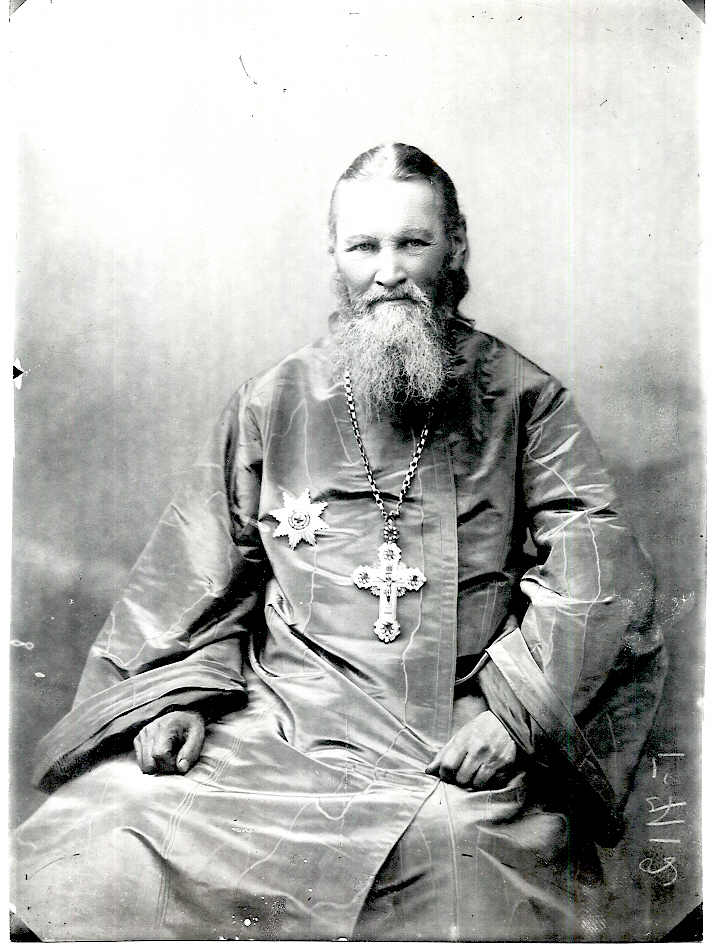
I want to live my life as John of Kronstadt lived his.
I want that kind of life in me, the life that Father John and others have received from their Father, their only Father.
Listen to what John of Kronstadt says…

He truly gives charity who gives from his heart, and with a loving heart. He is truly merciful who converses with everyone heartily, and not only with the intellect and lips, but who renders sincere, hearty respect to everyone; in a word, he who embraces all and carries all in his heart by love, despising everything material that may become a hindrance to love between himself and his neighbor; such a one is truly merciful and loving.

— Fr. John of Kronstadt

Thursday, August 31, 2006

Over Mountains


Over Mountains

Do you ever wonder
Why we're in this world?
Flies caught in this web
Of material confusion?
Do you really think
You'd be satisfied
At the end of time?
Sure you will. That's how
it's supposed to be.

Forty years of suicide,
All for a life that lied.

Let me take you flying
Over mountains and hills.
We could be children again
Without a single care.
Let me take you to a place
Where no one but God
Is watching us, watching us.

Do you ever dream
Of being young again?
To run around free
In nature's perfect world?
I've seen you curse the world
And its false majesty.
"There's no way out," you say,
"so I'll have to let it be."

Are we really trapped
In this life?
Or can we evade
this pointless strife?

Let me take you flying
Over mountains and hills.
We could be children again
Without a single care.
Let me take you to a place
Where no one but God
Is watching us, watching us.


Andrew Gorny
from the album If Only They Knew

Monday, August 21, 2006

Love Sets No Limits

Kenny Ching posted this saying on his blog Zealous Convert:
'I may have to love you, but I don't have to like you!'
For the most part agreeing with him, this is my response to his assertion, that ‘love sets no limits.’

There are so many interpretations of love among people.

The one that seems to be behind your saying is the one that says… We must love people, that is, want what is best for them, have a good will toward them, but you don't necessarily have to want to be with them, or put up with them. This is where many a marriage ends up, and many a congregation. This is the love that can be commanded and, once we've hedged the commandment with escape clauses, we're free to follow the "commandment."

Though there are many kinds of love among us, the Word of God is the only teacher of what love is. How we apply it depends on how much we want to see.

For me, just to look, really look, at another human being, or even a fellow creature, without thinking, without measuring, analyzing, just looking, for me love comes to the surface quickly. I want to know the person I am looking at, and spontaneously I want to love them.

Freedom intervenes to set the limits.
Does the other person want to be loved, or is it an intrusion?
Do I want to activate the love which naturally rises in me, or will I let it die, look the other way, because I realise there will be a price to pay?

I hold myself "ready to love" others, because Jesus may come to me in the guise of my brother or sister. I do not fret over whether I should or must love my neighbor in an active way. I just love the one who is put before me this moment. If love requires action beyond that point, I try to do whatever love demands.

The aftertaste of love is prayer, specifically intercession.

Mother Gavrilia says, "Love does not get tired."
I know what she means…
When I was loving the brother whom God placed before Brock and me a week ago last Saturday, it didn't matter to me that I had to stay with him the whole day, eating little, taking no rest, just making sure he was fed, that he would stay awake (we were all up many hours that day!), that he had somewhere to go while waiting for his bus connexion. I just wasn't tired. I could've stayed up all night with him, because I was loving him.

Love just doesn't get tired.

Have you ever noticed how John 3:16 (the often quoted scripture) and 1 John 3:16 really go together, and how the 3:16 in John's first letter is really a completion and commentary of the 3:16 in John's gospel?

Behold, I send you

Neither failure nor hostility can weaken the messenger's conviction that he has been sent by Jesus. That His Word may be their strength, their stay and their comfort, Jesus repeats it, “Behold, I send you…” (Matthew 10:16)
For this is no way they have chosen themselves, no undertaking of their own. It is, in the strict sense of the word, a MISSION.…Where the Word is, there shall the disciple be. Therein lies his true wisdom and his true simplicity. If it is obvious that the Word is being rejected, if it is forced to yield its ground, the disciple must yield with it. But if the Word carries on the battle, the disciple must also stand his ground. In each case he will be combining wisdom with simplicity. “Be ye therefore wise as serpents, and harmless as doves.” (again, Matthew 10:16)

— Dietrich Bonhoeffer, The Cost of Discipleship, Ch. 24

A Disciple of Love

The following excerpted from the article “A Holocaust to His Love” by John Brady, at the site In Communion. www.incommunion.org/.../issue-35/mother-gavrilia

Avrilía Papayanni was born in 1897 to a wealthy Greek family in Constantinople [Istanbul], which remained her home until 1923, when the family was deported to Thessalonika as part of the infamous “exchange of populations.” Though the path to worldly distinction seemed open to this intelligent, unconventional and privileged young woman, she chose another way: in 1932, responding to a command (as she later described it) of Christ Himself, she moved to Athens to live alone and work in nursing homes. She then traveled to England (arriving with one pound to her name) and studied physiotherapy in London. In 1947 she opened her own physiotherapy practice in Athens. Already her nearly-unique path of combined service and hesychia [inner prayer] was beginning to emerge: though she had many wealthy clients, she donated her services to the poor, said the Jesus Prayer constantly during her treatment sessions, and healed many by her prayers, often using her medical procedures as “cover” for her wonderworking intercession.

In 1954 her beloved mother died. The moment was a pivot in her life: she wrote that her mother’s death “severed the last tie that had kept me bound to normal, material life on this Earth. Suddenly I was dead… I was dead to the world.” Within a year she had closed her therapy practice, given all her money and belongings to the poor, resolved to live in absolute poverty, and (now aged almost sixty) headed for India with no plan, but a strong sense that Christ had called her there. Avrilia arrived in India with one dress and a Bible (her only reading at that time) and stayed for five years, at first giving free physiotherapy to lepers and the poor at several clinics and ashrams. She worked and mingled freely with Hindu gurus and protestant missionaries, making no distinctions in her loving openness to all.

Toward the end of her time in India, the same Voice that had called her to give her life to the poor led her to spend eleven months in eremitic solitude in the Himalayas. During this time she received the call to monastic life. In 1959 she entered the Monastery of St. Lazarus in Bethany, where she was tonsured a nun after a three-year novitiate, receiving the name Gavrilia.

The next twenty years were a heady mix of monastic quietude alternating with speaking tours, three years of missionary service in East Africa, and another three years in India working with Fr. Lazarus Moore’s Orthodox community. Archimandrite Sophrony asked her to become abbess of his women’s monastery in England, but she declined — one of the few times that she refused any of the calls to service that repeatedly drew her away from her increasingly cherished silence and solitude.

In 1979 she was given free use of an apartment in Athens that over the next ten years became known to her disciples as the “House of Angels.” Here she would spend half of each day in prayer, receiving no one, the other half in counseling and healing a stream of visitors. In her last few years she moved to a hermitage in Aegina, then to Leros, where she received the Great Schema in 1991 and reposed in peace the following year.

The sweetness and openness of Mother Gavrilia’s character was fed by a quiet but constant áskesis and awareness of the rigor of Christ’s commandments. Even as she extended herself without reserve to serve others, she felt the relative smallness of her service. While living at the New Jerusalem Monastery in Greece (1967, aged 69) she offered free physiotherapy to residents of the Russian Old People’s home. She wrote “You can imagine my joy at being here and treating these aged people… I joke and laugh and see their mournful faces change. What a pity all is so temporary… Unless Joy comes from within — that is from its Source — it does not last. As soon as I leave, it is as if I had never shared His Joy with them. Here I understand the words of Christ: My joy I give unto you: not as the world giveth…”

Mother Gavrilia’s life obliterated the inane distinctions that we so often make between prayer and service, contemplation and action. She had no theories about the Church, society, the Christian life, or anything else. Her only “program” was to love with the love that proceeds from complete abandonment to Christ, and to act as that love dictated. At one time this might express itself in “social action,” at another time in secluded hesychia. The difference was immaterial because the Source was the same.

One of the most valuable portions of Ascetic of Love [a biography of Mother Gavrilía] is a luminous collection of her sayings. I can find no better way to close than to quote the first and last of these: “Any place may become a place of Resurrection, if the Humility of Christ becomes the way of our life.”

Friday, August 18, 2006

Out of the Mouths of Babes

Why do ye repel the joy? Why, when the sun shineth, do ye love darkness? Why do ye against unconquerable peace meditate war?

If, therefore, ye be the sons of Zion, join in the dance together with your children. Let the religious service of your children be to you a pretext for joy. Learn from them who was their Teacher; who called them together; whence was the doctrine; what means this new theology and old prophecy. And if no man hath taught them this, but of their own accord they raise the hymn of praise, then recognise the work of God, even as it is written in the law: “Out of the mouth of babes and sucklings hast Thou perfected praise.” (Matthew 21:16)


Redouble, therefore, your joy, that ye have been made the fathers of such children who, under the teaching of God, have celebrated with their praises things unknown to their seniors. Turn your hearts to your children, and close not your eyes against the truth.

But if ye remain the same, and hearing, hear not, and seeing, perceive not, and to no purpose dissent from your children, then shall they be your judges according to the Saviour's word. Well, therefore, even this thing also, together with others, has the prophet Isaiah spoken before of you, saying, “Jacob shall not now be ashamed, neither shall his face now wax pale. But when they see their children doing my works, they shall for me sanctify My name, and sanctify the Holy One of Jacob, and shall fear the God of Israel. They also that err in spirit shall come to understanding, and they that murmured shall learn obedience, and the stammering tongues shall learn to speak peace.” (Isaiah 29: 22, 24)

— Methodios of Olympos (reposed AD 311)

Tuesday, August 15, 2006

Thinking of Communion

I'm a Greek Orthodox. Our main service on any given Sunday, as well as many Saturdays and weekdays during the year, is called "E Theia Liturgia" (The Divine Liturgy) and it always leads into a communion service. Strangely, we receive communion in the form of leavened bread (chunks) soaked in wine, and fed to us, like babies, on a small spoon. The same spoon goes into everybody's mouth. It's a real social leveler. Only those who have been baptised in an Orthodox church (Greek, Russian, American, Antiochian, etc.) can receive. We all know that it is what the Bible says it is: the Body and Blood of Christ. That's that. No further explanation how it can be that. It just is. Why do we have communion whenever we meet for worship? Probably because the early Christians did, and that's still us, only the early church didn't die out in the eastern end of the world (Greece, Israel, Lebanon, Syria, Russia, Egypt, Ethiopia, etc.), and it has migrated to America along with the immigrants.

But there's more, for me and my friend.
Every time we have a meal together in sincere fellowship, calling on the name of our God, be it at home or at a lunch counter (and we do!), we experience a non-ritualized version of the same Presence of Jesus with us. That's why even if there's two bread rolls and two of us, we still break each piece in half and share it, the same with the cheese, the grapes, the olives, whatever we're eating—if it can be divided and shared, we do it. That's because the sharing is better food than the eating.

In the context of worship, communion takes on a glorious and supernatural aspect. At the humble dinner table of love's bread, Christ comes among us in no less real a manner, just humbly, intimately. It's there that we can really touch Him in touching each other, love Him in loving each other, and share His generosity in the literal breaking of bread.

"When he was at the table with them, he took bread, gave thanks, broke it and began to give it to them. Then their eyes were opened and they recognized him…"
(Luke 24:30-31 NIV)

Pressing On

Trusting in God, who makes use even of our mistakes and failures, the Christian pilgrim presses on (Philippians 3:12-14), not looking back, not even judging oneself, leaving all judgment to Him, knowing that everything works out for the best for those who love Him (Romans 8:28). There is no loss with Jesus.

Trusting in God, who makes use of our weaknesses to train us for a weight of glory (2 Corinthians 4:7-12, 17) that is all out of proportion to them, we push against our weaknesses as a weight lifter pushes against the weights, to build spiritual muscle, until the Lord, our trainer, moves us to the next exercise.

In short, through Jesus Christ, all that binds us can and will be not only overcome but transformed, as we are changed through Him into the Image that we reflect (2 Corinthians 3:18).